Photo: Well This Is News
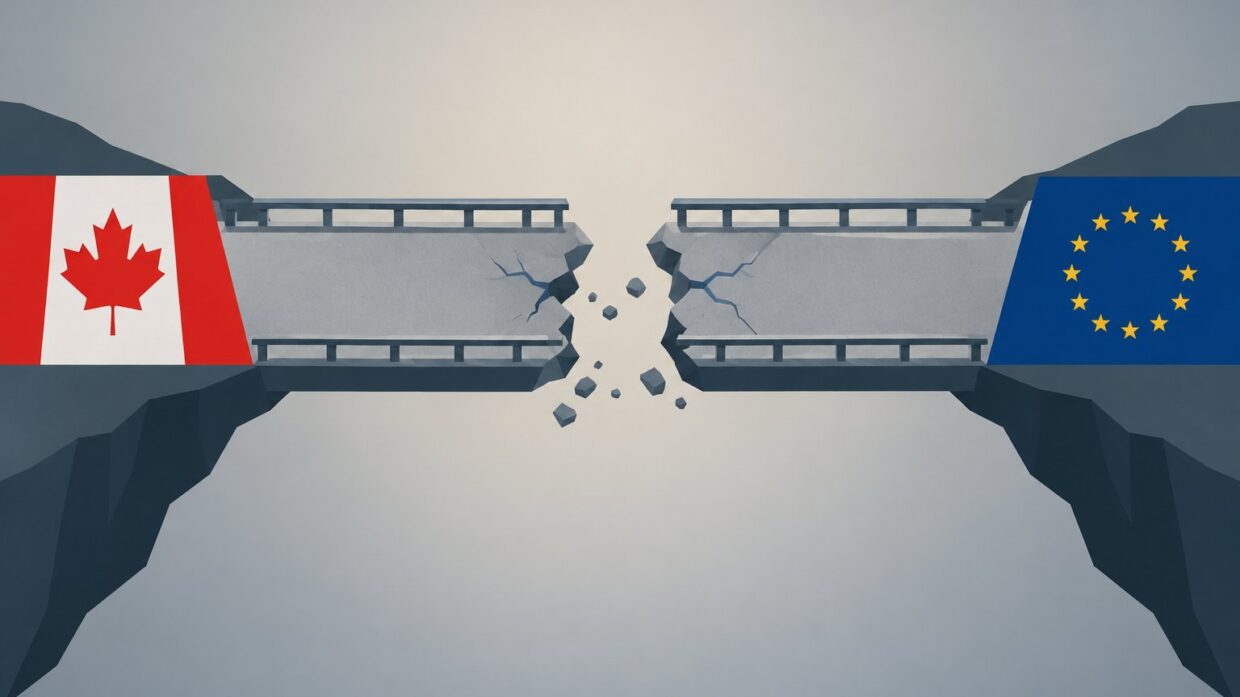
EU Retreats From Canadian Associate Member Offer After Internal Divisions Emerge
We haven't found a right-leaning take on this story yet.
Breaking stories sometimes publish before every side has covered them. We'd rather show you that than invent a view.
EU Commission Pushes Associate Membership for Canada Despite Member State Resistance
Key Takeaways
- Von der Leyen publicly advocated for associate member status despite EU member states having already rejected that language before the summit even started.
- The shift to 'ever closer association' reflects member state control over external policy, but neither side has explained which countries led the resistance or why.
- The EU avoided creating a formal new membership category that could have set a precedent for other nations seeking similar status, though the public record does not establish whether this was the primary concern driving member state opposition.
The Analysis
The EU's handling of Canada's membership status reveals a structural tension between the European Commission's executive authority and the veto power held by individual member states, a dynamic that neither the left nor right framing fully captures.
What actually happened: Von der Leyen, the Commission President, pressed for Canada to pursue "associate member" status during the Montreal summit that began in late October 2026. The Guardian reports that EU member states had already rejected this language in preparatory discussions before the summit commenced. Bloomberg documents that von der Leyen continued calling for the associate membership track despite this rejection. The final summit statement offered "ever closer association" instead, language that is substantively less binding and institutionally less defined than "associate member" status would have been.
The Guardian frames this as the EU "backing away," emphasizing what was lost. The headline treats the watered-down final language as a retreat. This framing is factually accurate but incomplete. It does not explain why member states rejected the original proposal, what specific concerns drove their position, or which member states led the resistance. The Guardian's narrative suggests the Commission overreached and was corrected, but does not establish whether that characterization reflects the member states' actual reasoning.
Bloomberg emphasizes von der Leyen's persistence and the existence of "dissent," treating her advocacy as noteworthy precisely because it continued despite opposition. This framing highlights the Commission's independent agency and suggests institutional friction. However, Bloomberg does not establish what consequences flow from a Commission President publicly advocating a position her member states rejected. It does not clarify whether this is routine executive-level advocacy or an unusual escalation.
What neither side fully captures is the institutional precedent this may set. An "associate member" category would have created a new formal relationship with a non-EU country, potentially opening questions about what other nations might seek similar status and on what terms. The shift to "ever closer association" preserves flexibility and avoids creating institutional obligations. Neither the Guardian nor Bloomberg reports whether specific member states objected to the formality of a new category itself, or whether objections were narrower (concerns about Canada specifically, resource commitments, or treaty implications).
The public record also does not establish whether von der Leyen's continued advocacy was intended as a negotiating posture to move the final language closer to associate membership, or whether it represented a genuine institutional disagreement about EU policy toward Canada. The two framings point to different interpretations of the same facts.
What this reveals about EU decision-making is that Commission executives can advocate publicly for positions member states have rejected, and that the final agreement reflects member state preferences over executive preference. The timing and visibility of this disagreement, surfacing at a major summit, suggests the negotiation was substantive rather than symbolic.
The headline this situation actually supports: Von der Leyen advocated for Canadian associate membership; EU member states rejected it; the final statement offered a less formal alternative, reflecting member state control over external relations policy.
Von der Leyen's public push for associate membership despite member state rejection establishes that Commission executives can advocate openly for positions already defeated in preparatory talks without facing institutional consequences. This precedent matters because it clarifies the limits of executive authority in EU external relations: the Commission can shape public negotiating positions and frame options, but member states retain veto power over binding institutional commitments. The shift from "associate member" to "ever closer association" represents not compromise but capitulation, leaving future relationships with non-EU countries dependent on whether member states agree to formalize them or accept indefinite ambiguity instead. This determines whether the EU can offer transparent structural relationships to partners like Canada or whether it defaults to creating status categories that avoid legal clarity and institutional obligations.