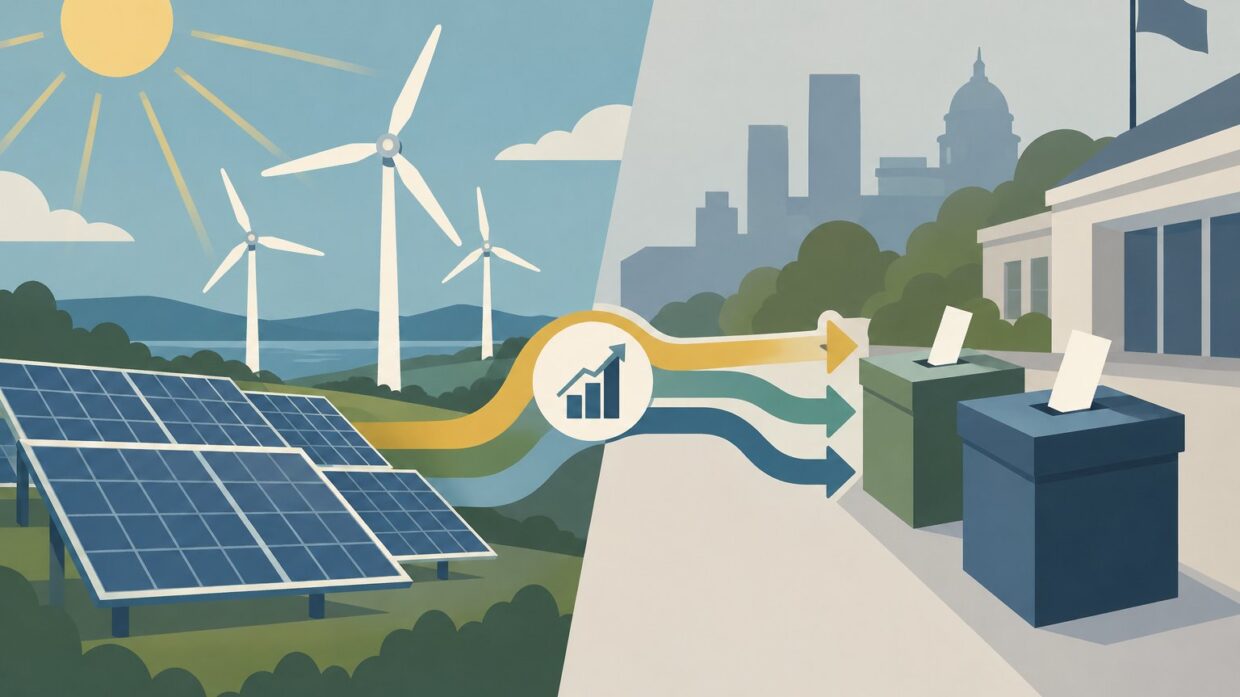
Photo: Well This Is News
We haven't found a left-leaning take on this story yet.
Breaking stories sometimes publish before every side has covered them. We'd rather show you that than invent a view.
We haven't found a right-leaning take on this story yet.
Breaking stories sometimes publish before every side has covered them. We'd rather show you that than invent a view.
Democrats won midterms while downplaying climate; outlets dispute whether that signals strategy shift or messaging reframe
Key Takeaways
- Democrats discussed the same climate policies in 2022 campaigns but used different language, calling them energy price solutions and job creation rather than climate action.
- The Inflation Reduction Act, the largest federal climate investment in U.S. history, passed with zero Republican support, yet Democrats won the midterms without prominently advertising it.
- Measuring whether Democrats prioritized climate depends entirely on whether you count explicit use of the word climate or count actual policy proposals about energy and emissions.
The Analysis
The same election produced two contradictory headlines about the same outcome. Axios framed Democratic silence on climate as a retreat from years of campaign emphasis. The Guardian described Democrats as having won decisively while emphasizing climate as economic policy. Neither framing is false. Both are incomplete in ways that reveal what each outlet chose to foreground.
Axios's reporting emphasizes the absence of climate rhetoric from Democratic campaign messaging. The outlet notes that climate "barely" appeared in Democratic platforms despite being a centerpiece for years, and suggests this silence reflects how far the issue has fallen on the political priority list. The word choice matters: "barely mentioned" frames climate as sidelined, a victim of electoral calculation. The implicit narrative is that Democrats abandoned a commitment when it became politically inconvenient. The Axios framing leaves out what The Guardian emphasizes: the specific language Democrats actually used when addressing climate.
The Guardian's account starts from a different factual observation about the same campaigns. Rather than measuring climate's presence by frequency of the word "climate," it measures it by substance: what policy outcomes Democrats ran on. According to The Guardian, Democrats discussed datacenters, energy prices, and job creation in green industries. These are climate policies discussed through an economic lens. The Guardian calls this shift from ideological framing to economic framing "green populism", emphasizing cost-of-living benefits rather than environmental urgency. That framing leaves out whether this rhetorical choice was strategic adaptation or whether it obscures the actual policy proposals involved.
The tension between these accounts reflects a real disagreement about what constitutes a campaign message. Axios measures presence by explicit mention of the climate crisis as such. The Guardian measures presence by policy substance regardless of terminology. Both approaches are defensible, but they produce different conclusions from identical electoral outcomes.
What neither outlet fully examines is the prior context that makes this moment significant. Climate has been a Democratic campaign staple for roughly a decade, especially after the 2018 midterms when climate-focused candidates performed well in some competitive districts. The 2022 Inflation Reduction Act represented the largest federal climate investment in U.S. history, yet it passed through Congress with Democratic support and Republican opposition. If Democrats won the midterms while downplaying the legislation they had just passed, that is a different story than if they reframed it. The available reporting does not establish which happened.
The documented record shows Democrats won, and climate was discussed in their messaging. The disagreement is whether that constitutes strategic emphasis or strategic omission. That disagreement turns on whether you measure political salience by terminology or by policy substance, a choice both outlets made without stating it as a choice. A reader relying on Axios alone would believe climate was deprioritized. A reader relying on The Guardian alone would believe it was successfully repositioned. Neither headline captures the actual finding: Democrats changed how they talked about climate without changing what they proposed.