Photo: Well This Is News
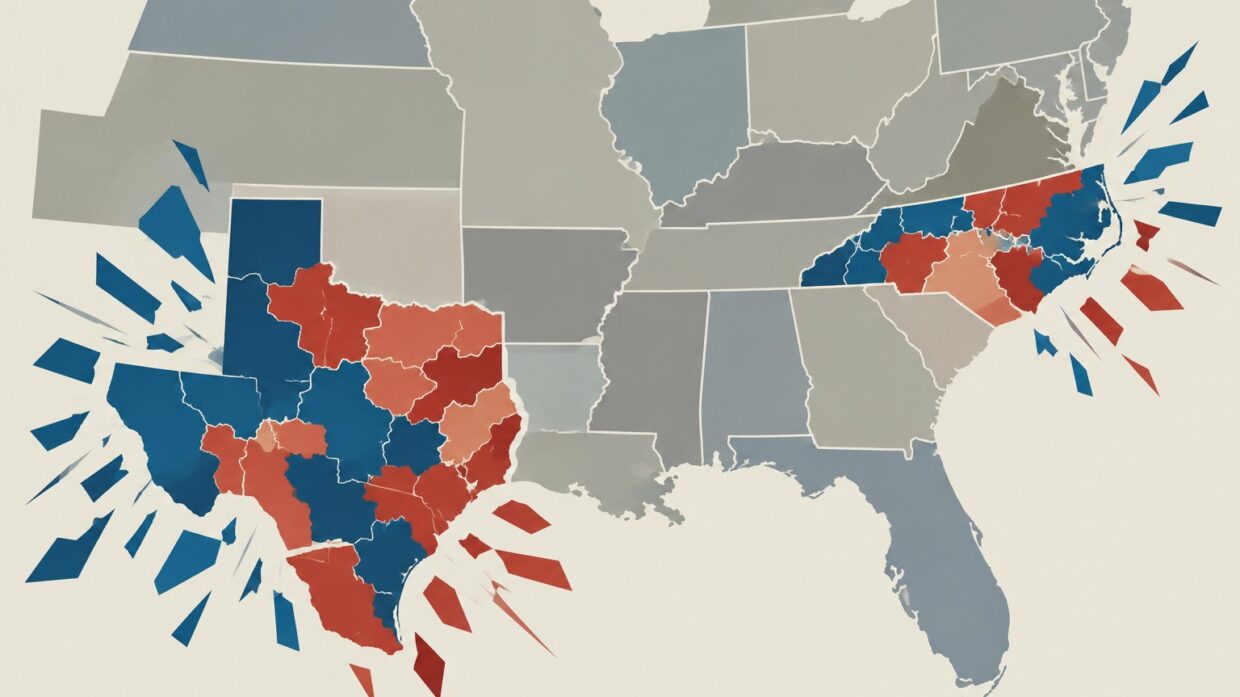
Blue wave reshapes American politics as Democrats flip GOP strongholds in Texas and North Carolina
We haven't found a right-leaning take on this story yet.
Breaking stories sometimes publish before every side has covered them. We'd rather show you that than invent a view.
Democrats gain seats in Texas and North Carolina as Republican coalition shows signs of fracture
Key Takeaways
- The reporting uses the term 'blue wave' to describe Democratic victories without establishing whether the results reflect a national trend, regional dynamics specific to Texas and North Carolina, or factors unique to individual races.
- Neither the left nor right coverage explains the mechanism behind Democratic gains, whether they resulted from crossover voting, increased turnout in Democratic areas, Republican defection, or local issues.
- The available sources document that Democrats won specific contests and flipped five seats but do not provide the baseline data needed to determine if these results differ meaningfully from prior election cycles in these districts.
The Analysis
The reporting on Democratic victories in Texas and North Carolina contains a critical ambiguity about scope and magnitude that both sides are exploiting without naming it directly. The available coverage shows Democrats won specific contests in specific districts, yet the framing language used, particularly "blue wave", suggests something broader about national momentum and structural realignment. What the sources actually establish and what they imply are not the same thing.
James Talarico's defeat of Ken Paxton in Texas by over 12 points is presented as evidence of a wave reshaping red-state politics. That specific margin is verifiable and significant. Democrats also flipped five Republican-held congressional seats in North Carolina. Those are documented facts. But the reporting does not establish whether these results reflect a national trend, regional dynamics specific to these states, or candidate-specific factors that drove individual races. The Politico reporting notes that "both parties would be left without clear direction amid a blue wave. And then the blue wave hit," which frames the narrative around momentum rather than analyzing which districts moved and why.
The left framing emphasizes the word "wave" and describes victories as occurring in "deep-red" or "GOP stronghold" territory. This language choice accomplishes two things simultaneously: it highlights the geographic difficulty of Democratic gains in conservative areas, and it implies those gains signal momentum that extends beyond the specific races shown. The NPR headline uses the phrase "looked like" to describe the wave, which acknowledges regional specificity while still deploying the wave metaphor. What this framing leaves out is how many districts Democrats contested in these states, what the baseline expectations were before the race, and whether these results differ meaningfully from prior cycles in these specific regions.
The right framing, represented here only by the Fox News headline, uses the language "stunned" and "didn't expect this." That word choice frames the outcome as surprising to Democrats themselves, which emphasizes unexpectedness rather than underlying trend. But the available coverage does not include substantive right-side analysis of why these results occurred or what they mean structurally. Without that counterpoint, readers cannot assess whether the right side is disputing the fact of Democratic gains or disputing the interpretation that they signal broader momentum.
What neither side fully addresses is the relationship between these district-level results and the overall electoral environment. The Politico polling reference to internal party division suggests fragmentation within both coalitions, but the reporting does not connect that internal division to the electoral outcomes. It remains unclear whether the Democratic victories in Texas and North Carolina reflect crossover voting, increased turnout in Democratic areas, or defection from the Republican coalition. The available reporting also does not establish whether these races were influenced by specific candidate quality, local issues, or national factors.
The real question the reporting leaves unresolved is whether "blue wave" is an accurate descriptor or a metaphorical overreach. A wave implies broad-based movement. Five seats flipped in North Carolina is meaningful. One candidate defeating another by 12 points in Texas is a fact. Whether those facts together constitute evidence of a wave, a regional shift, or district-specific outcomes requires context the available sources do not provide.
Democrats flipping five congressional seats in North Carolina and winning a statewide race in Texas by 12 points will reshape 2026 recruitment strategies for both parties and force Republicans to defend territory they considered secure. The specific margins and locations of these victories establish new baselines for what Democrats can achieve in conservative districts, meaning the NRCC must allocate resources differently across its target map and the DCCC will prioritize similar demographic and geographic profiles in future cycles. This is not merely symbolic momentum; it materially changes which races get funded, which challengers get recruited, and which incumbents face unexpected vulnerability. The reporting conflates district-level gains with national trends without establishing the connection, but the institutional consequence is immediate and concrete: Republican campaign committees now operate with revised assumptions about which states and districts remain safely red.