Photo: Well This Is News
Permitting bill threatens clean energy, Democrat warns as Trump blocks wind and solar
We haven't found a right-leaning take on this story yet.
Breaking stories sometimes publish before every side has covered them. We'd rather show you that than invent a view.
Democrat raises concern bipartisan permitting bill could favor natural gas over renewables
Key Takeaways
- The permitting bill's text and actual treatment of natural gas versus renewable timelines remain undisclosed, leaving the structural risk of asymmetric acceleration unverified.
- Casten's warning reflects a concern about executive branch discretion weaponizing facially neutral permitting reform, but reporting does not clarify whether he seeks amendments or opposes the bill entirely.
- Environmental groups have issued an ultimatum to Senate leadership but their specific demands and satisfaction threshold are not publicly reported, obscuring the actual negotiating position.
The Analysis
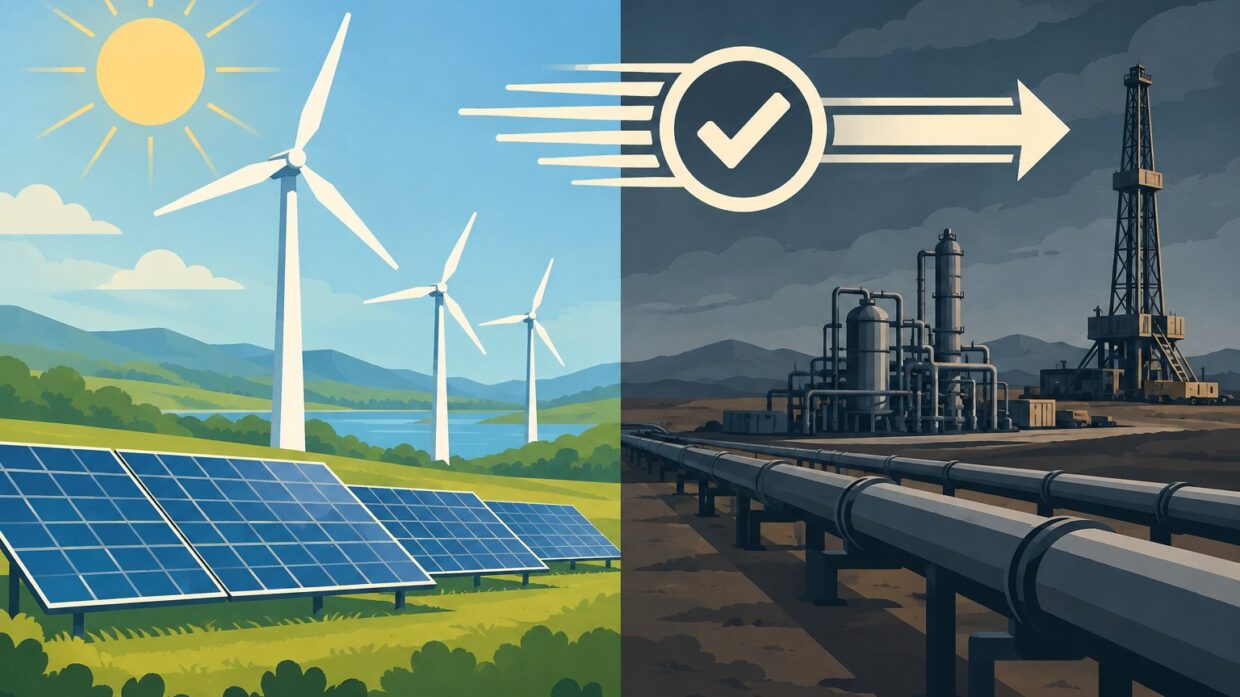
A bipartisan permitting bill intended to accelerate energy development approval is encountering resistance over fears it could unintentionally benefit natural gas infrastructure over renewables, creating a policy wedge that neither the left nor right is fully acknowledging.
Rep. Sean Casten (D-Ill.) used the phrase "gold rush for gas" to describe his concern about the bill's potential effects. The core issue is structural, not rhetorical: permitting bills typically establish timelines and procedural standards that apply uniformly across energy source categories. If applied uniformly to natural gas and renewables simultaneously, streamlined permitting should theoretically accelerate both. Casten's concern appears to rest on a specific mechanism: the Trump administration's documented opposition to wind and solar projects could mean that while the bill removes procedural barriers for gas infrastructure, executive branch actions could simultaneously slow renewable approvals through other channels, creating a relative advantage for gas.
Inside Climate News reported that environmental groups are "ramping up their opposition" and issued an "ultimatum" to Senate leadership. The reporting establishes timing (Senate vote expected within two weeks of late October) and identifies organized pressure from what the outlet describes as "some of the country's leading environmental groups." The reporting does not specify which groups, what their ultimatum entails, or what threshold of concessions would satisfy them. This framing emphasizes mobilized opposition but leaves the actual negotiating positions undisclosed.
The left's framing, evident in Axios coverage, emphasizes that Trump's known hostility to renewables could weaponize a permitting bill that appears neutral on its face. This frame highlights a concrete risk: if procedural acceleration applies to all energy sources but executive discretion slows renewables through other approvals (siting, grid connection, environmental review), the relative cost advantage shifts toward natural gas. What this framing does not engage is whether the bill contains safeguards that would prevent such asymmetry, or whether Democrats negotiating the bill have proposed amendments addressing this concern.
A right-leaning reading of the same facts would likely emphasize that permitting reform across all energy sources serves the national interest, that environmental groups reflexively oppose any legislation that does not explicitly favor renewables, and that delays in energy permitting regardless of source impose economic costs. This perspective is not present in the source material provided, leaving that analysis unfounded for this analysis.
What neither framing addresses is the bill's specific language on natural gas versus renewable treatment. The sources do not provide the text or a summary of how the permitting timelines differ, if at all, between energy categories. They do not establish whether previous permitting bills have shown asymmetric application or whether this concern is speculative. The reporting also does not clarify whether Casten's warning reflects a negotiating position (the bill should be amended to address this) or a fundamental objection (the bill cannot be fixed and should be opposed). Without that distinction, readers cannot assess whether this is a salvageable legislative problem or a terminal flaw in the underlying approach.
The unresolved institutional question is whether a permitting bill can remain neutral on energy source when executive branch discretion in other approval channels is itself not neutral. That structural tension is real. Whether this specific bill adequately addresses it remains unclear from the available reporting.
A permitting bill that accelerates approval timelines uniformly across energy sources will inevitably favor whichever type the executive branch actively obstructs through other channels. If Trump administration officials slow wind and solar projects via environmental review, grid interconnection rulings, or lease denials while the permitting bill removes procedural obstacles for natural gas pipelines, the relative advantage shifts decisively to fossil fuels regardless of the bill's stated neutrality. This creates a permanent institutional asymmetry: Republicans can pass a facially neutral permitting law while their appointees selectively weaponize remaining discretionary authority. Democrats negotiating this bill have not publicly articulated whether they seek specific amendments to prevent cross-channel sabotage or whether they view the structural problem as unfixable. That distinction determines whether permitting reform becomes a renewable energy trap or a genuine acceleration mechanism.