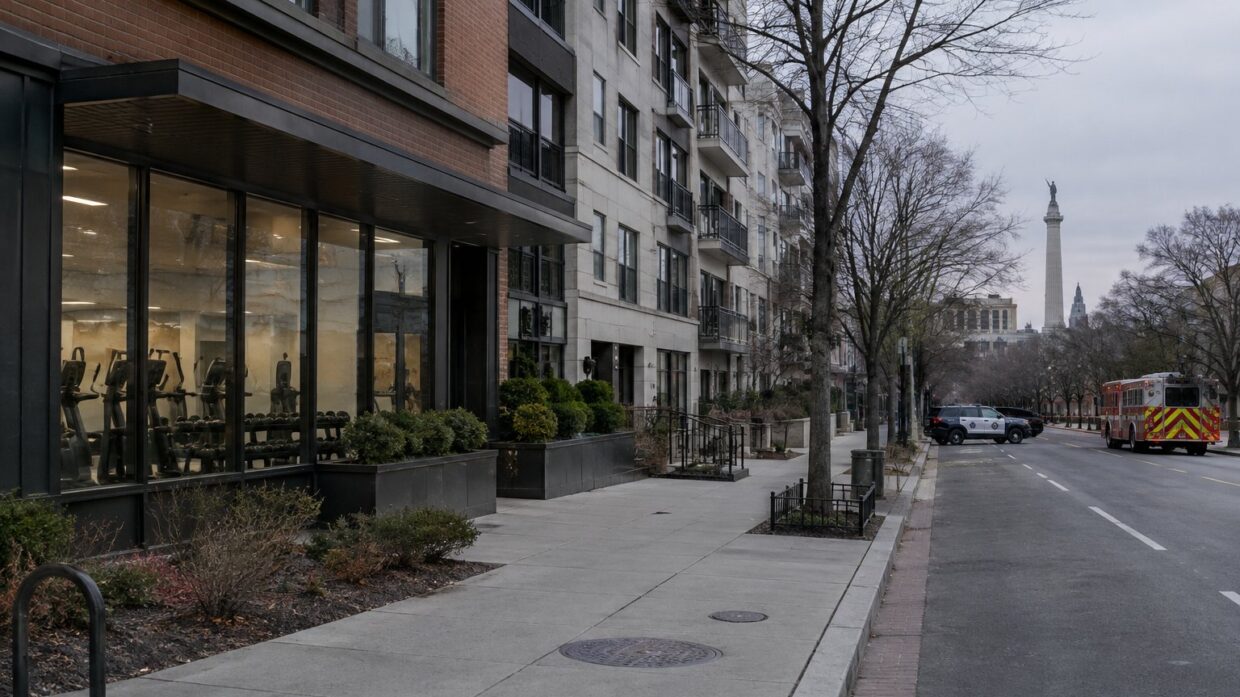
Photo: Well This Is News
Gunman Opens Fire at Logan Circle Gym, Killing 1 and Wounding 4
ER Doctor Involved in Condo Dispute Kills 1, Wounds 4 in D.C. Gym Shooting
D.C. Gym Shooting Kills 1, Injures 4; Suspect Dead After Barricade
Key Takeaways
- Police have not publicly confirmed whether the condo dispute was Lambert's primary motive or established a clear causal connection between the legal conflict and Thursday's shooting.
- The reporting does not establish the timeline between when Lambert's lawsuit was filed or resolved and when he acquired the weapon used in the attack.
- Both major outlets have made editorial choices about whether to lead with eyewitness accounts and immediate facts or with the shooter's documented personal circumstances, reflecting fundamentally different judgments about what context readers need.
The Analysis
A shooting at a D.C. gym Thursday morning left one dead and four injured, with the gunman dead from a self-inflicted wound. What distinguishes this story is not the violence itself but the public record's conflicting emphasis on whether the shooter's documented personal crisis explains the attack or whether identifying that crisis amounts to excusing it.
The facts are established across all sources. Dr. Matt Lambert, 55, an emergency room physician, opened fire inside VIDA Fitness in Logan Circle shortly after 8 a.m. Thursday. One victim died; four others were injured, with one in critical condition. Police made contact with Lambert on the seventh floor of a nearby apartment building, where he barricaded himself and died from a self-inflicted gunshot wound. The scene was contained within roughly a mile of the White House.
NPR's coverage uses the phrase "witnesses describe" and leads with eyewitness accounts of the incident itself. The reporting foregrounds the immediate facts: who was shot, where, and how many. The framing emphasizes the event as a discrete incident requiring public safety response. NPR does not lead with Lambert's identity or background.
The Daily Wire reports Lambert's identity prominently and in the headline. The language is precise: Lambert "had sued the Met" over a condo dispute involving "mold and water damage." A separate Daily Wire headline references "Possible Trigger," signaling that reporting has established a connection between Lambert's documented legal conflict and his actions. The framing invites readers to trace a causal chain from civil dispute to violence.
Neither framing is dishonest. Both are selective. NPR's approach emphasizes the public safety event and eyewitness experience. The Daily Wire's approach emphasizes the shooter's documented circumstances and potential motive. What neither side fully addresses is what the police record actually establishes about Lambert's state of mind, the timeline between the condo dispute and the shooting, or whether the mold dispute was his primary motivation or one factor among others.
The phrase "possible trigger" in the Daily Wire headline signals the reporter's interpretation, not a stated conclusion from law enforcement. The reporting does not establish whether police confirmed Lambert's motive or whether the condo dispute was the primary driver of the violence. This distinction matters. Stating that someone was in a legal dispute is factual. Asserting that the dispute triggered violence requires explicit confirmation from investigators.
What neither side is emphasizing is the specific timeline. How long had the dispute been ongoing? When did Lambert lose the case or reach a settlement? When did he acquire the weapon used Thursday? The available reporting does not establish whether Lambert acted impulsively or whether there was a precipitating event that day. These gaps suggest that either law enforcement has not yet disclosed the timeline or the reporting has not yet pursued it.
The underlying question is whether understanding a shooter's documented personal crisis is a form of explanation that risks excusing the violence, or whether it is simply relevant context that readers deserve. NPR's decision to lead with witnesses and immediate facts reflects skepticism that background should dominate the frame. The Daily Wire's emphasis on the condo dispute reflects a different editorial judgment: that a shooter's verifiable circumstances are central to understanding what happened. Neither judgment is inherently wrong. Both reflect choices about what readers should prioritize.
Police records will now face renewed scrutiny over what information they disclose about a shooter's documented grievances and timeline to violence. The Condo Board and Building Association for the Met will face potential liability questions and heightened pressure to review their dispute-handling procedures, particularly in cases involving residents displaying behavioral changes. The distinction between reporting a motive as "possible" versus confirmed will reshape how D.C. media outlets frame future incidents involving public figures or professional backgrounds. Emergency room protocols at hospitals citywide may face review regarding how psychiatric crises among physicians are identified and escalated, given Lambert's professional standing potentially shielded warning signs. The incident establishes that framing choices about shooter background are not neutral journalistic decisions but editorial judgments that shape public understanding of whether systemic failures preceded the violence or whether the shooter's grievances were simply personal failures. How law enforcement responds to future requests for timeline specificity during active investigations will directly affect whether the public receives the causal information