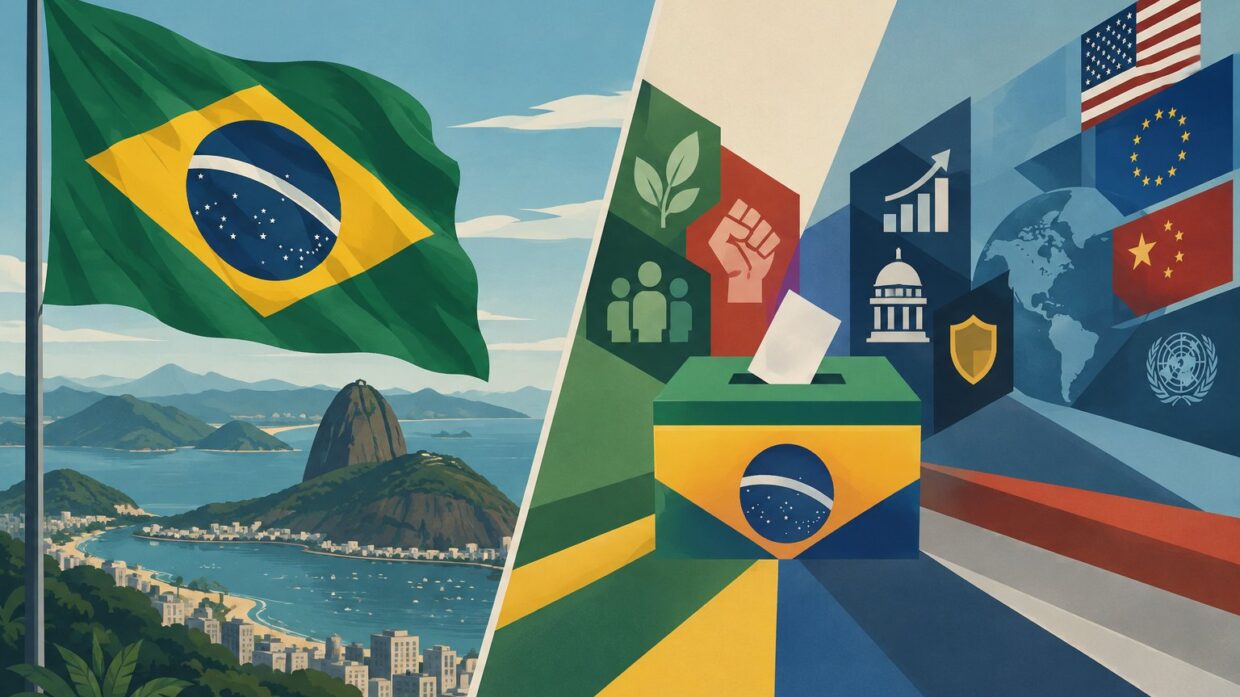
Photo: Well This Is News
Tens of thousands rally for Lula as leftist incumbent fights to retain Brazil presidency
Bolsonaro camp signals Brazil could join Trump's anti-cartel coalition if Flávio wins runoff
We haven't found a neutral take on this story yet.
Breaking stories sometimes publish before every side has covered them. We'd rather show you that than invent a view.
The Analysis
Brazil's October 25 runoff election between incumbent Luiz Inácio Lula da Silva and Flávio Bolsonaro sits at an intersection of two distinct narratives: one focused on domestic political mobilization, the other on international security alignment, yet the coverage from each side largely ignores the other's frame entirely.
The factual record is straightforward. Nearly 159 million Brazilians are eligible to vote on October 25. The Guardian reports that tens of thousands of Lula supporters gathered on Rio de Janeiro's beaches for a rally described as an effort to propel the incumbent toward victory. Fox News reports that Eduardo Bolsonaro, Flávio's brother, stated Brazil would join Trump's Shield of the Americas anti-cartel coalition if Flávio wins. Those are the documented facts. Everything else is interpretive choice.
The left-leaning frame, advanced through The Guardian's coverage, emphasizes voter mobilization and mass political engagement. The language centers on "supporters" and a "giant protest" designed to influence the outcome. This framing underscores democratic participation and grassroots energy. What it leaves out is any assessment of whether rally size correlates with actual electoral support, any polling data about the race's competitiveness, or any exploration of what voters are actually responding to beyond attendance at a beach event. The frame treats visible enthusiasm as evidence of momentum without establishing whether the broader electorate shares it.
The right-leaning frame, advanced through Fox News, emphasizes geopolitical realignment and security cooperation. The language foregrounds Trump's "war on drug cartels" and Brazil as a "powerful new ally" gaining entry to a coalition. This framing positions the election outcome as significant for hemispheric security architecture and Trump administration priorities. What it leaves out is any analysis of drug cartel activity in Brazil itself, any assessment of how this coalition would actually function, whether Flávio Bolsonaro has independently articulated this position or whether Eduardo is speaking strategically on his behalf, or what Lula's stated policy on cartel enforcement is by comparison. The frame treats the statement as news without establishing its credibility or Flávio's own public commitment to it.
What neither side foregrounds is the election's actual competitiveness. The reporting does not establish whether this is a race where either candidate has a clear advantage or whether rallies and foreign policy pledges actually move the electorate. Neither framing includes recent polling, voter sentiment on the issues each side emphasizes, or historical context about how Brazilian voters have responded to mass mobilization versus security-focused messaging in past elections. The left emphasizes visible enthusiasm; the right emphasizes diplomatic realignment; neither asks whether voters care about either as much as inflation, employment, or crime in their own neighborhoods.
The underlying question is whether this runoff is genuinely competitive and what voters prioritize. The available reporting suggests two campaigns operating in different information spaces, each amplifying the evidence that favors their candidate's path to victory while leaving out the most basic measure of the race's actual state. A reader who only knows these headlines cannot answer the most elementary question: who is winning?
Brazil's runoff will reshape hemispheric security architecture if Bolsonaro's faction prevails, directly determining whether Brazil joins Trump's anti-cartel coalition and shifts away from Lula's current diplomatic posture on drug enforcement cooperation. This institutional realignment affects not just bilateral US-Brazil relations but also the operational structure of drug interdiction efforts across South America, resource allocation to regional security agencies, and which geopolitical bloc Brazil anchors itself within for the next decade. The election outcome determines concrete policy infrastructure, not merely electoral cycle theater. Yet current coverage obscures whether voters actually prioritize cartel policy or foreign alliance positioning over domestic economic concerns like inflation and employment, making it impossible to know which campaign's message resonates beyond rallies and press statements. The most consequential aspect of this election remains unreported: what Brazilian voters actually want their government to prioritize when choosing between these two fundamentally different visions of their country's role in the hemisphere.