Photo: Well This Is News
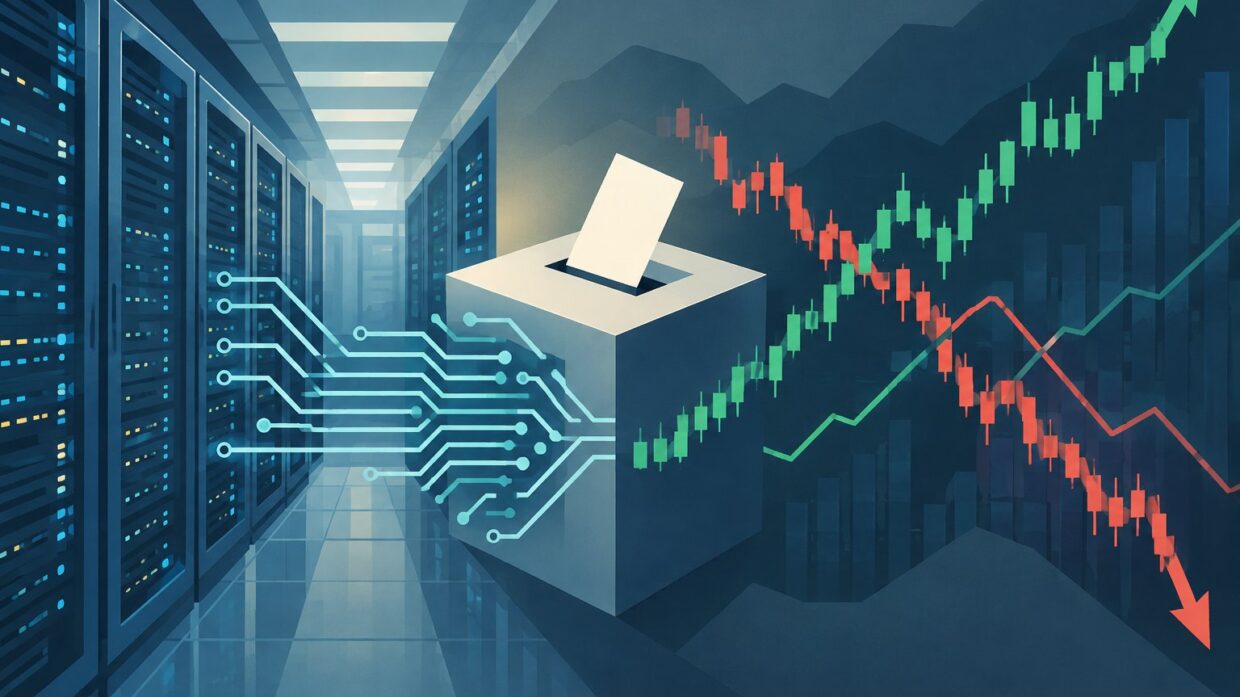
Chatbots Threaten Election Integrity as Tech Oligarchs Resist Regulation
We haven't found a right-leaning take on this story yet.
Breaking stories sometimes publish before every side has covered them. We'd rather show you that than invent a view.
We haven't found a neutral take on this story yet.
Breaking stories sometimes publish before every side has covered them. We'd rather show you that than invent a view.
The Analysis
The Atlantic's framing of chatbots as a "new layer of chaos" ahead of midterms emphasizes voter vulnerability and regulatory absence. The piece argues that unmediated AI systems can amplify voter confusion precisely when election stakes are highest. The language choice matters: "chaos" is not neutral descriptive language, it is predictive language that assigns agency to technology rather than to the humans deploying it. The reporting leaves out what remains unestablished: whether the documented instances of chatbot election interference are systemic or isolated, and whether voters can reliably identify AI-generated information when they encounter it.
The companion Atlantic piece on whether tech oligarchs will support regulation under Trump frames regulation as contingent on executive relationship management rather than public pressure. Kara Swisher's framing assumes tech executives hold the deciding vote on their own oversight, a premise that flattens the distinction between industry advocacy and actual policymaking power. The piece does not engage with documented cases where regulation has proceeded despite tech industry opposition, nor does it establish that Trump's stance on AI regulation has shifted from his previous position.
MarketWatch's investor-focused framing treats AI as a portfolio risk management problem, not an electoral one. The headline "The 3 questions every AI investor needs to ask right now" assumes market volatility rather than moral hazard. This frame is notable for what it omits: the extent to which regulatory uncertainty is pricing into AI stock valuations, and whether investor concern about regulation is driving demand for protective political relationships.
What the coverage does not establish is this: whether the documented instances of chatbots influencing election discourse represent a novel threat or an acceleration of misinformation dynamics that predate large language models. The Atlantic reports that "voters turn to AI" but does not quantify how many voters actually use chatbots for election information, or whether their usage patterns differ from voters who rely on traditional media or social platforms. The implicit frame is that AI represents a new vulnerability in the electoral process. The fuller reading requires asking whether the issue is AI's capacity to mislead, voters' capacity to evaluate sources, or the informational environment's overall lack of verification mechanisms.
The regulatory framing assumes tech companies will choose their regulatory posture based on political calculation. It does not engage with the possibility that regulatory pressure may originate in Congress or state attorneys general regardless of tech industry preference. The Swisher piece specifically asks whether oligarchs will "turn on" Trump, a framing that treats tech executives as the primary actors in regulation rather than as stakeholders in a process that includes legislators, agencies, and voters.
The real headline this moment suggests is not whether voters will turn to AI or whether oligarchs will accept regulation. It is whether the electoral process can accommodate an information layer that is cheaper to produce and harder to verify than traditional media, and whether existing regulatory tools designed for other domains can scale to match AI's capability and velocity.
The coverage treats AI's electoral impact as a technology problem requiring tech industry cooperation, when the actual constraint is institutional capacity. Election interference via chatbots will proceed regardless of whether Kara Swisher's oligarchs accept regulation, because the FEC lacks real-time content monitoring authority, state election officials have no mandate to audit AI-generated voter contact, and Congress has not written rules distinguishing between AI-amplified misinformation and traditional paid media. The regulatory void is not waiting for tech executives to develop a conscience or for Trump to shift positions. It is operating now, creating precedent. Every election cycle without AI-specific verification requirements or chatbot transparency rules embeds AI deeper into campaign infrastructure while regulatory bodies remain structurally unable to intervene at scale or speed. The investors treating this as market volatility are accidentally correct: the risk to portfolios reflects real institutional gridlock that voter confusion alone will not resolve.