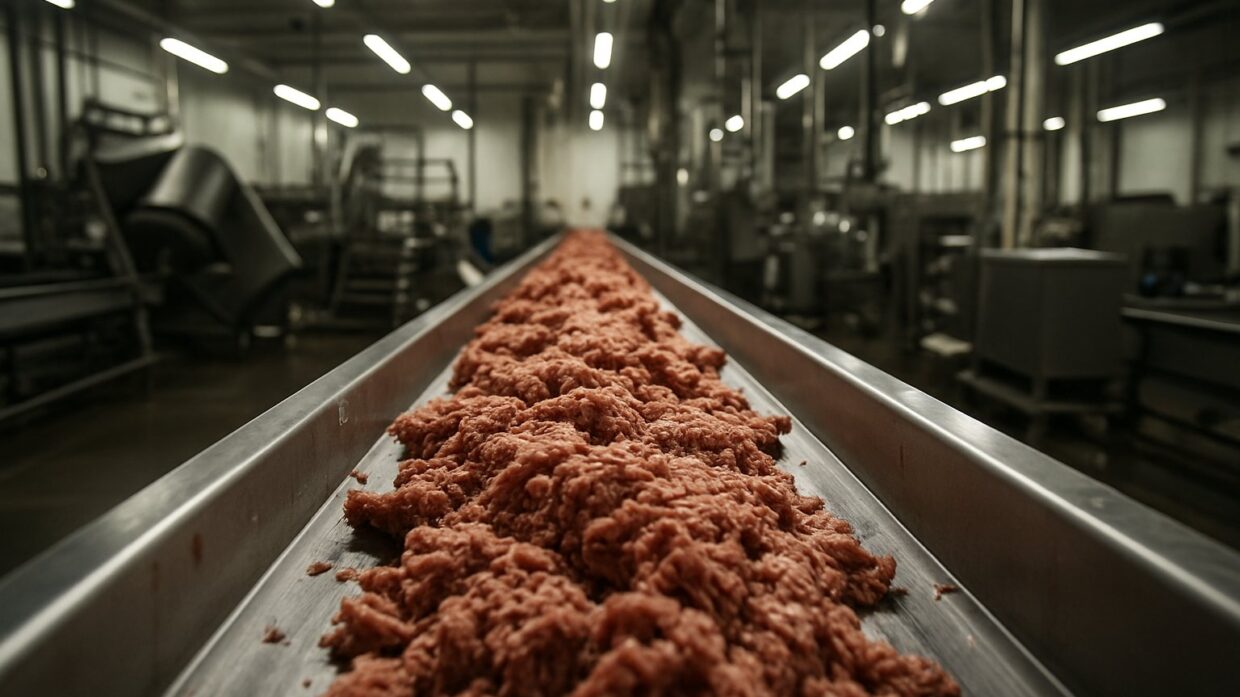
Photo: Well This Is News
Trump USDA moves to speed up slaughterhouses despite worker injury risks
Deregulation effort targets outdated meatpacking rules to boost production
USDA proposes faster meatpacking line speeds; worker safety and climate impacts disputed
Key Takeaways
- Current meatpacking line speeds were established through decades of union-labor conflict and injury litigation, not because safety experts determined they represent the optimal balance between production and worker protection.
- The left's support for lower line speeds is rooted in preserving union bargaining power rather than an evidence-based assessment of worker welfare, while the right's deregulation push prioritizes cost reduction without engaging with documented increases in workplace injuries.
- Neither side is willing to openly debate the genuine question of what line speed, decided by whom and for whose benefit, would produce the least total harm to workers and the environment.
The Analysis
The Trump administration's USDA has proposed loosening federal restrictions on meatpacking line speeds, a technical regulatory change that reveals a fundamental conflict between production efficiency and the human cost of industrial food processing that neither political side is willing to honestly address.
The facts are straightforward. The USDA announced proposed rule changes to increase the speed at which conveyor lines move through meat processing facilities, effectively allowing companies to process more animals per hour. Jill Mauer, a government meat inspector with more than 30 years of direct plant experience, submitted formal comments to the USDA warning that faster lines create documented hazards. Inside Climate News reported that Mauer specifically flagged both worker injury risk and increased methane emissions from faster decomposition of waste. The rule change would alter standards that have governed line speeds since the Clinton administration.
The left frames this as deregulation in service of corporate profit at the expense of workers. Mother Jones chose the language "Jack Up Line Speeds" in its headline and emphasized worker safety data showing injury rates correlate with line speed increases. The narrative is that Trump appointees are repeating a familiar pattern: removing worker protections to boost industry margins. What this framing omits is any acknowledgment that current line speed caps are themselves the result of industry-labor fights dating back decades, and that the left has historically supported union interests in keeping speeds low regardless of other consequences. The framing also doesn't engage with whether current speeds reflect genuine worker protection or negotiated labor power.
The right's available sources don't directly address meatpacking speeds, but deregulation rhetoric generally frames faster lines as removing "outdated" rules that harm American competitiveness. The implicit argument is that worker safety is best served by competitive, profitable companies rather than rigid production caps. This framing accepts no trade-off: efficiency and safety are presented as compatible. It omits the actual inspection data, the specific injury numbers, and the fact that faster speeds do produce measurable increases in workplace trauma.
What neither side says: meatpacking has been a deliberately brutal industry since Upton Sinclair. Current line speeds were set after union power and injury litigation, not because they reflect optimal safety. Faster lines increase injuries, that is established. But the left's defense of current speeds is fundamentally about preserving union bargaining leverage, not genuine worker welfare. The right's push for deregulation is fundamentally about cost reduction, not efficiency. Both sides are using workers as a rhetorical tool while avoiding the actual question: what line speed, set by whom, for whose benefit, produces the least total harm? That question requires admitting that this isn't about rules versus freedom. It's about whose interests get embedded in the rules.
Faster meatpacking lines will directly increase injury rates among workers already experiencing some of the highest trauma rates in American manufacturing, according to 30-year USDA inspector Jill Mauer's documented comments. This regulatory shift also accelerates methane emissions from processing waste, creating a tangible climate cost that production data can measure. The rule alteration abandons standards set during the Clinton era, meaning injured workers and measurable environmental degradation become the concrete institutional price of whatever marginal efficiency gains emerge. Neither the industry's competitiveness argument nor labor's job protection claim addresses whether the current tradeoff between speed and harm actually serves worker welfare or merely preserves existing power arrangements while leaving workers to absorb the documented physical costs.