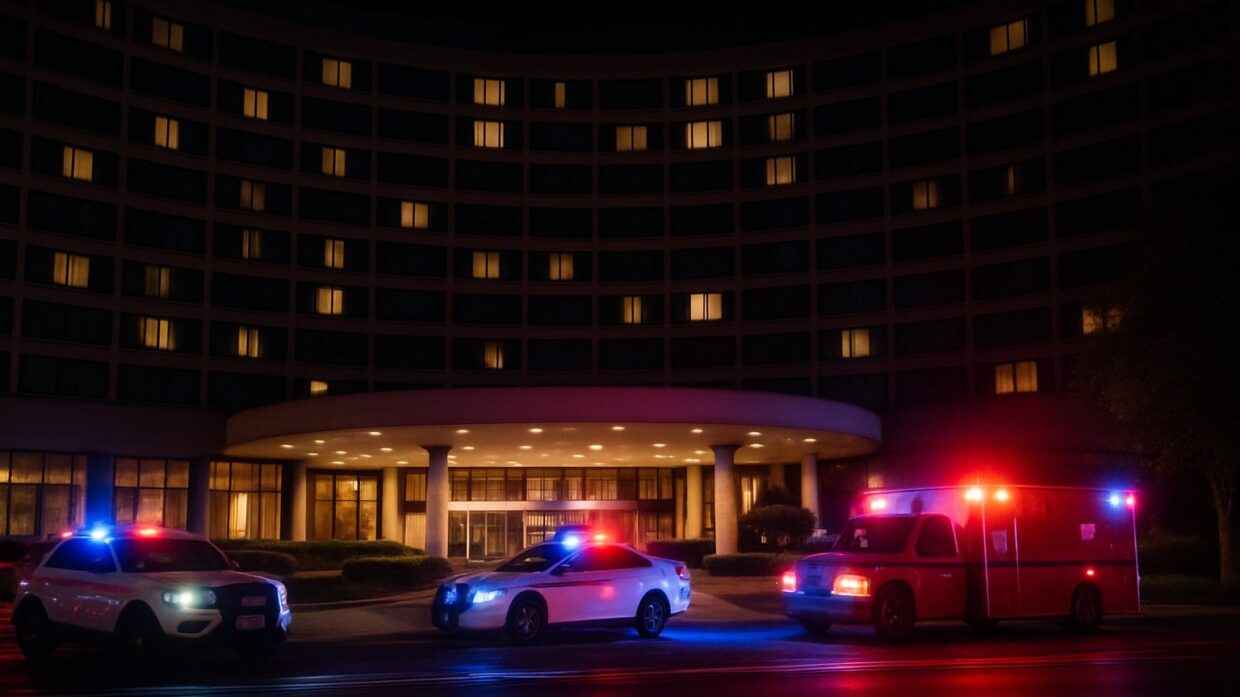
Photo: Well This Is News
Reagan assassination site targeted again as gun violence strikes Washington's elite gathering
WHCD security breached as suspect checked in day before; attendee reports no screening at entrance
Shots fired at Washington Hilton during White House Correspondents' Dinner; suspect arrested
Key Takeaways
- The White House Correspondents' Dinner is a private event at a commercial hotel where security is the responsibility of the hotel and organizers, not the Secret Service, creating a jurisdictional gap that enables minimal screening.
- Neither side has addressed Cole Allen's actual motive, whether he was previously flagged by law enforcement, or what threat assessment the hotel received before the event.
- Both left and right narratives avoid the core structural issue: private entities hosting events with government officials are not required to implement airport-grade security, and addressing this gap would require regulation neither side is willing to discuss.
The Analysis
A shooting at the Washington Hilton during the White House Correspondents' Dinner has prompted two competing narratives that each seize different facts while ignoring the same uncomfortable structural failure that enabled what happened.
Here is what actually occurred: Cole Allen, 31, checked into the Washington Hilton on Friday, one day before Saturday's White House Correspondents' Dinner. Shots were fired during the event. Authorities arrested Allen. Multiple attendees confirmed that security at event receptions consisted of staff asking to see tickets at the entrance, with no metal detection, bag screening, or security sweeps performed. The Washington Hilton is the same hotel where John Hinckley Jr. shot Ronald Reagan on March 30, 1981.
The left's framing, deployed by NBC News, leads with the Reagan connection. The language chosen was deliberate: "same hotel where Reagan was shot" places the story inside America's gun violence continuum. This frame asks viewers to see the WHCD as yet another venue where armed individuals breach security. What this framing omits is any examination of why security at a high-profile event involving Cabinet members was minimal enough that an attendee could later report walking in with only a ticket check. The Reagan comparison is historically accurate but operationally unhelpful, because it treats this as inevitable rather than as a preventable failure of procedure.
The right's framing, emphasizing Allen's pre-positioning and the absence of security screening, reverses the omission. Fox News and The Daily Wire focus on the mechanics: he checked in a day early, walked into receptions without metal detection, no bag checks. The language here centers on access and procedure. But this framing quietly omits what Cole Allen's actual motive was and whether pre-positioning the night before is even unusual at a major hotel hosting a ticketed event. By making the security gap the entire story, it converts what may have been a failed threat assessment into a procedural checklist problem.
What neither side is discussing: The White House Correspondents' Dinner is not a state event. It is a private event hosted by a news organization at a commercial hotel. The Secret Service protects the President and designated Cabinet officials, but WHCD security is the responsibility of the hotel and the dinner's organizers. This creates a jurisdictional gap that both sides are leaving untouched. The left avoids it because it complicates the gun violence narrative. The right avoids it because it exposes that private entities hosting high-profile gatherings are not required to implement airport-grade security, and fixing that would require regulation the right typically resists.
Also omitted: whether Cole Allen had been flagged by any law enforcement prior to checking in, whether the hotel had been provided advance threat assessments, and what his actual target or intent was. Without these details, both narratives are incomplete.
The real headline is simpler and less useful to either side: An event mixing government officials and journalists at a commercial hotel relied on ticketing rather than security screening, and that choice proved vulnerable. That is neither a gun control story nor a security procedures story. It is a story about what happens when private entities host events involving public figures without public-grade security infrastructure, and neither side wants to examine it.
Private entities hosting high-profile government figures have no obligation to implement security infrastructure proportional to the target-rich environment they create, leaving a regulatory vacuum that neither ideological side will address because each profits from treating the symptom as the whole disease.