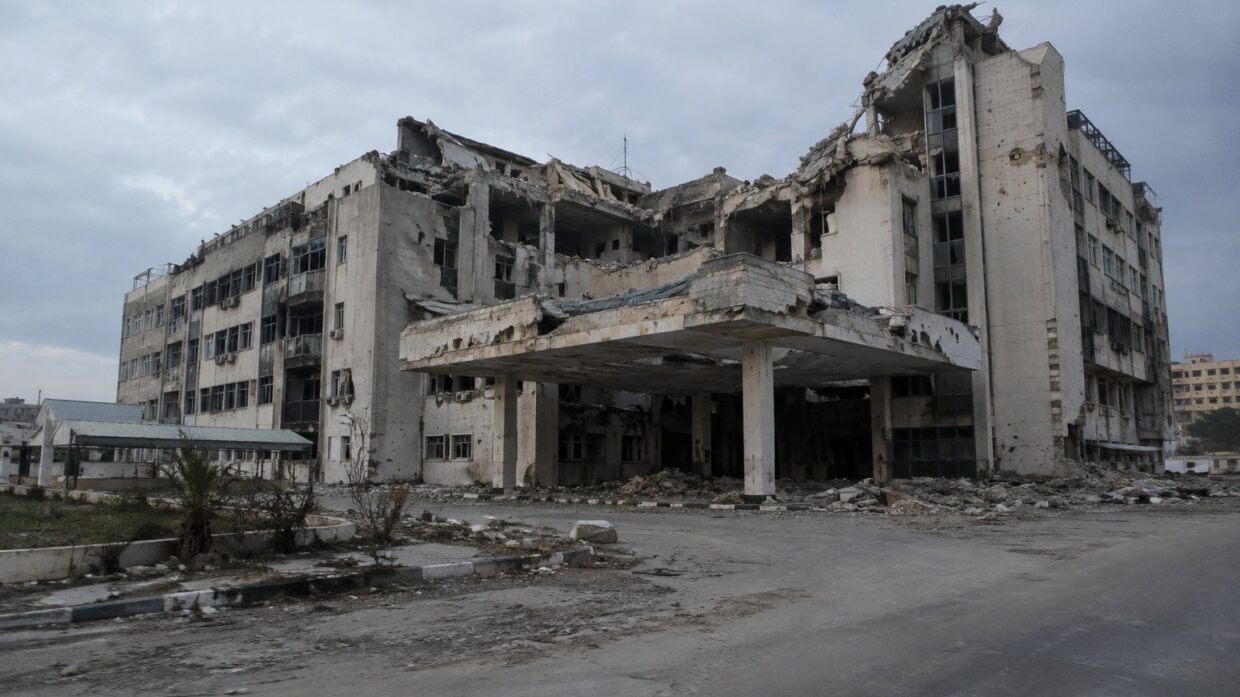
Photo: Well This Is News
Israeli strike on Gaza hospital kills at least 6 people, including surgeon
We haven't found a right-leaning take on this story yet.
Breaking stories sometimes publish before every side has covered them. We'd rather show you that than invent a view.
Israeli airstrike on Gaza hospital kills 6, including medical staff; Israel says it targeted Hamas commander
Key Takeaways
- No source has independently confirmed whether a Hamas commander was actually present at Nasser Hospital or whether the strike hit its stated target.
- The legal and factual question of whether hospitals cease to be protected under international law when armed groups operate from them remains unresolved by either side's framing.
- Medical staff present at the hospital have not been quoted or surveyed about whether they observed military activity or armed figures before the strike occurred.
The Analysis
An Israeli airstrike on Nasser Hospital in southern Gaza killed at least six people, according to Palestinian health authorities, while Israel claims the strike was precise and targeted a Hamas operational commander using the facility as cover. The central factual dispute centers on what the hospital actually housed and whether the six dead were combatants, medical staff, or patients caught in proximity to a military target.
The documented facts are narrow. Palestinian health authorities reported six deaths at Nasser Hospital on November 12, 2026, including medical personnel. NBC News quoted the Palestinian health ministry as saying medical staff and patients were among the dead. Israel characterized the operation as targeting what it called a Hamas "hub" inside the hospital and said it was striking a specific commander it believed was planning attacks from the location. Israel used the term "precise strike," which in military communications typically describes a strike that hit the intended target, not necessarily one without civilian casualties.
The left-leaning framing, as seen in NPR coverage, emphasizes the death toll and victim identities, naming "a surgeon" and foregrounding "at least a dozen more injured." This framing positions the hospital itself as the primary object and the Israeli action as striking a civilian institution. The word choice matters: "Israeli strike on a Gaza hospital" differs from "Israeli strike on a Hamas commander in a Gaza hospital." NPR's summary does not foreground that Israel claimed to target a specific military figure, placing that claim subordinately as Israel's justification rather than as the operating premise of the headline. This omits the prior context that would explain the strike's rationale.
The center-right framing, visible in Bloomberg, leads with Israel's claim as a parallel truth: "what it described as an operational hub." Bloomberg names both the death toll and Israel's stated target in roughly equal weight. The phrase "what it described as" signals skepticism without asserting falsehood. This framing treats both the casualty count and the military justification as contemporaneous claims requiring verification rather than settling one as primary.
What neither source fully establishes is independent confirmation of whether a Hamas commander was actually present, whether the strike hit the intended target, or the specific location within the hospital of the deaths. The available reporting does not reveal whether Israel provided targeting intelligence to third parties for verification, whether medical staff present can confirm or dispute the presence of a military figure, or what happened in the moments immediately before the strike. The Palestinian health ministry's count comes without independent verification of the identities of the dead or their precise circumstances at the moment of impact.
The underlying question this story leaves unresolved is whether hospitals can be legitimate military targets when armed groups operate from them, and at what threshold of civilian presence a strike becomes unlawful under international humanitarian law. Prior agreements on this question, including the 2008-2009 Gaza conflict and the 2014 war, established competing interpretations of hospital inviolability and operational legitimacy. Neither the left nor right framing foregrounds the Geneva Convention standards that would determine whether this strike was lawful or the prior precedents that shaped Israel's assessment of its authority to strike. What remains undisclosed is the specific intelligence that prompted the targeting decision and whether it has since been confirmed or challenged by on-the-ground sources.
The hospital strike reveals a critical gap in Gaza conflict documentation: neither side's targeting claims are independently verified before casualty counts become fixed in the public record. When Israel strikes facilities where armed groups operate, the immediate death toll becomes documented fact while the military justification remains assertion, creating a structural imbalance in how future strikes are evaluated. Each new incident without third-party verification strengthens the pattern where casualty numbers anchor the narrative while target legitimacy remains contested. This asymmetry will shape accountability mechanisms if international investigations occur, potentially determining whether strikes are classified as lawful operations against valid military targets or unlawful attacks on civilian infrastructure. Without on-site verification of who was present and where at impact, subsequent strikes at similar facilities will inherit this unresolved evidentiary problem, making it harder for courts or commissions to establish consistent standards for what constitutes a lawful hospital strike in urban conflict zones.