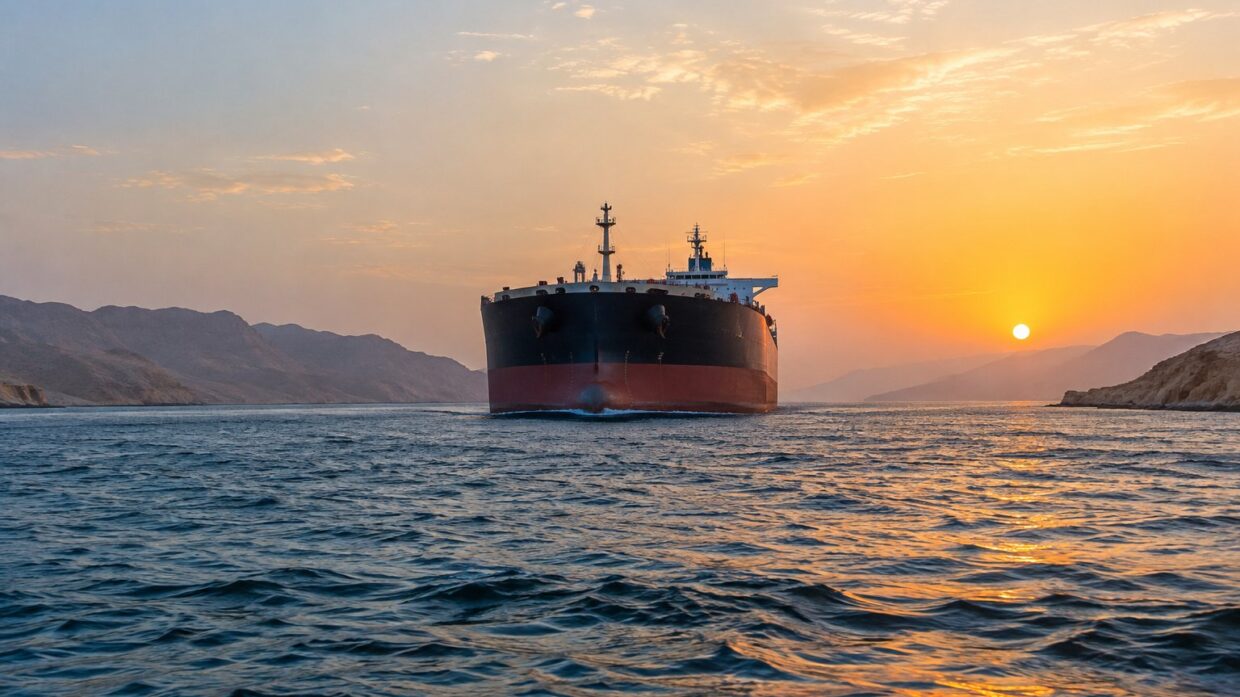
Photo: Well This Is News
We haven't found a left-leaning take on this story yet.
Breaking stories sometimes publish before every side has covered them. We'd rather show you that than invent a view.
We haven't found a right-leaning take on this story yet.
Breaking stories sometimes publish before every side has covered them. We'd rather show you that than invent a view.
Iraq Minister Says US Reached Understanding on Oil Exports via Hormuz, Requests Iran Border Closure
Key Takeaways
- Hussein used deliberately vague language calling them 'understandings' rather than binding agreements, leaving unclear whether Iraq faces enforceable consequences for non-compliance.
- The phrase 'most' Iran border crossings rather than 'all' suggests Iraq negotiated room to keep some crossings open, but reporting never specified which ones or why.
- No reporting explained what triggered this announcement now or whether it reflects a genuine shift in Iraqi policy or a temporary tactical arrangement Iraq plans to implement selectively.
The Analysis
Iraqi Foreign Minister Fuad Hussein announced two coordinated but asymmetrical commitments: the US has agreed to allow Iraq to export oil through the Strait of Hormuz, and Iraq has agreed to shut most of its border crossings with Iran in response to US pressure. The story as reported offers Hussein's public statement but does not disclose the substance of what "understandings" means, what enforcement mechanisms exist, or what triggered the timing of the announcement.
Hussein's language was careful and deliberate. He said Iraq had "reached understandings" with the US, not signed an agreement. He said the US "asked" Iraq to close Iran border crossings, using a term that suggests request rather than demand. This framing matters because it allows Iraq to present itself as a sovereign actor making its own choices rather than complying with US pressure. The public record does not establish whether these understandings are formally binding or what happens if Iraq breaks them.
The oil export carve-out is significant because it directly addresses Iraq's economic interest. Iraq depends heavily on oil revenue, and the Hormuz strait is the critical chokepoint for Middle Eastern energy exports. US assurance that Iraq can export through Hormuz implies either a guarantee of safe passage or an exemption from potential sanctions targeting Iranian oil sales. The reporting does not specify which. What remains undisclosed is whether this understanding extends only to Iraqi crude or includes refined products, and whether it survives if regional tensions escalate.
The Iran border closure request appears to be the US payment for that oil concession. Iraq shares a 1,000-mile border with Iran and operates numerous official and informal crossing points. Most of Iraq's Iran trade flows through these crossings. Closing "most" of them would disrupt significant economic activity and align Iraqi behavior with US sanctions policy on Iran. Hussein's use of the word "most" rather than "all" suggests room for negotiation or selective enforcement, though the reporting does not explore which crossings would remain open or why.
What the coverage does not establish is the broader context that produced this moment. Iraq has navigated between US and Iranian influence for two decades, and its government includes both Shia militias aligned with Iran and ministers closer to the US. Hussein's dual announcement may reflect either a genuine shift in Iraqi policy, a temporary arrangement to secure immediate economic benefit, or a public commitment that Baghdad intends to implement selectively. The available reporting does not distinguish between these possibilities.
The timing also remains unexplained. No reporting indicates what triggered Hussein's announcement now, whether this reflects a new US demand or a long-running negotiation, or whether Iraq initiated the discussion. Without that context, a reader cannot assess whether this represents a shift in Iraq's strategic alignment or a routine diplomatic transaction.
The headline neither side is emphasizing is this: Iraq has leveraged its geopolitical position between two US adversaries to secure economic guarantees while making a public commitment on Iran policy that may be more limited in practice than it appears. The US appears to have obtained a policy shift on Iran at the cost of guaranteeing Iraq's ability to sell oil. Whether that represents US strategic success or Iraq's diplomatic maneuvering depends on whether Iraq follows through.
Iraq's agreement to restrict Iran border crossings in exchange for US protection of its oil exports through the Strait of Hormuz establishes a new enforcement mechanism for US sanctions policy without formal legal binding. By framing this as an "understanding" rather than a treaty, Iraq preserves plausible deniability while the US gains operational control over which crossings remain open and can selectively enforce compliance. If Iraq implements this fully, it fractures the informal economic network sustaining Iranian influence in Iraq and signals that US guarantees on energy exports now outweigh the cost of alienating Tehran-aligned factions within Baghdad's own government. This precedent transforms Iraq from a buffer state into an instrument of US sanctions architecture, with implications for how Washington can leverage energy security promises to reshape alignments throughout the region.