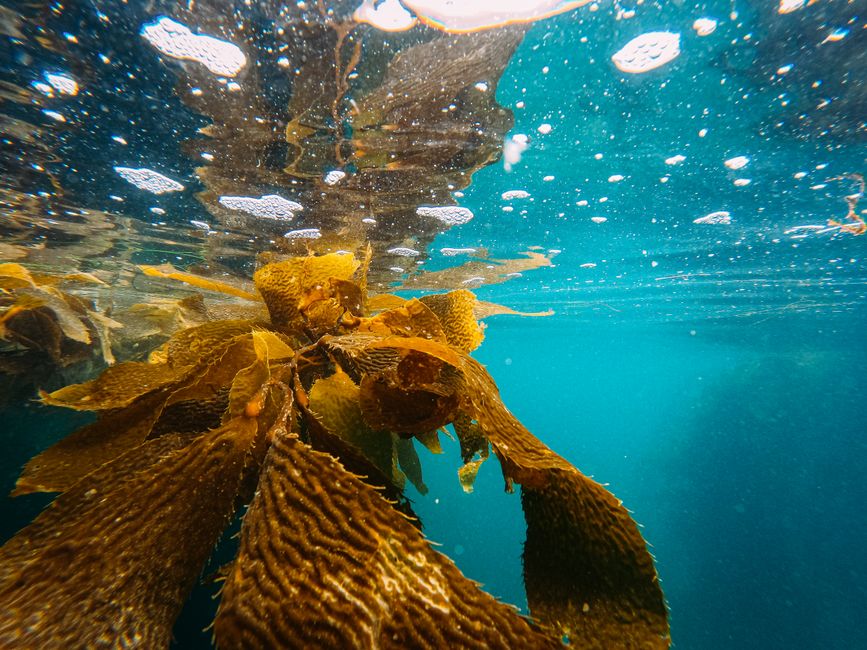
Photo: Kindel Media
Climate crisis reshapes California waters as tropical ecosystems migrate north
We haven't found a right-leaning take on this story yet.
Breaking stories sometimes publish before every side has covered them. We'd rather show you that than invent a view.
Super El Niño warming Pacific, shifting marine ecosystems northward off California
Key Takeaways
- Scientists have not established whether the northward migration of tropical fish into California represents a temporary disruption that will reverse when El Niño ends or a permanent shift in the ocean's thermal structure.
- El Niño itself is a natural climate cycle occurring every 3-7 years, but the sources do not clarify how much of the current warming is attributable to the cycle versus background ocean warming from greenhouse gas accumulation.
- The disruption to California's marine ecosystems is already affecting commercial and recreational fishing communities, but neither major source reports what portion of observed impacts will persist after the super El Niño phase concludes.
The Analysis
A super El Niño developing in the Pacific is warming ocean temperatures significantly and shifting tropical fish species into California waters that have historically remained temperate, disrupting the marine ecosystems that commercial and recreational fishing depends on. The phenomenon is documented to be on track to peak in December 2026 and is already affecting sea surface temperatures and species distribution across the region.
The Atlantic frames this as an ecological transformation driven by climate conditions, using language like "unrecognizable" to describe the shift in marine life composition. This framing emphasizes the magnitude of ecosystem change and connects it to broader climate dynamics, but the reporting leaves unstated how much of this shift is attributable to the El Niño cycle itself, which is a natural oscillation, versus longer-term climate change trends that may be intensifying it. The Atlantic's approach treats the phenomenon as a warning about accelerating environmental disruption without clearly distinguishing between natural variation and anthropogenic forcing.
Carbon Brief reports the same super El Niño using the phrase "simply staggering" to characterize its development and emphasizes its trajectory toward a December 2026 peak that will push global temperatures higher. This framing centers on the temperature impact rather than the biological consequence, and presents the event as a significant warming driver. Carbon Brief's language choices focus on magnitude and speed of development but do not explicitly frame this as evidence of climate change itself, instead treating it as a discrete weather phenomenon with global temperature implications.
What neither source directly addresses is the distinction between El Niño as a recurring natural climate pattern and the question of whether current El Niño events are becoming more frequent or intense due to long-term ocean warming. The Atlantic emphasizes ecological disruption visible off California, but does not establish whether the northward migration of tropical species represents a permanent shift in ocean thermal structure or a temporary displacement that will reverse when the El Niño phase ends. Carbon Brief reports the warming magnitude but does not connect it to the biological consequences already unfolding. The public record these articles provide does not establish whether this El Niño will fundamentally alter California's marine ecosystem baseline or whether historical patterns will reassert once cooler conditions return.
El Niño is a natural oscillation in tropical Pacific sea surface temperatures that occurs roughly every 3-7 years and affects global weather patterns and ocean conditions. The current event's intensity and timing matter for fishing communities, ecosystem services, and agricultural regions dependent on altered precipitation patterns, but the sources available do not establish what portion of the observed warming represents the El Niño cycle itself versus background ocean warming from greenhouse gas accumulation. The real question neither framing addresses is whether the disruption visible off California is temporary or symptomatic of a permanently altered marine baseline.
California's fishing industry faces immediate economic disruption as tropical species replace the cold-water fish stocks that support both commercial operations and recreational activity, but the deeper institutional question remains unresolved: whether this northward shift represents a temporary El Niño-driven displacement that reverses within years or signals a permanent recalibration of the Pacific's thermal structure. Fisheries management along the coast operates on species distribution assumptions built from decades of data, and if the marine baseline has fundamentally changed rather than cyclically shifted, regulatory frameworks for catch limits, protected areas, and stock assessments will require wholesale revision. The fishing communities and seafood markets dependent on predictable species composition cannot wait for clarity on this distinction while their economic models become obsolete.