Photo: Well This Is News
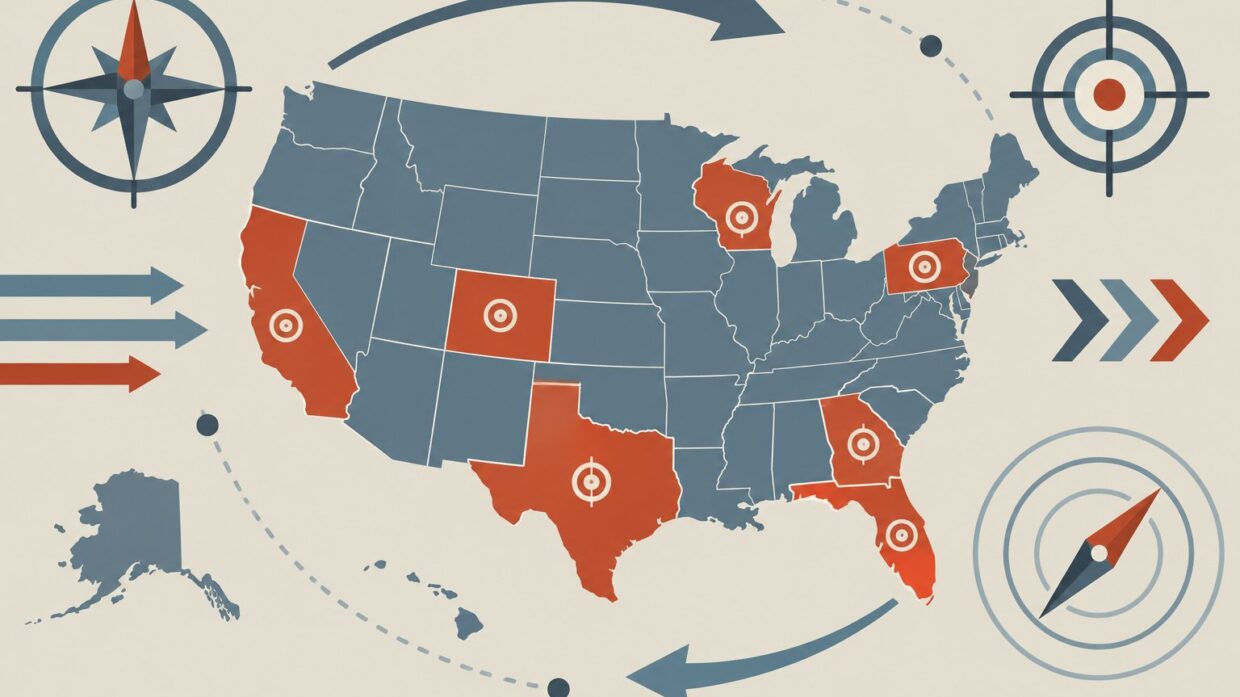
The States Where Democrats Have the Most to Gain
Democrats Run On Trump Hatred Because They Have No Vision For America
We haven't found a neutral take on this story yet.
Breaking stories sometimes publish before every side has covered them. We'd rather show you that than invent a view.
The Analysis
The Democratic Party's state-by-state electoral targeting for 2026 and the internal disagreement about campaign messaging reveal a strategic tension that both left-leaning and right-leaning outlets are covering but emphasizing differently.
The Atlantic's framing centers on tactical opportunity. The piece identifies specific states where Democrats believe they can gain seats and describes this targeting as the party attempting to "take maximum advantage of the moment." This language presumes conditions exist now that Democrats should exploit, and the coverage appears to treat state-level targeting as straightforward campaign competence. The reporting does not foreground what has changed to create these opportunities, nor does it examine whether the gains being projected represent restoration of previous Democratic strength or new territory.
The Federalist's framing pivots to a different claim: that Democratic gains in these states, if achieved, would rest on anti-Trump sentiment rather than on affirmative policy vision. The phrase "Democrats run on Trump hatred" is the outlet's characterization of the party's strategic choice. What this framing emphasizes is that opposition messaging alone leaves unaddressed what The Federalist identifies as "their own crisis of national identity." The right-leaning analysis treats the absence of stated positive vision as a structural weakness that electoral geography cannot remedy.
What both framings leave undisclosed is the specific content of Democratic messaging in these targeted states. The Atlantic does not name the policy proposals Democrats are emphasizing. The Federalist asserts the absence of affirmative vision but does not cite what Democratic candidates in these states are actually saying to voters. Neither outlet provides the actual language from campaign materials, candidate statements, or party communications that would allow readers to evaluate whether the charge of Trump-focused messaging is accurate or overstated.
A fuller picture requires examining what Democrats are communicating beyond whether the framing is anti-Trump or not. Campaign messaging typically includes positions on specific issues: healthcare, inflation, immigration, or abortion access. The reporting does not establish whether Democratic candidates in these targeted states are leading with these issues or leading with opposition to Trump. That distinction matters for evaluating The Federalist's claim about the absence of vision. It is possible Democrats are running on substantive issues in certain states while also criticizing Trump, or vice versa. The available coverage does not disclose this level of detail.
The implicit assumption in both pieces is that state-by-state opportunity exists and is measurable. The Atlantic treats it as given. The Federalist accepts the premise but questions whether Democratic gains would be durable without stronger ideological moorings. Neither outlet provides the polling data, demographic shifts, or specific seat-by-seat analysis that would substantiate where Democrats actually perceive opportunity. The reader learns that Democrats are targeting states strategically but not which states or by what metrics they determined opportunity exists.
The underlying question both pieces gesture toward but do not directly address is whether Democratic electoral strategy reflects response to actual voter demand for change or whether it reflects party leadership's assessment of where incumbency is vulnerable. That distinction shapes what the midterms will reveal about voter preference.
Democratic targeting of specific states for 2026 gains will either validate or undermine the party's theory about what voters actually want. If Democrats gain seats primarily in states where they're running on substantive policy positions like healthcare or abortion access, it suggests voter demand for an affirmative agenda. If gains occur only in states where anti-Trump messaging dominates, it indicates the party is capitalizing on opposition sentiment without building lasting coalitions around concrete governing proposals. The outcome will determine whether Democratic strength in these states becomes structural or remains dependent on Trump remaining a polarizing figure. That difference will shape whether Democrats can sustain gains beyond 2026 or face immediate collapse if political conditions shift.