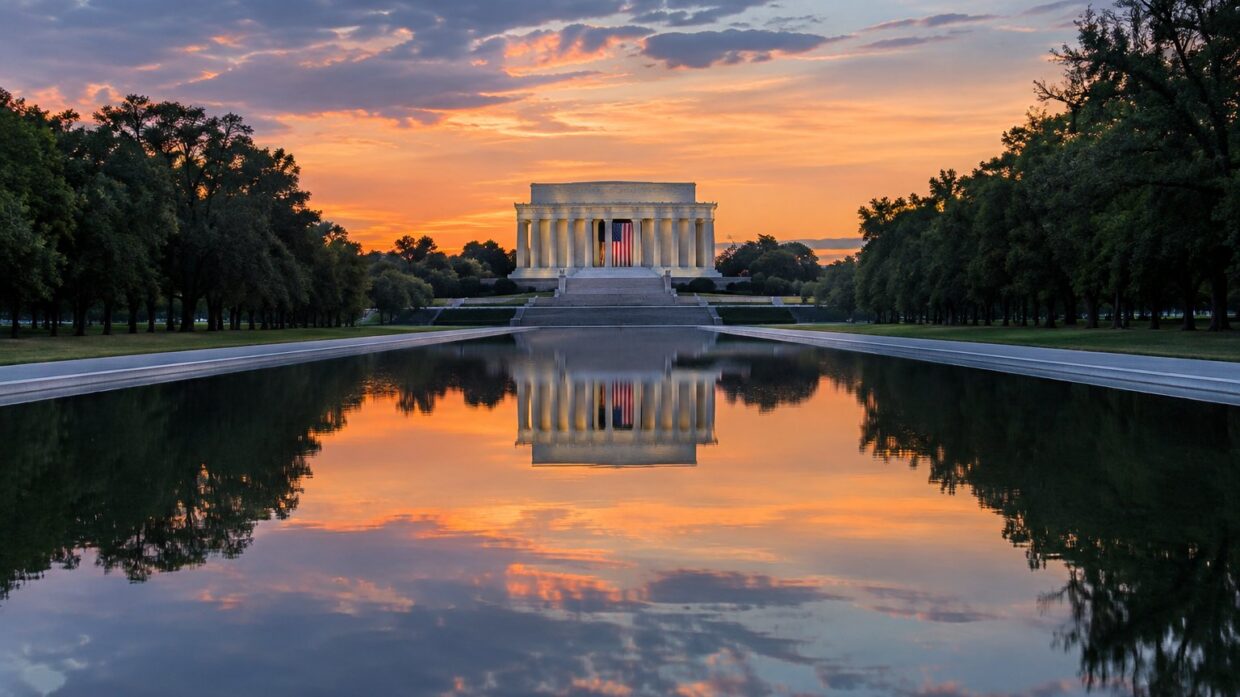
Photo: Well This Is News
Trump Concedes Midterm Headwinds While Pivoting to DC Beautification Project
We haven't found a right-leaning take on this story yet.
Breaking stories sometimes publish before every side has covered them. We'd rather show you that than invent a view.
Trump Uses Reflecting Pool Reopening as Final Election-Eve Pitch
Key Takeaways
- Trump's acknowledgment of historical midterm losses could have been either strategic expectation-setting to credit Republicans for outperforming or simple candid reflection, but available reporting does not establish which.
- No coverage explains whether the Reflecting Pool venue was already scheduled, recommended by advisors, or chosen by Trump for specific strategic reasons.
- Trump's final pre-election messaging approach was unusual compared to typical sitting presidents, but reporting did not compare his statements to how other presidents handled similar moments.
The Analysis
Trump held a speech at the Lincoln Memorial Reflecting Pool on the eve of the midterm elections, making specific claims about both the political moment and the renovation itself. The event framed the choice between campaigning in competitive districts and using final messaging to shape narrative around expected outcomes.
The documented facts: Trump said Republicans "gave this a very strong shot" while explicitly acknowledging that historically, "the president's party doesn't win the midterms." NBC News reported this language directly. The reflecting pool had been under renovation for months and faced documented delays and cost overruns before the event. Trump used the platform to highlight administration beautification projects rather than make a closing campaign argument focused on specific races or policy contrasts with Democrats.
NBC's framing emphasizes that Trump "sets the stage for potential Republican losses" by acknowledging historical midterm patterns. This language choice suggests NBC is interpreting the acknowledgment as strategic lowering of expectations, which may explain why a sitting president would discuss headwinds in his closing argument. The frame leaves out what Trump may have been attempting: using historical context to later credit Republicans for performing better than the baseline pattern.
PBS reports the event as a choice between two uses of Trump's final pre-election day. The language is stark: "Rather than using Monday to travel to key states and try to energize his supporters," Trump chose a "renovation project that has been embarrassing and contentious." This frame emphasizes opportunity cost, not just the renovation's troubled history. It also names the project as embarrassing, using descriptive language that goes beyond documenting delays. PBS does not establish what Trump's internal calculation was, only that the choice diverged from standard campaign strategy.
What the coverage leaves out is significant. None of the reporting establishes whether the Reflecting Pool event had strategic function beyond literal infrastructure announcement. The available reporting does not explain whether Trump was deliberately depressing expectations to set up a positive narrative if Republicans performed better than historical precedent, or whether he was simply acknowledging historical reality without strategic calculation. The record does not establish whether campaign advisors opposed the venue choice or supported it.
Second, the reporting does not contextualize how Trump's reflection on midterm headwinds compared to what other sitting presidents had said in their final pre-election messaging. Were Trump's comments unusual candor, standard acknowledgment, or strategic framing that other presidents had also employed?
Third, the coverage treats the Reflecting Pool project as background detail rather than central to understanding why Trump chose it. The reporting establishes that it had been problematic but does not explain whether Trump saw the reopening as a genuine accomplishment worth featuring, whether advisors recommended it for political positioning, or whether the venue was already scheduled before final campaign decisions were made.
The most accurate headline for this story is that Trump used his final pre-election message to highlight a completed Washington infrastructure project while explicitly acknowledging historical patterns that typically disadvantage the sitting president's party in midterms. That framing captures both what he said and what venue he chose to say it from, without assigning motive to either decision.
Trump's final midterm message from the Reflecting Pool created a strategic vulnerability that shaped Republican expectations heading into Election Day. By explicitly acknowledging that sitting presidents' parties historically lose midterm elections, Trump lowered the baseline against which Republican performance would be measured. This rhetorical move served two functions: it provided cover for potential losses while simultaneously allowing Republicans to claim victory if they exceeded the historical pattern of midterm erosion. The venue choice, highlighting a completed infrastructure project rather than campaigning in competitive districts, signaled confidence in the outcome or resignation to it. Either interpretation undermined the traditional closing argument that campaigns mount in final hours, when energy and resource allocation toward winnable races determine margins and seat totals. The precedent this set for how sitting presidents frame electoral vulnerability affects how future administrations will calibrate their own pre-election messaging and whether acknowledging historical headwinds becomes standard practice or remains unusual candor.