Photo: Well This Is News
Private jet carrying nine crashes in cataclysmic fireball in South Florida
Jet explodes in massive fireball in terrifying crash near Mar-a-Lago
Nine killed in Learjet crash near West Palm Beach; NTSB investigating
Key Takeaways
- The NTSB investigation into the crash has not yet determined whether weather, mechanical failure, pilot error, or another factor caused the aircraft to nose-dive.
- News outlets framed the crash's location using Mar-a-Lago as a geographic reference point, but it is unclear whether this reference originated from official statements or represents a framing choice by media organizations.
- The crash sequence is documented, nose-dive, impact with trees and power lines, fireball, but the reason the aircraft entered the nose-dive in the first place remains unknown and will require weeks or months of NTSB investigation to establish.
The Analysis
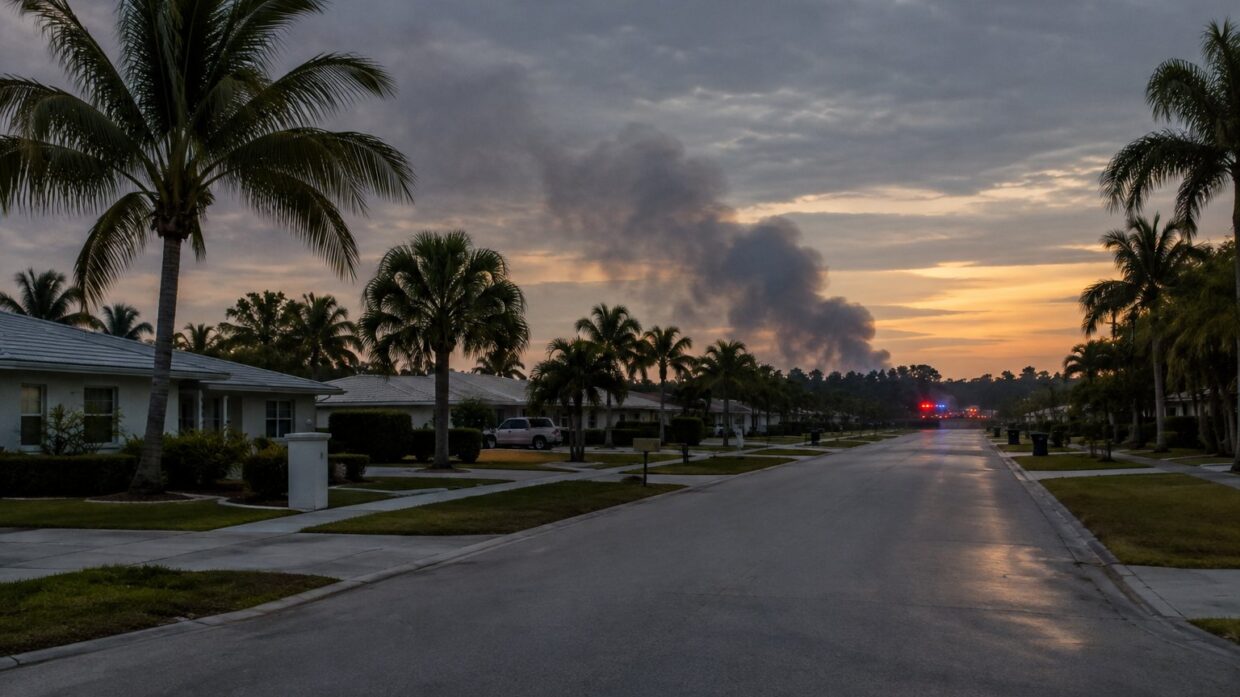
A Learjet 60 crashed in South Florida on Sunday afternoon, killing all nine people aboard. The aircraft nose-dived into a residential neighborhood near West Palm Beach around 1:00 p.m. ET, struck power lines and trees, and erupted into a fireball that appeared to narrowly miss nearby homes before impacting near a busy roadway. U.S. Transportation Secretary Sean Duffy confirmed the fatalities. The National Transportation Safety Board opened an investigation into the cause, which remains undisclosed.
NBC News frames the crash using the word "cataclysmic" in its opening, emphasizing the force and scale of impact. This language appears in the NBC headline and reporting but is not attributed to officials in the available coverage. The framing foregrounds the magnitude of destruction without emphasizing location specifics or the proximity to populated areas.
The Daily Wire and Washington Examiner both highlight the crash's proximity to Mar-a-Lago, mentioning the mobile home park and busy roadway nearby. The Daily Wire specifies the aircraft's value ($2 million), the impact sequence (trees, power lines, then ground), and the time of impact. This reporting emphasizes near-misses to structures and population centers, creating a narrative of fortunate avoidance alongside loss of life.
What neither framing adequately addresses is that the investigation into cause has not concluded. The NTSB typically requires weeks or months to establish what happened, including examination of maintenance records, weather data, pilot communications, and structural analysis. The available reporting does not establish whether weather, mechanical failure, pilot error, or another factor caused the nose-dive. NBC's use of "cataclysmic" describes the impact but not its cause. The Daily Wire's detail about the sequence of ground strikes describes what happened last, not why the descent occurred.
The geographic framing also obscures what remains unclear. Both right-leaning outlets name Mar-a-Lago as the reference point, which is geographically accurate but introduces a political element to what is currently an aviation safety matter. The Washington Examiner version from the AP wire does not emphasize the Mar-a-Lago reference in its opening, instead focusing on the neighborhood impact sequence. The available coverage does not establish whether the Mar-a-Lago reference appears in official statements or is a framing choice by news organizations.
What the record establishes: nine people died in a crash that involved a nose-dive, impact with infrastructure, and a fireball in a residential area. What it does not establish: why the aircraft descended nose-first, whether mechanical or operational factors contributed, whether weather played a role, or the identities and backgrounds of those aboard. The NTSB's preliminary findings typically become public within days; full investigation results may take months. Until that evidence emerges, the cause remains officially unknown, making explanatory framings premature.
Aviation crashes in populated areas trigger regulatory scrutiny of fleet maintenance standards and pilot certification protocols, particularly when involving business jets operating under less stringent rules than commercial carriers. The Learjet 60 fleet has experienced previous incidents, and NTSB findings from this investigation will likely inform whether the FAA should impose additional inspection requirements or operational restrictions on similar aircraft. Preliminary investigation results typically arrive within days, potentially exposing systemic issues that affect dozens of operating Learjets across the country. This crash's proximity to residential neighborhoods also pressures local zoning authorities to review whether current flight corridors near populated areas require rerouting or altitude restrictions. Until mechanical cause is established, describing impact severity without addressing causation leaves regulatory agencies and aircraft operators without the specific failures needed to prevent similar incidents.