Photo: Well This Is News
She Called Me Crying: Inside the Spirit Halloween Store Shooting
Gun Control Fail: Seven Shot at California Halloween Store
We haven't found a neutral take on this story yet.
Breaking stories sometimes publish before every side has covered them. We'd rather show you that than invent a view.
The Analysis
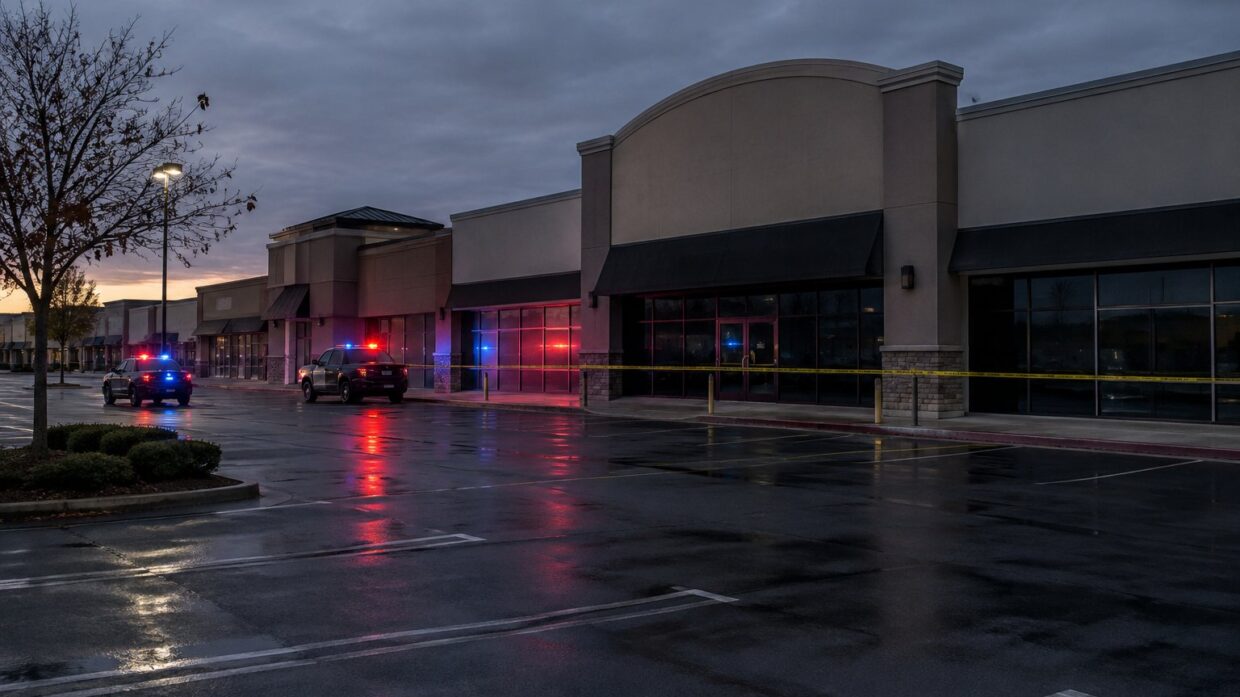
A shooting at a Spirit Halloween store in Fairfield, California on Friday night killed one person and wounded six others, with police still searching for the suspect as of publication. The basic facts are verified: the incident occurred around 8:30 p.m. at Solano Town Center, seven people were struck by gunfire, and one victim died. What divides the coverage is not the facts but the frame each outlet selected to emphasize.
NBC's framing centers on the immediate human experience. The headline leads with a husband's description of a phone call from his wife trapped inside the store, positioning the story as a personal tragedy witnessed in real time. This approach foregrounds visceral emotional detail: the fear of someone calling for help, the helplessness of someone listening from outside. The story's emotional weight is its primary editorial choice. What this framing does not foreground is any analysis of how such incidents occur, what enabled this particular shooting, or what policy considerations follow from it.
Breitbart's framing is explicitly political. The headline describes the shooting as a "gun control fail" and leads with California's status as a state with strict gun regulations. The phrase "gun control fail" is not a descriptive label but a causal claim: that gun control policies failed to prevent this incident. By naming California's regulatory environment in the opening, Breitbart positions this story as evidence that existing restrictions do not work. The reporting does not establish what regulations existed, were violated, or proved ineffective, but the frame presumes that question is answered.
What neither framing addresses is the suspect. As of the available reporting, police have not publicly identified the shooter, released information about motive, or confirmed whether the suspect obtained weapons legally or illegally. Without that information, claims about whether gun control succeeded or failed rest on incomplete data. A complete reading requires knowing whether the suspect was prohibited from possessing firearms under existing law, whether he obtained weapons through legal channels that regulations permit, or whether he circumvented legal channels altogether. The public record does not yet establish those details.
California law requires background checks for all firearm purchases, universal registration, and a 10-day waiting period. Whether this shooter complied with, evaded, or was exempt from those requirements remains unknown. The left frame omits policy discussion entirely, treating the shooting as a moral rather than a systemic question. The right frame assumes policy failure without establishing what specifically failed or how. Both frames leave readers without the information necessary to actually evaluate whether existing regulations functioned as designed.
The underlying question neither side is pressing is whether information about the suspect exists but has not yet been released, and whether that timeline matters to understanding how this incident relates to gun policy at all. Until the shooter is identified and the circumstances of weapon acquisition are established, both "this proves gun control works" and "this proves gun control fails" are interpretations unsupported by the available facts.
California's strict firearm regulations have not prevented mass shootings within its borders, yet the absence of the suspect's identity and weapon acquisition details makes claims of policy failure premature. Until police establish whether the shooter obtained firearms legally under existing background check and registration requirements, or circumvented them entirely, neither advocates celebrating regulatory success nor critics declaring regulatory failure have a factual foundation. The real institutional failure is the information gap itself. Law enforcement agencies routinely withhold suspect details during manhunts, but this delay leaves the public unable to assess whether existing California law functioned as designed. Future mass shooting analysis depends on establishing whether gaps exist in enforcement, regulation, or both, information that should accompany public pleas for suspect identification rather than follow weeks later in court documents.