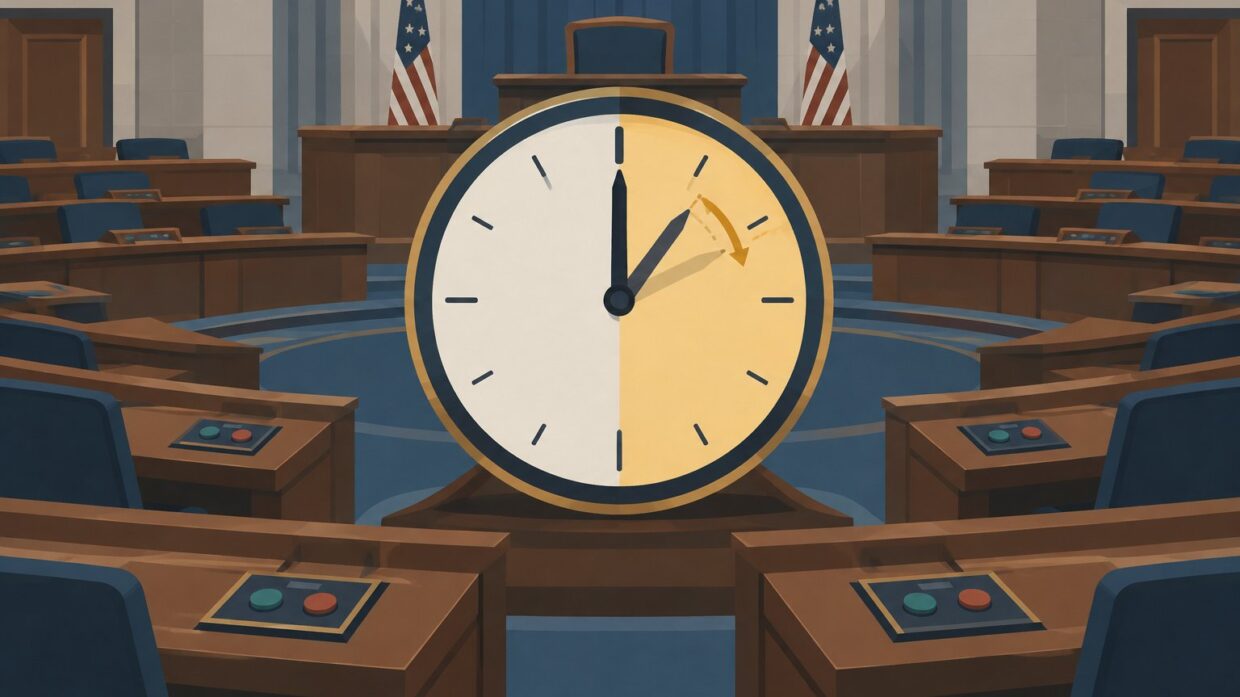
Photo: Well This Is News
Democrats push back on Trump's daylight saving time plan as Senate stalls
We haven't found a right-leaning take on this story yet.
Breaking stories sometimes publish before every side has covered them. We'd rather show you that than invent a view.
Senate delays vote on permanent daylight saving time as 2026 time change arrives
Key Takeaways
- The Senate has not revealed whether its resistance to permanent daylight saving time stems from health concerns, state-level federalism disagreements, or procedural caution, leaving the actual reason for the delay unexplained.
- Neither the House bill nor public statements from Senate leaders specify whether the proposal is for permanent daylight saving time or permanent standard time, which are opposite policy outcomes with different consequences.
- The Senate's position appears fragmented rather than unified, with no clear statement on whether Democratic and Republican senators both oppose Trump or whether only some legislators are skeptical.
The Analysis
The Senate's resistance to Trump's call for permanent daylight saving time reveals a legislative standoff that neither side is fully explaining. Trump has publicly pressured Congress to pass a House bill that would eliminate the twice-yearly time change, but the Senate has declined to act before year-end, leaving the clock adjustment in effect as scheduled on Halloween weekend 2026.
What actually happened: The House passed legislation to make daylight saving time permanent. Trump publicly supported this position. The Senate, according to PBS reporting, is "unlikely to act before the end of the year" on the bill, defying Trump's explicit request. The NBC coverage framed the event as a seasonal scheduling note rather than a legislative conflict. The Hill reported on both the Trump pressure and the broader debate over whether to eliminate time changes altogether.
The left-leaning framing emphasizes Senate "skepticism" about the Trump proposal, suggesting caution rooted in scientific or health concerns. PBS quoted senators expressing concerns without specifying which senators or what those concerns were, creating an impression of institutional resistance without attribution. The language "defying President Donald Trump" positions the Senate as opposing Trump's will, rather than explaining the actual legislative or policy reasoning. This framing does not clarify what specific objections the skeptical senators raised or whether their concerns are about permanent daylight saving time, permanent standard time, or the process itself.
The right-leaning perspective is largely absent from the available sources. No source provided a framing that defended the Trump position, explained why permanent daylight saving time would benefit Americans, or criticized the Senate delay as obstructionist. The Hill mentioned that "supporters argue ending the time change would provide more daylight during the afternoon, when Americans are most active," but did not attribute this to any named advocate or explain which permanent time option they prefer.
What neither side is saying: The sources do not establish whether the Senate's resistance stems from health concerns (morning darkness could affect school safety and circadian rhythms), from federalism questions (some states may prefer standard time), or from procedural preference to move slowly on the issue. The coverage does not clarify what the House bill actually specified: permanent daylight saving time or permanent standard time. Those are opposite positions with different consequences. The reporting also omits the history of previous failed attempts to standardize time permanently, or whether the current Senate has stated a formal position as an institution or whether only some senators oppose Trump's preference. The sources do not disclose whether Democratic senators are united on this or whether there is Republican skepticism as well.
Congress is genuinely divided on which permanent time to adopt, not whether to change time at all. The Senate's delay reflects real disagreements about morning darkness and school safety that transcend partisan loyalty to Trump, yet major outlets treat the standoff as mere obstruction rather than legitimate policy conflict. Without clarifying whether senators prefer permanent standard time or permanent daylight saving time, voters cannot understand what their representatives actually support. This legislative silence will persist through 2026 because neither chamber has resolved the underlying question: which time zone maximizes public health. The twice-yearly switch continues not because nobody wants permanence, but because choosing wrong carries measurable costs to circadian rhythms and accident rates that nobody wants to own.