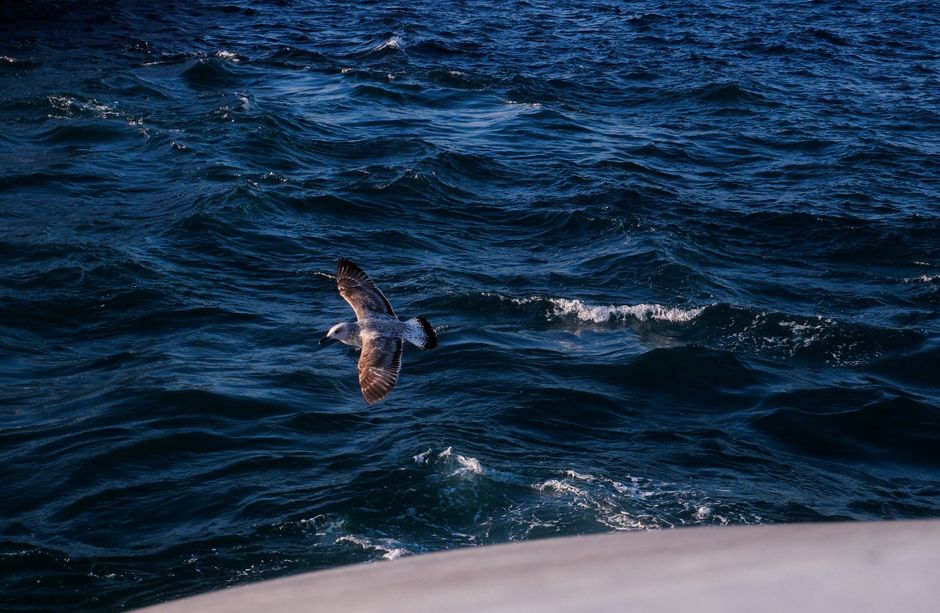
Photo: أولو الألباب
Even birds get jet lagged, study shows
We haven't found a right-leaning take on this story yet.
Breaking stories sometimes publish before every side has covered them. We'd rather show you that than invent a view.
Oxford study finds Manx shearwaters become disoriented when body clocks desynchronize from local time
Key Takeaways
- The study documents a mechanism but does not establish whether circadian lag actually impairs wild seabirds during their natural migration patterns or if they have evolved countermeasures.
- Migratory animals may already possess neurological or behavioral strategies to compensate for time zone shifts, but the reporting does not explore whether Manx shearwaters use such adaptations.
- The ecological significance of the navigation errors remains unclear because the study does not specify how often birds naturally encounter conditions severe enough to trigger circadian desynchronization.
The Analysis
An Oxford study tracking Manx shearwaters has documented that the seabirds can be thrown hundreds of miles off course when their circadian rhythms desynchronize from local time, a phenomenon researchers are characterizing as a form of jet lag in animals. The findings are based on tracking data collected from birds returning to their nests after foraging trips across multiple time zones.
The study itself presents a straightforward biological mechanism: when an animal's internal body clock becomes misaligned with external environmental cues, its navigation systems suffer measurable degradation. The Manx shearwater is a relevant test case because the species undertakes long transoceanic flights and maintains precise homing behavior. Researchers observed that birds exhibited directional errors correlating with the degree of circadian desynchronization, suggesting the internal clock plays an active role in spatial orientation, not merely in sleep-wake cycles.
The left framing, as presented by NPR, emphasizes the analogy to human jet lag and frames this as evidence of a shared biological constraint: "Even birds get jet lagged." The headline construction draws a parallel designed to make the animal behavior immediately relatable. This framing leaves out the mechanistic specificity of what the study actually measured. It does not establish whether birds experience subjective disorientation as humans do, nor does it address whether seabirds have evolved countermeasures to this problem during their natural migration patterns. The emphasis on analogy to human experience also downplays that the navigation errors documented may have been acute laboratory or observation artifacts rather than persistent problems in the birds' ecological context. What remains unstated is whether wild populations have already adapted to minimize these effects over evolutionary timescales.
No right-leaning source has materially engaged with this story in the provided materials, so no right-side framing can be reliably characterized.
What the coverage does not adequately foreground is the distinction between laboratory-induced or artificially observed circadian desynchronization and the navigational challenges birds face during natural migration. The study is presented as revealing a constraint, but the available reporting does not establish how significant this constraint is in the birds' actual behavior. Do Manx shearwaters naturally encounter conditions that create severe circadian lag during their normal foraging cycles? The study appears to isolate a mechanism, but the ecological relevance remains undisclosed. Additionally, the reporting does not engage with existing research on how migratory animals compensate for time zone shifts, or whether certain species have neurological or behavioral strategies to minimize these effects. The story frames jet lag as a universal problem made newly visible, but obscures the question of whether it is actually a problem these birds face in practice.
The actual headline should reflect what the study measured rather than what it implies: Oxford researchers found that Manx shearwaters exhibit directional errors when their circadian rhythms desynchronize from local time, but the ecological significance and frequency of this problem in natural conditions remain unclear.
Migratory bird navigation depends on circadian timing, and this Oxford study identifies a specific mechanism linking internal desynchronization to directional error. If wild Manx shearwaters routinely encounter conditions that degrade circadian alignment during natural migration cycles, then conservation strategies for managing habitat fragmentation and light pollution become more urgent. The research could reshape how researchers model population-level impacts of rapid environmental change on species that depend on precise navigation across vast distances. However, the reporting obscures whether this constraint actually manifests as a survival problem in nature or remains a laboratory phenomenon, leaving policymakers without clarity on whether this biological vulnerability requires intervention or represents a solved problem evolution has already addressed in wild populations.