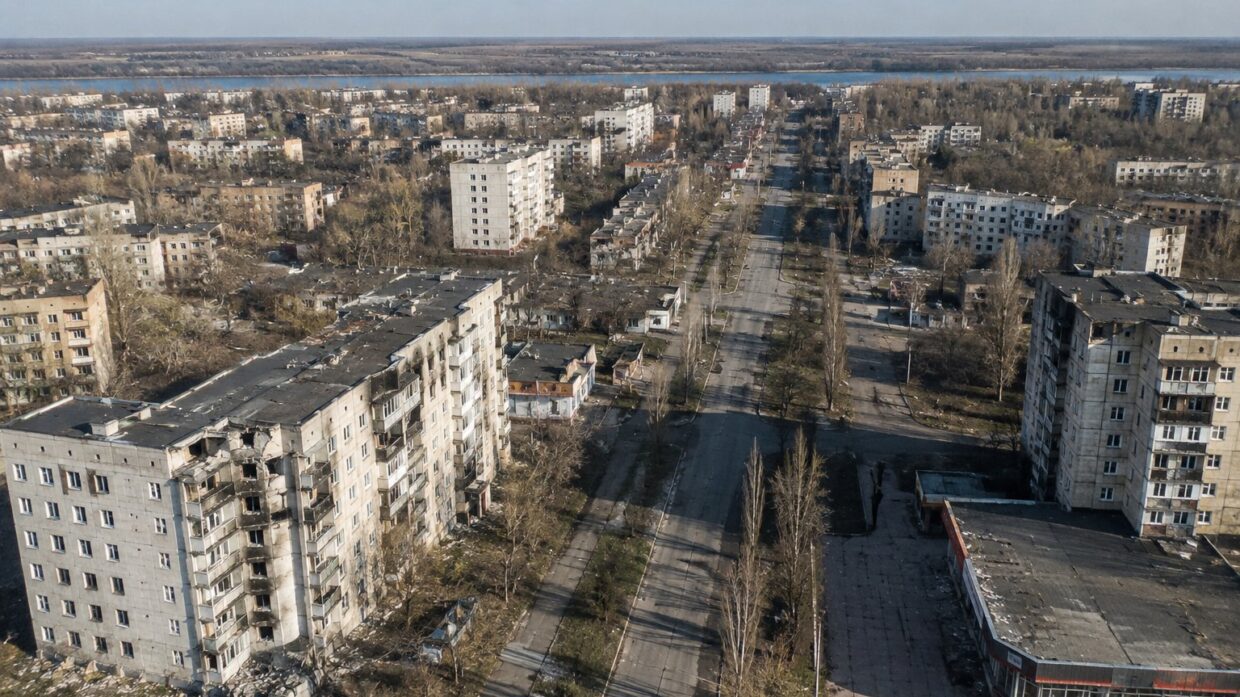
Photo: Well This Is News
Oleshky truce appears to hold as two European leaders have 'frank' call with Putin
Localised Ukraine Ceasefire Brokered by Melania Trump Begins in Russian-Invaded City
We haven't found a neutral take on this story yet.
Breaking stories sometimes publish before every side has covered them. We'd rather show you that than invent a view.
The Analysis
A localized ceasefire in Oleshky, a Russian-occupied southern Ukrainian city, began Tuesday with both sides reportedly halting drone operations, but the framing of who brokered the pause and what it represents diverges sharply between outlets reporting the same event.
The Guardian attributes the ceasefire arrangement to diplomatic talks between European leaders and Putin, using the word 'frank' to describe the nature of those conversations. The outlet emphasizes that this represents the first quiet period in years on that frontline and contextualizes the pause as preceding an evacuation operation. Breitbart credits Melania Trump as the broker of the ceasefire and frames it explicitly as a humanitarian relief mission initiated by the White House. Both accounts confirm the same basic fact: drone attacks ceased on Tuesday. Both confirm an operation is planned. But they attribute the ceasefire's origin to different actors operating through different channels.
The Guardian's framing leaves out attribution to any U.S. figure or official. The word 'frank' suggests serious, candid negotiation but does not establish whether those talks were conducted by elected officials, diplomats, or private channels. The outlet foregrounds European agency and direct Putin engagement. This emphasis suits a narrative in which traditional diplomatic channels and established allies (European governments) negotiate directly with adversaries, the familiar Cold War model. It omits any role for the Trump family or U.S. executive branch actors.
Breitbart's framing assigns credit to Melania Trump and attributes the arrangement to White House initiative. The outlet does not cite direct sourcing for Trump's specific role but grounds its claim in White House statements. This framing emphasizes U.S. executive action outside traditional State Department diplomacy and aligns with a narrative of unconventional problem-solving by the Trump administration. The outlet does not foreground or explain how European leaders fit into the arrangement, if they do at all.
What neither account adequately establishes is the chain of communication that produced the ceasefire. Did European leaders negotiate with Putin and inform Washington? Did the Trump administration negotiate independently and coordinate with European governments? Did multiple channels operate simultaneously? The Guardian's language about European leaders having a call with Putin does not clarify whether Trump administration officials participated. Breitbart's attribution to Melania Trump via White House statement does not establish whether that statement actually describes her direct involvement or whether it assigns credit to her office retroactively. The public record does not disclose the specific sequence of diplomatic contacts or who proposed the ceasefire to whom.
What both sides leave unexamined is the durability of this ceasefire and the underlying terms. A localized pause in drone attacks differs substantially from a negotiated cessation of hostilities with defined timeframes and enforcement mechanisms. The available reporting does not establish what happens when this operation concludes, whether both sides committed to specific duration, or what enforcement exists if one side resumes attacks. Neither outlet addresses whether this ceasefire reflects a broader shift in negotiating posture or remains tactical and temporary.
The most significant omission across both frames is the absence of Ukrainian government voice or position on the ceasefire's origins and terms. If European leaders negotiated with Putin, did they do so with Kyiv's consent? If the Trump administration brokered it, how did Ukrainian officials respond? The ceasefire involves Ukrainian territory and Ukrainian forces, yet neither account centers Ukrainian agency in describing how this arrangement came into being.
Ceasefire arrangements brokered outside transparent diplomatic channels risk creating parallel agreements that contradict each other or bind different parties to incompatible terms. If European leaders negotiated one set of conditions with Moscow while the Trump administration negotiated separate terms, Ukrainian forces could face conflicting orders about when to resume operations, creating tactical chaos on the ground. The absence of Ukrainian government confirmation in either account suggests this pause may represent a fait accompli imposed on Kyiv rather than a negotiated agreement it endorsed, establishing a precedent where major powers negotiate territorial truces without the nation controlling that territory. This fractures the unified Western diplomatic front Ukraine depends on and invites future negotiations where multiple actors claim credit for ceasefires while withholding full disclosure of their terms.