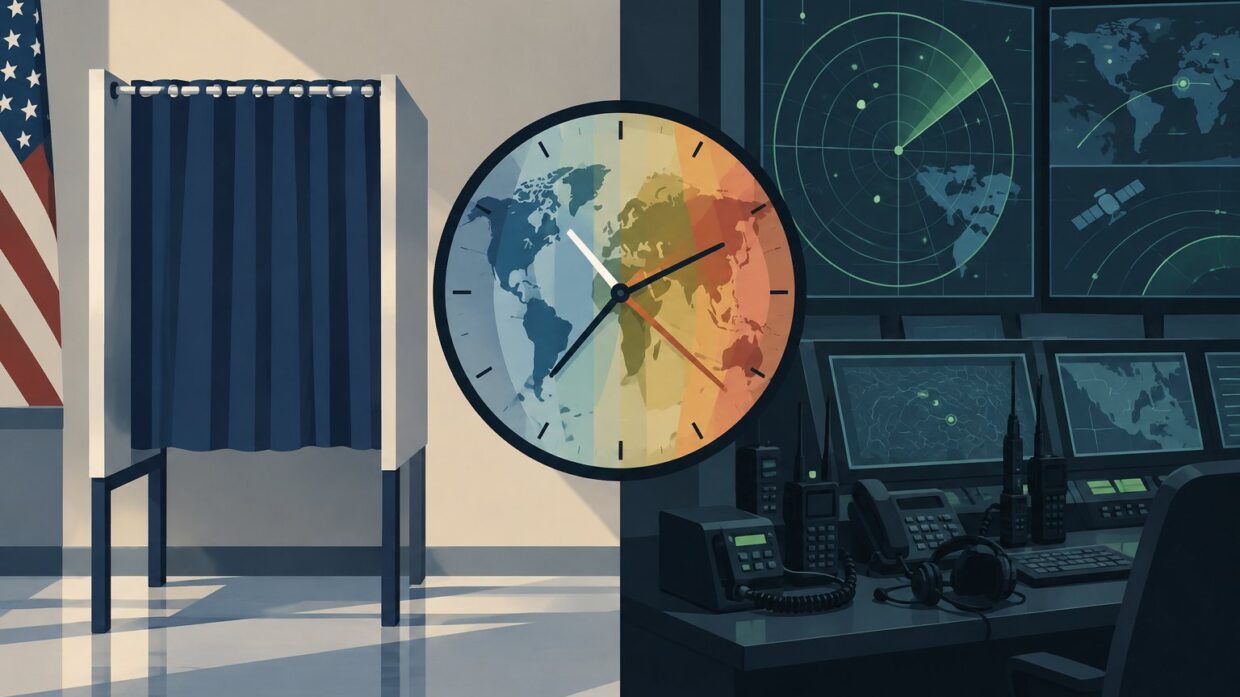
Photo: Well This Is News
Democracy at risk as Netanyahu, Trump weigh war during election season
Iranian threats intensify as US and Israeli leadership faces electoral uncertainty
Election cycles in US and Israel raise questions about Iran military operations timing
Key Takeaways
- The reporting establishes that electoral cycles create decision points about Iran military action but does not prove whether elections are the primary driver of timing or one factor among many competing pressures.
- Neither Iran's public statements nor declassified intelligence assessments are cited to confirm that Iranian military decisions are actually anchored to American or Israeli election schedules, leaving the core claim about adversary timing unverified.
- The coverage raises whether premature action, delayed action, or poorly-timed action is the actual concern, without establishing what specific strategic plans or military scenarios are being shaped by electoral considerations versus regional conditions.
The Analysis
Three Bloomberg discussions about the same subject tell strikingly different stories about what is actually at stake, and what remains undisclosed, in the relationship between electoral cycles and military decisions in the Middle East.
Here is what the reporting establishes: Former US Ambassador to Israel Daniel Shapiro has raised concerns that renewed military operations against Iran could deepen regional and global economic strain. Former Israeli Prime Minister Ehud Olmert argues that Israel needs a change in approach to both the Iran war and settler violence in the West Bank. Bloomberg Economics Defense Lead Becca Wasser and Middle East correspondent Dan Williams have flagged the possibility of renewed US strikes after the midterms. The timeline is specific: simultaneous electoral cycles in the US and Israel create decision points about military action.
The left frame emphasizes democratic vulnerability and the erosion of institutional guardrails. Olmert's invocation of the need for changed approaches in Israel signals that the current security strategy is being shaped by something other than military necessity alone. The framing here treats electoral pressure as a distortion of rational policy. What this perspective underplays is whether the Iranian threat is also real and ongoing, independent of electoral timing. The reporting does not establish whether Iranian military preparations or provocations have accelerated alongside these elections, or whether they remain constant. An honest version of this frame would acknowledge that both electoral pressure and genuine threat could be operating simultaneously.
The right frame emphasizes Iranian strategy and the exploitation of American and Israeli electoral vulnerability. By laying out the possibility of renewed strikes after US midterms, the reporting suggests that Iranian actors are aware of, and may be timing their provocations around, American political cycles. What this perspective leaves unexamined is the specific evidence of Iranian timing calculations. The reporting does not establish that Iran has publicly stated it is waiting for elections to pass, or that intelligence assessments confirm Iranian decision-making is anchored to electoral calendars. The frame also does not address whether a different US or Israeli government would necessarily make different military choices about Iran, or whether the threat itself creates imperatives independent of who holds power.
What neither side captures is the structural question: How should democracies making security decisions distinguish between electoral pressure and genuine threat? The reporting does not establish whether the concern is that elections will produce premature military action, delayed action, or simply action timed poorly relative to regional conditions that have no respect for electoral calendars. It does not name the specific strategic planning documents, intelligence assessments, or military scenarios that are allegedly being shaped by electoral timing. The available coverage treats electoral cycles as a complicating variable without establishing whether they are the primary driver of decisions or one factor among several.
The real issue is that voters in both countries may be choosing leaders partly on national security grounds, while those same electoral cycles create conditions that constrain or accelerate the very military decisions those voters care about. Neither framing addresses what accountability looks like when security decisions are made in the shadow of elections, or what the public record should disclose about the relationship between electoral timing and military planning. The reporting raises the question without resolving what evidence would be needed to answer it.
Israel and the US face a structural accountability crisis that electoral cycles have exposed but not created. When voters choose leaders partly on security grounds, those same elections become variables in military planning, creating a feedback loop where democratic choice shapes the conditions for the very decisions voters believed they were electing people to make independently. The reporting establishes that simultaneous electoral windows exist and that military options remain on the table, but it does not demand the specific evidence needed to answer whether elections are distorting threat assessment or whether genuine Iranian capabilities are simply coinciding with political calendars. What remains undisclosed is whether either government has produced strategic documents acknowledging electoral timing as a constraint on military decision-making, and what mechanisms exist to insulate threat assessment from political pressure. Without public standards for distinguishing electoral pressure from military necessity, both democracies risk either premature action justified by phony urgency or constrained response to real threats, each scenario equally damaging to institutional credibility. The gap between