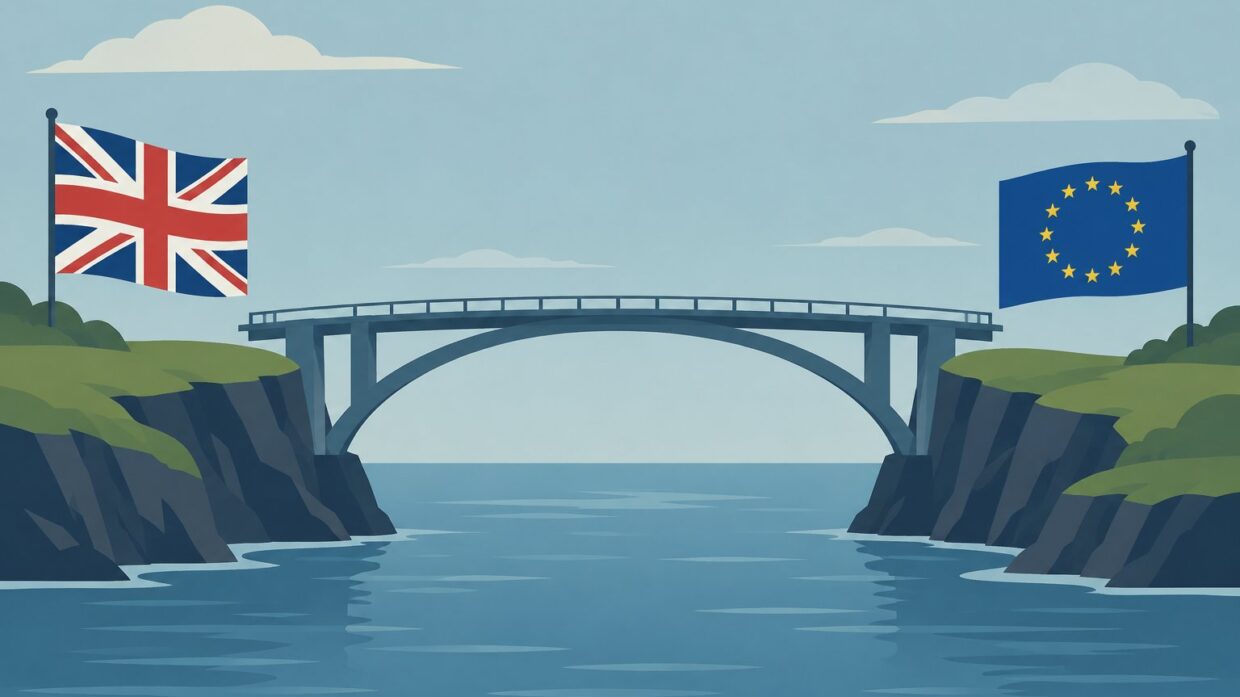
Photo: Well This Is News
PM Burnham Calls for Honest Debate on Returning to EU Free Movement
We haven't found a right-leaning take on this story yet.
Breaking stories sometimes publish before every side has covered them. We'd rather show you that than invent a view.
Burnham Opens Discussion on UK-EU Free Movement Possibility
Key Takeaways
- Burnham is calling for public discussion about free movement without disclosing what specific changes to the UK-EU relationship he is actually considering or what outcome he wants to achieve.
- Neither major news outlet has reported whether the EU has indicated willingness to renegotiate free movement or whether this is a one-sided UK proposal unlikely to succeed.
- The framing of 'evidence-based debate' does not clarify whether Burnham intends to argue for or against free movement, leaving unclear whether this is a genuine policy exploration or a negotiating signal to Brussels.
The Analysis
Prime Minister Andy Burnham is proposing a public conversation about free movement with the EU ahead of a November summit with Brussels, but neither the reported coverage nor his framing discloses what specific changes to the current UK-EU relationship he is actually considering.
What the record establishes: Burnham used the phrase 'honest discussion' in reference to free movement, according to The Guardian. The BBC reported he called for a 'factual' and 'evidence-based debate.' Both outlets characterize this as part of 'plans for a new relationship' with Brussels, though neither source details what those plans contain or what outcome Burnham is negotiating toward. The timing is tied to a November summit, but the reporting does not explain what decisions are scheduled for that meeting or what the UK's negotiating position actually is.
The Guardian's framing emphasizes that Burnham wants to move 'beyond' the Brexit settlement on free movement, using language like 'significant break' and 'reconsider.' This narrative foregrounds the political novelty of a Labour government reopening this question at all, which serves the interpretive function of presenting the move as a calculated shift in party positioning. What the framing leaves out is what Burnham actually proposes to change, what the EU's stated position is on UK free movement, and what cost or benefit he expects this discussion to produce. The article moves quickly from 'he wants to discuss it' to the implication that reversing free movement restrictions is now under consideration, without establishing whether that is what he is actually proposing.
The BBC's framing is narrower. It reports the language 'factual' and 'evidence-based' and does not editorializing about what these terms imply. What the BBC's approach leaves out is any context about why Burnham is choosing to open this discussion now, what domestic political calculation shapes the timing, or what the substantive disagreement between the UK and EU on this question actually is. The reporting treats the call for 'honest discussion' as self-evident rather than asking what specific policy outcome that discussion is meant to produce.
Neither outlet foregrounds what may be the most significant context: the UK's current migration numbers relative to public opinion, the role of free movement in net migration from EU countries, or what the actual political constraints are on either side. Burnham's call for an 'evidence-based debate' could mean he intends to argue against free movement based on migration data, or it could mean he intends to argue for it based on economic data. The framing does not distinguish. Neither source reports whether the EU has indicated openness to renegotiating this element of the post-Brexit relationship, or whether this is a unilateral UK proposal with little chance of acceptance.
The underlying question neither framing fully captures is whether Burnham is genuinely testing public appetite for free movement as part of a negotiating strategy with Brussels, or whether he is attempting to shift the domestic narrative around migration while signaling to Brussels that he is a different kind of negotiator than his predecessors. The omission of this distinction matters because it changes what the 'honest discussion' is actually about.
Burnham's framing of an "evidence-based debate" on free movement obscures whether he intends to argue for or against it, leaving the public unable to assess what the UK is actually proposing to the EU or what concessions might be traded away. Without disclosure of the EU's negotiating position, the domestic political calculation driving the timing, or specific policy outcomes Burnham seeks, this "honest discussion" becomes a rhetorical placeholder that allows him to appear pragmatic on migration while keeping his actual negotiating hand hidden. The November summit's stakes remain undefined in public reporting, meaning voters cannot hold either government accountable for decisions made in those talks or evaluate whether the trade-offs were worth the political cost of reopening a settled post-Brexit question.