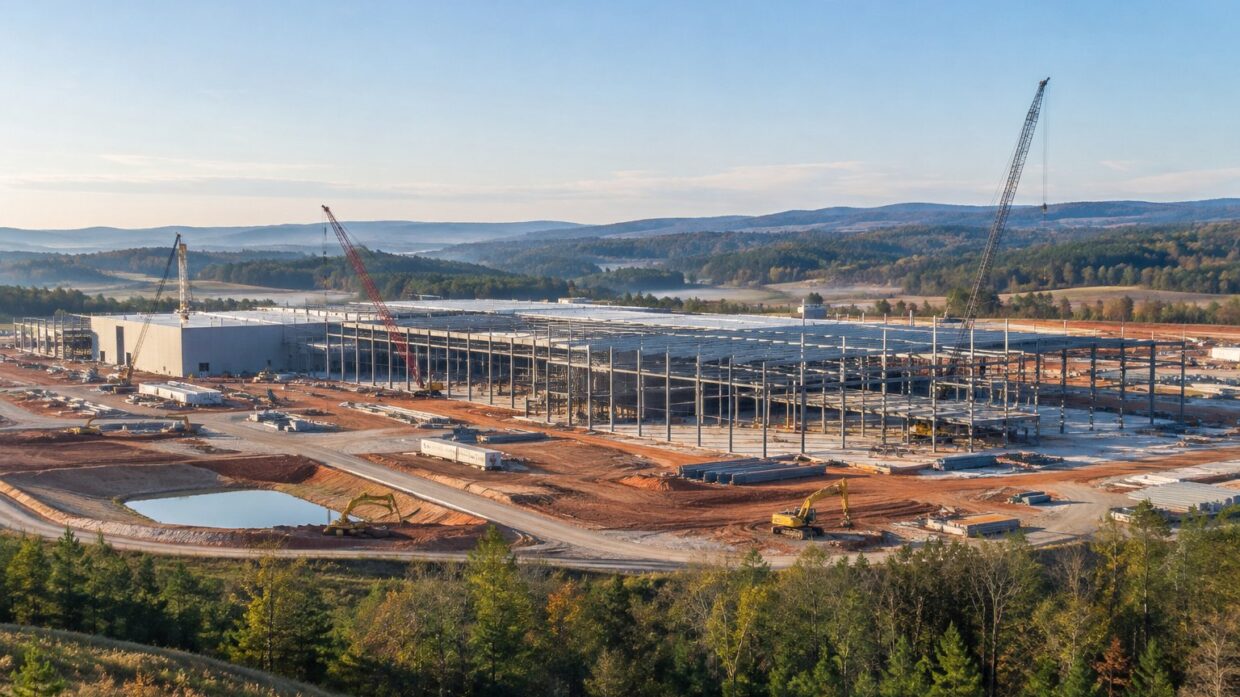
Photo: Well This Is News
We haven't found a left-leaning take on this story yet.
Breaking stories sometimes publish before every side has covered them. We'd rather show you that than invent a view.
We haven't found a right-leaning take on this story yet.
Breaking stories sometimes publish before every side has covered them. We'd rather show you that than invent a view.
Volkswagen to Build $4.2B Audi Plant in Georgia as Trump Touts Tariff Strategy
Key Takeaways
- Volkswagen has not disclosed whether tariffs motivated the Georgia investment, selected it as a condition of market access, or coincided with the decision for unrelated reasons like labor costs or existing US operations.
- The investment may reflect VW adapting to new tariff conditions, positioning itself preemptively against future tariff increases, or executing a long-planned expansion that happened to align with political timing.
- Both sides cite this single announcement as proof their tariff theory is correct without examining whether it offsets job losses elsewhere, increases consumer costs, or represents typical deal flow for comparable facilities.
The Analysis
Volkswagen's decision to build a $4.2 billion Audi plant in Georgia presents a data point that both fits and obscures the actual debate over tariff policy that Trump invoked to explain it. The announcement itself is verifiable: VW will construct a new premium-brand facility in the state while expanding South Carolina operations. What remains undisclosed is whether tariffs drove this decision, accompanied it, or occurred independently of it.
Trump's framing at the Georgia rally made a specific causal claim: that tariffs "have made the US richer" and that this investment proves tariffs work. The available reporting does not establish whether VW executives cited tariffs as the deciding factor, offered alternative reasons for the investment, or characterized it as contingent on tariff policy. The timing, announced during a campaign rally in an election-cycle context, establishes the political function of the announcement but not its economic cause.
What the record does establish is that VW operates under tariff conditions set by Trump's administration. Whether those conditions incentivized this specific investment, forced it as a condition of market access, or coincided with it for separate reasons remains a question the reporting does not answer. A fuller accounting would require VW's own explanation of why Georgia, why now, and what role tariff policy played in that calculus.
The left-leaning framing available in the sources emphasizes the announcement as "handing Trump a win," language that foregrounds the political benefit rather than the economic mechanism. This framing leaves out the specific reasons VW selected Georgia, the comparative analysis of what other countries offered, or whether the investment size or job-creation claims meet historical baselines for similar facilities. It also does not examine whether tariffs increased the cost of VW's supply chain, potentially offsetting any incentive effect.
A right-leaning framing would likely emphasize the investment as proof that tariffs work to bring manufacturing home and strengthen domestic production capacity. That frame typically leaves out: the total cost to consumers and businesses from tariff-driven price increases; whether this single announcement offsets job losses in other sectors or supply chains that depend on imported materials; or whether VW chose the US location despite tariffs rather than because of them. It also omits the baseline question: how many such announcements would need to occur to justify tariff policy's economic tradeoffs.
What neither available framing addresses is the prior relationship between VW and the US market. Volkswagen already operates manufacturing facilities in the United States and has faced years of shifting regulatory and tariff conditions. The plant announcement may represent adaptation to new tariff conditions, strategic positioning ahead of potential further tariff increases, or a long-planned investment with convenient political timing. The public record does not establish which.
The most honest headline reflects what is actually verifiable: VW is investing $4.2 billion in Georgia capacity. Whether this investment proves tariff policy works, adapts to tariff policy, or exists independently of tariff policy remains an open question the available reporting does not answer.
Volkswagen's Georgia investment gives Trump a campaign-season talking point, but it obscures the actual mechanism of tariff policy that remains unexamined in coverage. VW has not publicly stated whether tariffs incentivized the facility, forced it as a market-access condition, or occurred alongside independent business calculations. The investment's timing during a rally in an election cycle establishes its political utility but not its economic cause. Without disclosure of VW's decision-making rationale, the announcement functions as a symbolic victory claim rather than evidence that tariff policy achieved its stated objective. Manufacturing announcements require baseline comparison data: job creation relative to historical norms, supply-chain cost impacts from tariffs, and whether other sectors absorbed offsetting losses. The public still lacks this accounting.