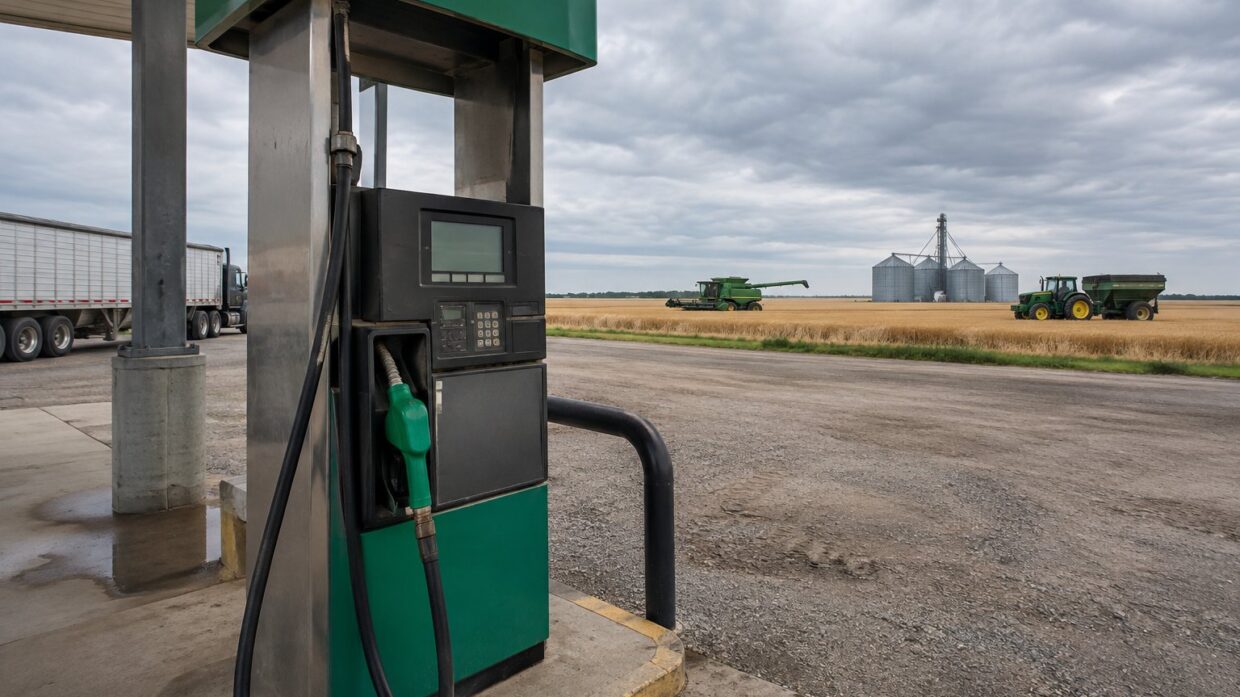
Photo: Well This Is News
Marshall dodges Iran war legacy, pins diesel crisis on Ukraine to align with Trump
We haven't found a right-leaning take on this story yet.
Breaking stories sometimes publish before every side has covered them. We'd rather show you that than invent a view.
Kansas Senate Debate: Marshall attributes diesel prices to Ukraine war, not prior geopolitical factors
Key Takeaways
- Diesel prices have multiple documented causes including the Iraq war, the Libya intervention, and the Ukraine war, but Marshall cited only Ukraine, narrowing the causal story.
- Neither candidate examined whether reducing Ukraine aid would actually lower diesel prices or whether the connection is primarily rhetorical rather than causal.
- Domestic U.S. energy policy including refinery capacity and renewable fuel mandates shapes diesel costs independently of foreign military spending, but the debate did not address these structural factors.
The Analysis
During a Kansas Senate debate, Republican Sen. Roger Marshall attributed high diesel prices specifically to the Ukraine war, not to earlier geopolitical conflicts like the Iraq war that shaped energy markets for years after 2003. This attribution choice matters because it frames current energy costs as a consequence of the Biden administration's foreign policy priorities rather than as a legacy effect of earlier military interventions or domestic energy deregulation.
The documented record shows diesel prices have multiple contributing factors. Oil markets respond to geopolitical disruption at various scales: the Iraq war's 2003 start coincided with oil price spikes that persisted through 2008, the 2011 Libya intervention disrupted crude supplies, and Russia's 2022 invasion of Ukraine directly reduced wheat and energy exports that affect both commodity prices and shipping costs. Marshall's choice to cite Ukraine specifically, while leaving unmentioned Iraq and Libya, serves a framing function that concentrates voter attention on one recent foreign commitment rather than inviting comparison across multiple administrations.
The PBS NewsHour reporting explicitly notes that Marshall's framing "aligned Marshall with President Donald Trump's freshly antagonistic posture toward Ukraine, which has spent more than four years defending itself against an invasion." This names the political function of the attribution: it positions Marshall as aligned with Trump's argument for reducing Ukraine aid. The framing does not establish how much of current diesel prices actually traces to Ukraine war disruption versus other factors. The Axios reporting provides context that diesel prices remain elevated partly because diesel consumption is structurally entrenched in farming and trucking, suggesting that price reductions depend on supply-side shifts in crude production or transportation, not primarily on foreign aid budgets.
The Fox News framing treats Marshall's Ukraine attribution as one of five "key moments" in a debate centered on Trump, transgender athletes, and AI. That framing does not substantively engage with whether the attribution is accurate, instead treating it as a debate exchange comparable to other topics. This approach leaves readers without analysis of whether diesel prices are actually tied to Ukraine war disruption or whether that connection is speculative.
What neither framing addresses is that diesel prices reflect global crude oil supply disruptions at multiple scales and that U.S. domestic energy policy, including regulatory choices around refinery capacity and renewable fuel mandates, shapes fuel costs independently of foreign military spending. The debate exchange does not establish whether reducing Ukraine aid would materially affect diesel prices or whether the relationship is rhetorical rather than causal. Marshall's attribution frames the issue as a choice between foreign commitments and domestic fuel affordability, but the available evidence does not confirm that diesel prices would fall substantially if Ukraine aid were reduced.
The real headline is that both candidates left unexamined whether diesel prices respond primarily to foreign policy choices or to structural market conditions and domestic policy. Marshall's framing gains political utility precisely because it appears to address rural economic hardship while advocating for a specific foreign policy shift, but the causal chain remains undocumented in the debate coverage.
Marshall's Ukraine attribution reshapes how Kansas voters understand fuel costs at the pump, collapsing multiple geopolitical disruptions into a single recent foreign commitment and implying that reducing Ukraine aid could lower diesel prices. This framing works politically regardless of whether the causal link holds: if crude supplies are constrained by refinery capacity, renewable fuel mandates, or structural global demand rather than by Russian production losses, then pivoting away from Ukraine support would not materially affect what farmers and truckers pay for fuel. The debate coverage failed to establish whether diesel prices track foreign military spending or operate through independent market mechanisms, allowing Marshall's attribution to function as political rhetoric rather than economic analysis. Both candidates avoided examining whether rural fuel costs require foreign policy changes or targeted domestic energy policy reforms, leaving voters without the information needed to evaluate whether the implied trade-off between Ukraine support and household expenses is real.