Photo: Well This Is News
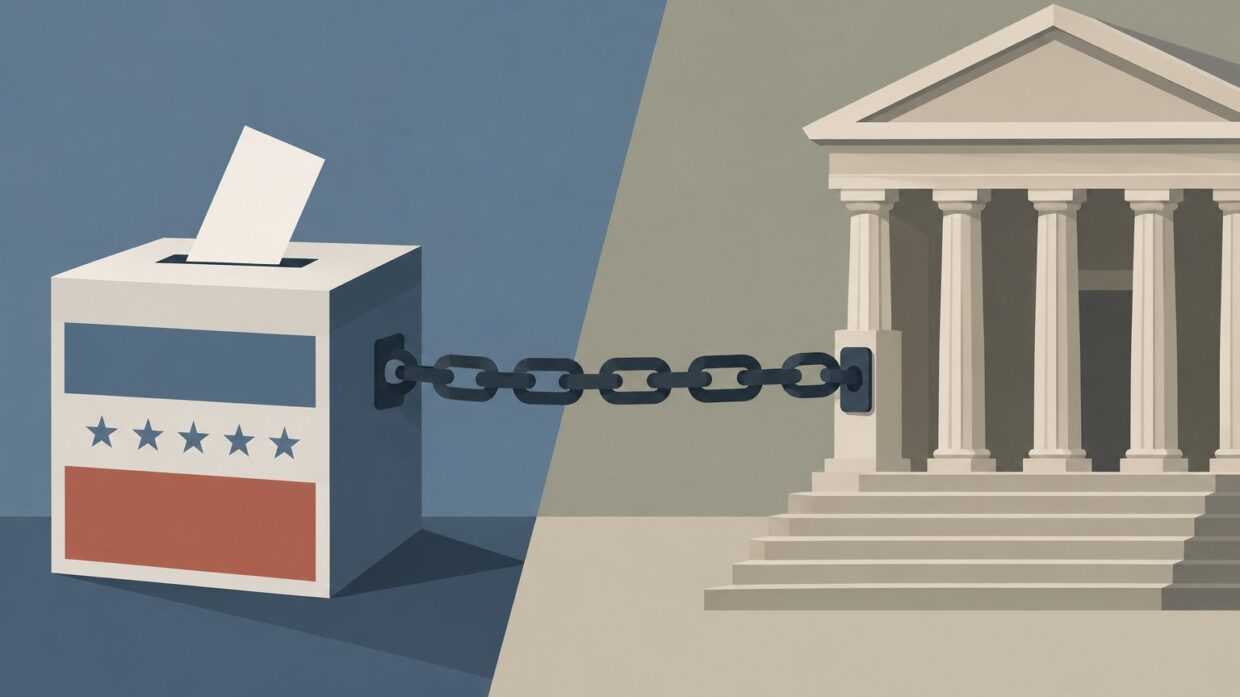
Trump administration weaponizes Justice Department to overturn Alaska election
We haven't found a right-leaning take on this story yet.
Breaking stories sometimes publish before every side has covered them. We'd rather show you that than invent a view.
We haven't found a neutral take on this story yet.
Breaking stories sometimes publish before every side has covered them. We'd rather show you that than invent a view.
The Analysis
The Justice Department sued Alaska on Thursday to prevent state election officials from certifying Senate results if incumbent Republican Dan Sullivan loses to Democrat Mary Peltola, raising immediate questions about whether the federal government can override state certification authority and on what legal grounds the Trump administration believes it can do so.
According to reporting, the lawsuit was filed in U.S. District Court for the District of Alaska and argues that a Democratic victory would violate federal election standards. The exact legal theory underlying the suit remains unclear from available reporting. No source explains what specific federal law or constitutional provision the DOJ cites, what it alleges Sullivan or Alaska officials did wrong, or what remedy it seeks if Sullivan loses. The reporting establishes that the suit targets the certification process itself, not the voting or counting procedures. The lawsuit does not allege fraud in vote counting or tabulation.
The left framing emphasizes that this represents the Trump administration "weaponizing" the Justice Department for political purposes. NBC News leads with the word "sues to block," using language that frames the action as an attempt to overturn results. The emphasis is on the unprecedented nature of federal intervention in state certification and implicit comparison to 2020 post-election litigation. What this framing leaves out is any explanation of what legal theory the DOJ advances, whether similar suits have been filed in prior cycles, or what Alaska officials have actually done that prompted the lawsuit. It also does not establish whether the DOJ is acting at Trump's direction or through independent prosecutorial judgment.
Right-leaning sources in the provided material are absent. Without sourced reporting from conservative outlets, the right's framing cannot be established with accuracy. Absent that information, assigning motivations or defenses to the right would violate the evidentiary standard required here.
What neither the available framing fully addresses is the actual legal standing question: whether the DOJ has authority to sue to block state certification before results are declared, what the threshold for federal intervention in state election administration actually is under current law, and whether Alaska has already certified results or whether this suit is preemptive. The reporting does not clarify whether Sullivan has already lost or whether the lawsuit is filed in anticipation of a loss. It also does not explain whether the federal government successfully blocked certification in Alaska in prior election cycles or whether this represents a departure from prior practice.
The underlying question is whether the lawsuit reflects a new interpretation of federal power over state election certification or whether it relies on existing legal authority that state and federal courts have previously recognized. Until the actual legal complaint is made public and analyzed, the evidentiary foundation for assessing the claim's merit remains absent from press reporting. What appears clear is that this case will likely proceed to federal court, potentially reaching appeal, and the outcome will establish precedent for federal-state authority over election certification regardless of which side prevails.
This lawsuit forces federal courts to define the constitutional boundary between federal oversight and state election authority for the first time in modern practice. If the DOJ prevails, it establishes that the Justice Department can unilaterally halt state certification through litigation, fundamentally inverting the post-Civil Rights Act framework where federal intervention required congressional authorization or specific statutory violation. If Alaska defeats the suit, courts create binding precedent limiting executive power to challenge certification. Either outcome reshapes how future administrations exercise authority over state election processes. The immediate impact extends beyond Sullivan's race: it signals whether a president can deploy federal courts as certification gatekeepers in competitive Senate, House, and gubernatorial contests nationwide. No Justice Department has attempted this strategy before certification, making the ruling precedential for decades regardless of the underlying merits.