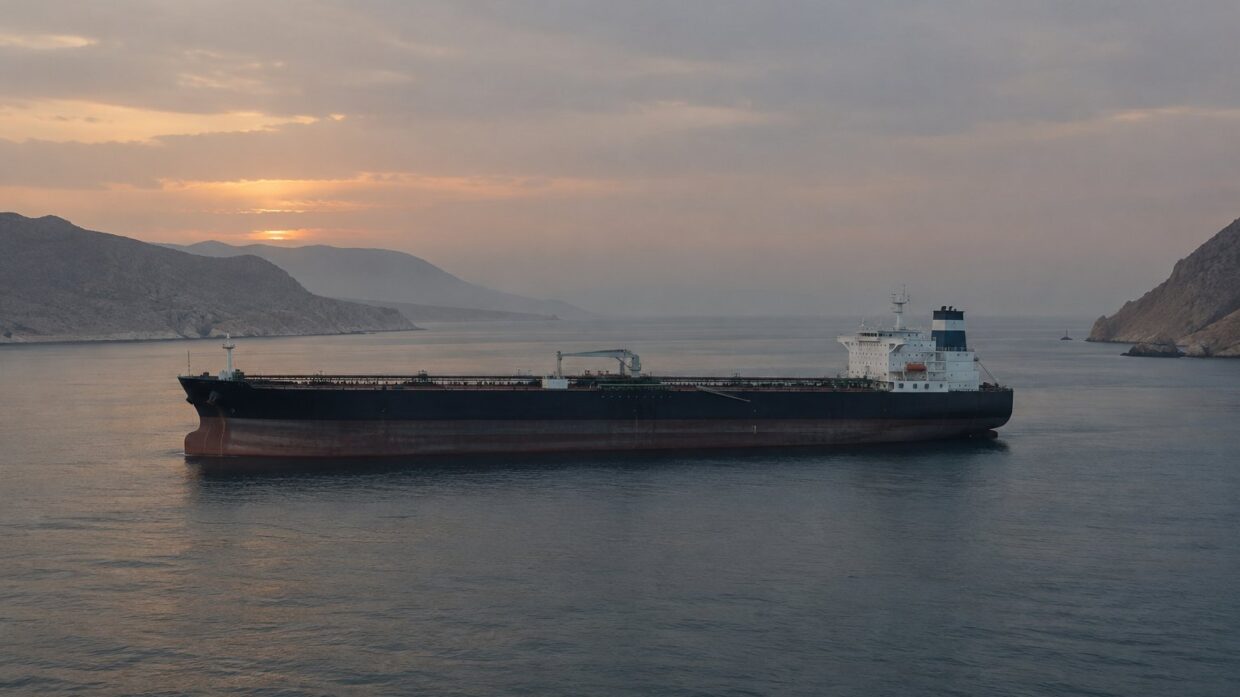
Photo: Well This Is News
Iran strikes ships in Strait of Hormuz as regional tensions threaten global energy crisis
We haven't found a right-leaning take on this story yet.
Breaking stories sometimes publish before every side has covered them. We'd rather show you that than invent a view.
Oil prices hit five-month high as attacks in Middle East raise supply concerns
Key Takeaways
- Oil exports from the Persian Gulf have recovered to near prewar levels even as prices hit five-month highs, suggesting markets are pricing geopolitical risk premium rather than actual current supply shortage.
- Iran's reported strike on seven tankers represents a specific claimed incident but lacks comparison to the frequency and severity of prior attacks in the Strait of Hormuz over recent years.
- The reporting establishes that a claim was made and markets reacted, but does not clarify whether the price spike reflects accurate assessment of genuine supply danger or market overcorrection to regional uncertainty.
The Analysis
Oil prices spiked to their highest level in five months Thursday following attacks on tankers in the Strait of Hormuz and near Saudi Arabia, yet the relationship between the reported incidents and actual supply disruption remains more complicated than either the market reaction or the headline coverage suggests.
The Iranian Revolutionary Guard Corps claimed responsibility for striking seven vessels, with four hits reported in the northern Gulf and three tankers damaged by mines near the strait. Oil prices responded immediately, jumping on Thursday as traders priced in the threat to one of the world's most critical chokepoints, through which approximately one-third of global seaborne petroleum passes. The Guardian's framing emphasizes the direct threat to supply, using language like "threaten global supply" to establish Iran's actions as the mechanical cause of price movement. The Hill similarly leads with "threaten to exacerbate regional tensions and the global energy crisis that is driving inflation," establishing a causal chain from military action to consumer impact.
But MarketWatch introduces a complicating fact that both the left-leaning and center coverage de-emphasizes: "More oil is flowing out of the Persian Gulf again, with exports approaching prewar levels." The reporting does not establish whether current physical supply has actually tightened or whether Thursday's price movement reflects trader assessment of future risk rather than present shortage. This distinction matters because it separates what markets fear from what markets face. If exports are recovering to prewar levels, the price increase may reflect geopolitical premium pricing rather than actual supply constraint, a possibility the Guardian's "threatens" framing obscures.
What neither the left framing nor the available center reporting fully captures is the baseline context on Strait of Hormuz security. The waterway has seen recurring attacks and threats for years. The Iranian navy has conducted exercises and made strike claims previously. The new detail Thursday is the specific claim of seven vessels hit, but the reporting does not establish whether this represents a meaningful escalation in actual damage or a continuation of existing hostilities with renewed messaging. The Hill names Iran's stated action but does not compare it to the frequency or severity of prior incidents in the same area.
The Guardian's language choices serve a framing function: "attacks," "threaten," and "global supply" establish Iran's action as the news event and oil prices as the consequence. This is accurate but narrow. It leaves out why prices are "stubbornly high" despite recovering exports, a question MarketWatch raises but does not fully answer. One plausible interpretation is that traders have permanently repriced risk in the region upward, meaning prices reflect not current shortage but sustained uncertainty about future supply reliability.
The public record does not establish whether Thursday's reported strikes represent new Iranian policy, tactical messaging, or responses to prior incidents the coverage does not foreground. What the reporting establishes is that a claim was made, markets reacted, and oil hit a five-month high. Whether that price movement reflects accurate assessment of supply risk or overcorrection to geopolitical noise remains undisclosed.
Middle East tensions are reshaping energy markets in ways that outlast any single incident. When traders price oil based on Strait of Hormuz threat rather than actual supply disruption, they're embedding a permanent geopolitical risk premium into global energy costs. This structural shift means future inflation data, shipping insurance rates, and central bank policy decisions will all reflect sustained uncertainty about a waterway where recurring attacks have become routine. The difference between pricing present shortage and pricing future instability determines whether oil settles at current levels or climbs further, affecting everything from airline fuel surcharges to manufacturing competitiveness for years ahead.