Photo: Well This Is News
Student-Led Uprising Spreads: Unions Join Fight for Wages and Education as French Crisis Deepens
Left-Wing Unions Hijack Student Protests, Leverage Youth Grievances to Demand Higher Wages
We haven't found a neutral take on this story yet.
Breaking stories sometimes publish before every side has covered them. We'd rather show you that than invent a view.
The Analysis
France experienced coordinated street demonstrations Saturday that merged two distinct grievance movements, one originating in schools and one anchored in organized labor. The reporting establishes that high school students had maintained blockades for more than three weeks before the larger Saturday protests, citing education conditions as the primary catalyst. Labor unions then joined these actions, explicitly demanding higher wages, creating a protest architecture that served multiple constituencies simultaneously.
The NPR framing emphasizes convergence and systemic economic stress. The headline focuses on the merger of movements and the fiscal crisis context. The language of students "joining" unions positions the relationship as additive, a natural alliance of economically squeezed groups. This framing leaves undisclosed what specifically prompted union leadership to mobilize their membership around student school blockades, and whether student organizers invited that involvement or whether unions seized the mobilization moment.
Breitbart's framing inverts the relationship. It describes unions "joining" student protests but positions that involvement as instrumental capture. The explicit language is "hijack," which attributes intentionality without sourcing it to any statement from union leadership or internal documents. The phrase "leverage youth grievances" implies tactical calculation. Breitbart names the unions as "left-wing," a descriptor not directly attributed to any source in its own reporting. This framing leaves out whether students welcomed union participation, whether union involvement actually altered the protests' trajectory or messaging, or what evidence establishes that wages became the primary demand rather than one demand among several.
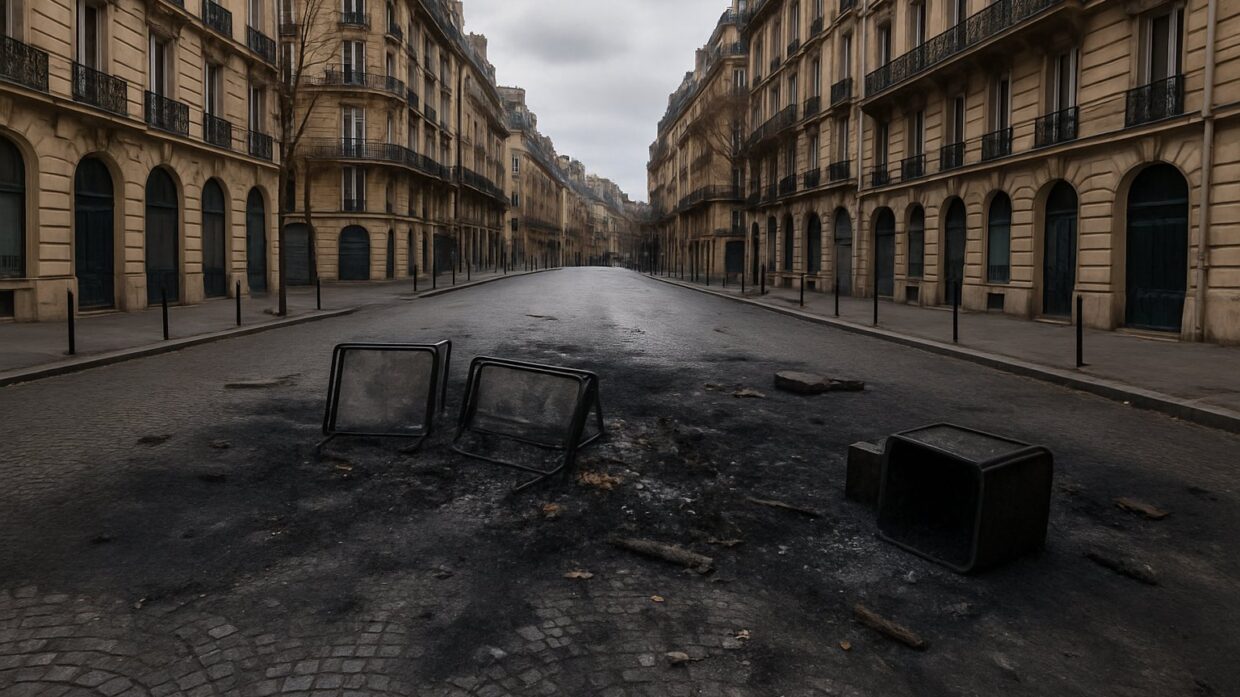
What the reporting establishes with specificity: students had grievances over education conditions, maintained blockades for three weeks, and protests occurred across multiple locations Saturday with some resulting in scuffles and fires. What neither side discloses: the sequence of decisions that led to union involvement, whether this coordination was planned or emergent, what specific union organizations participated, what their stated objectives were in their own communications, or how the protest's composition or messaging changed between Friday and Saturday.
The underlying political question neither framing fully surfaces is whether labor unions in France are experiencing their own membership pressure over wages and cost of living, and whether student protests provided a preexisting mobilization infrastructure that unions could efficiently activate, or whether this represents a deliberate strategic choice by union leadership to rebuild labor-student coalitions that haven't operated at scale in France in decades. That distinction matters for understanding whether this is spontaneous alliance-building or calculated institutional expansion.
The fiscal crisis context appears in both framings but the reporting provides no detail on what specific policies or budget proposals triggered the student actions, or whether unions' wage demands address the same fiscal pressures students identified. France's debt-to-GDP ratio, pension obligations, or specific government austerity proposals are absent from both articles. That omission is consequential because it prevents readers from assessing whether the protests address a genuine policy problem or reflect competing interest-group positioning.
What remains undisclosed is the role of French government or police response. Both articles reference scuffles and fires but provide no detail on who initiated physical confrontations, whether police deployed force, whether fires were set by protesters or resulted from confrontation, or what the government's stated position is on either the student blockades or union involvement. Without that information, readers cannot assess whether the weekend escalation was organic crowd behavior or state response.
If labor unions successfully reintegrated student movements into broad-based mobilization after decades of fragmentation, French institutional politics shifts fundamentally. Union membership across Europe has collapsed from over 40 percent in the 1980s to under 16 percent today, making the ability to activate non-member constituencies critical to labor's political relevance. A sustained student-labor coalition would directly challenge Macron's centrist legislative majority by creating electoral pressure on multiple demographic cohorts simultaneously, potentially forcing government concessions on pension reform, education funding, and wage policy that individual movements couldn't secure alone.