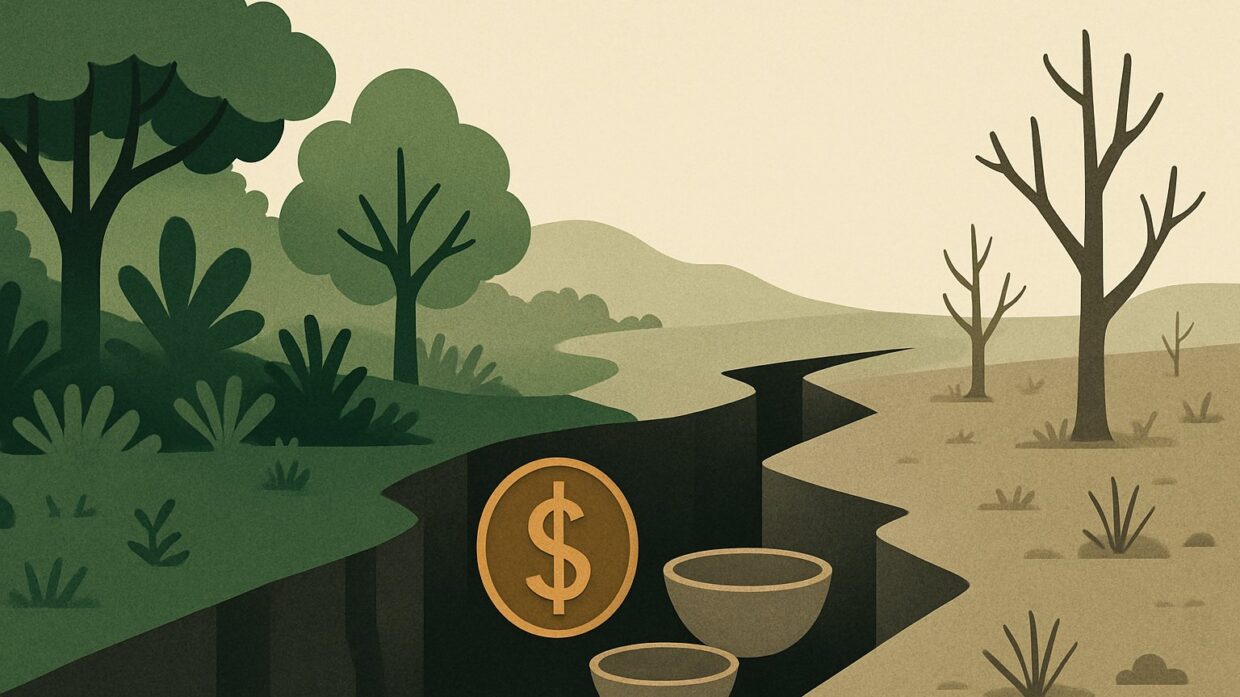
Photo: Well This Is News
Wealthy nations breaking nature promises as biodiversity crisis accelerates without adequate funding
We haven't found a right-leaning take on this story yet.
Breaking stories sometimes publish before every side has covered them. We'd rather show you that than invent a view.
First COP17 review finds nature finance and biodiversity targets significantly off track
Key Takeaways
- Developed countries may be distributing limited environmental funding across multiple competing commitments like climate and nature targets, creating shortfalls on each rather than choosing deliberate non-compliance.
- Nations could be making strategic calculations about which 2030 targets are achievable versus which ones to accept as infeasible, but the reporting does not reveal whether this deprioritization is happening.
- COP17 is establishing the first institutional pattern for how global nature accountability reviews work, meaning this review's impact on future compliance remains untested and unknown.
The Analysis
Countries are gathering in Armenia for the first comprehensive assessment of how close the world is to meeting the UN's 2030 nature targets, and the available evidence shows most objectives are off track. The reporting reveals a specific gap: developed nations have delivered nature finance that the record characterizes as falling "far short" of what was committed, creating measurable distance between pledge and reality.
The documented facts establish what actually happened. At COP17, the first formal review of progress toward the biodiversity targets adopted in Montreal in 2022 is underway. According to the Carbon Brief analysis, most of the 23 specific nature targets are not on pace for 2030 achievement. The finance gap is quantified: developed countries committed to specified levels of nature-related investment but have delivered amounts the available reporting describes as insufficient. The Carbon Brief tracking tool measures progress across multiple targets including protected area coverage, species extinction rates, and ecosystem restoration commitments.
The left framing emphasizes broken promises and institutional failure by wealthy nations. This perspective uses language like "fall far short," which assigns moral weight to the gap and frames it as a betrayal of commitment. Environmental advocates and climate-focused reporting tend to foreground the urgency of the biodiversity crisis itself, describing how species loss is accelerating and habitat destruction continues while funding remains inadequate. What this framing leaves out is the baseline from which progress is being measured: whether the targets themselves were realistic given the economic and political constraints nations actually face, or whether progress on some specific measures has actually occurred even if aggregate targets remain unmet.
The right framing does not appear in the available reporting, leaving that perspective unrepresented in this story's sources. Conservative or development-focused critics might note that nature finance commitments compete with other national priorities, or that some conservation metrics are improving in specific regions even if global totals miss targets. That perspective is not sourced here.
What neither side's available framing fully captures is the relationship between these targets and prior international environmental agreements. The 2030 nature targets represent a distinct commitment layer added to earlier obligations like the Paris climate agreement. What remains undisclosed is whether the finance shortfall reflects deliberate underinvestment or whether developed countries are distributing available resources across multiple competing environmental commitments, each with similar gaps. The reporting also does not establish whether countries are making deliberate calculations about which 2030 targets are least feasible and therefore deprioritizing them strategically.
The underlying question is whether a global review process that documents failure creates momentum for correction or becomes a mechanism for recording inadequacy without forcing change. COP17 is the first such assessment, meaning the institutional pattern for how this accountability works is still forming.
Failed nature finance commitments will directly constrain which conservation projects actually get built over the next six years. The shortfall documented at COP17 means specific protected areas won't be established, restoration programs will shrink, and developing nations will face direct budgetary pressure to choose between biodiversity protection and other critical infrastructure. This first formal review establishes the institutional precedent for how thoroughly future assessments will scrutinize broken pledges. If COP17 responds to the finance gap with merely rhetorical commitments rather than binding enforcement mechanisms, subsequent reviews will likely document accelerating failure across all 23 targets simultaneously, making 2030 recovery mathematically impossible and pushing meaningful biodiversity restoration beyond any near-term policy horizon.