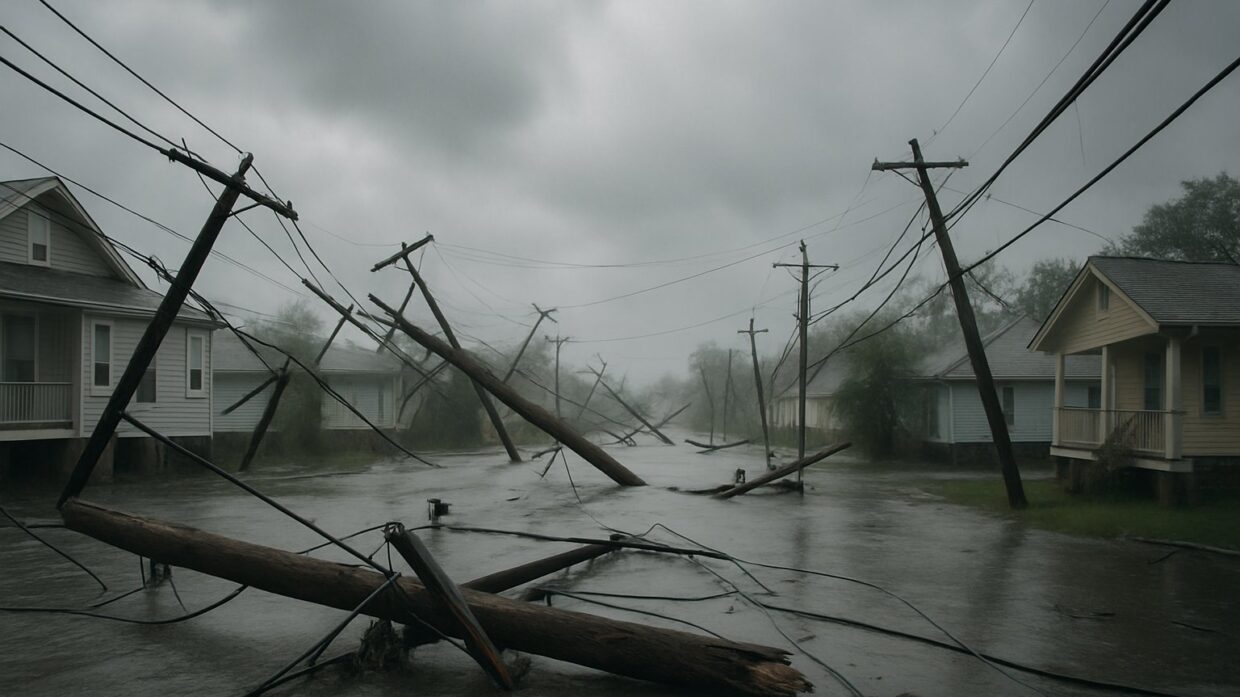
Photo: Well This Is News
Thousands Without Power in Florida and Alabama as Isaias Moves North
Hurricane Isaias Leaves Nearly 400,000 Without Power Across Southeast as Storm Moves North
Hurricane Isaias Leaves Nearly 400,000 Without Power Across Southeast as Storm Moves North
Key Takeaways
- The 396,000-customer outage figure is reported without context about how typical this is for storms of Isaias's intensity or whether utilities had adequate pre-storm preparation time.
- Four deaths are attributed to the storm but the specific cause of each death, location, and whether any were preventable remain undisclosed in available reporting.
- No utility company names, response timelines, or infrastructure failure details appear in coverage, leaving unclear whether the outages and fatalities reflect normal storm impact or gaps in coastal infrastructure resilience.
The Analysis
Hurricane Isaias left nearly 396,000 customers without power in Florida and Alabama while causing at least four confirmed deaths across those states, yet the public record contains almost no detail about what infrastructure failures produced those outages or whether prior storm-hardening measures were adequate.
The verified facts are narrow: the storm moved north on Sunday with moderate to heavy rainfall, triggered flash flooding warnings across central Appalachia and the mid-Atlantic, produced tornadoes, and caused documented fatalities. NBC News attributed four deaths to the system. The Guardian reported the same death toll but did not specify causes or whether these deaths resulted from storm surge, wind damage, falling debris, electrocution, or vehicle accidents during evacuation. The available reporting establishes the scale of the outages but not the mechanisms that produced them.
The left-leaning framing, represented by The Guardian's headline "Thousands Without Power in Florida and Alabama as Isaias Moves North," emphasizes the scope of customer impact and foregrounds the flooding risk to downstream regions. That framing leaves out any discussion of utility preparation, response time, or whether the power loss was predictable or preventable given pre-storm warnings. The emphasis on northward movement and cascading regional impact serves a particular narrative function: the storm as inevitable natural disaster to which populations are subjected. The Guardian's reference to "warnings of flash flooding that could stretch into Appalachians" frames the threat as forward-moving and expanding, which emphasizes the breadth of exposure.
The right-leaning sources provided do not offer a distinct counter-frame in the available materials. Without a direct conservative source covering this specific storm event, a complete left-right comparative analysis is not possible from the materials supplied. The absence of right-leaning coverage of a natural disaster with multiple fatalities and hundreds of thousands of outages does not establish an editorial position; it reflects the source list provided.
What neither available framing addresses is how the 396,000-customer outage figures compare to historical baselines for storms of Isaias's intensity, or whether utilities had adequate warning time to pre-position repair crews, generators, or emergency response assets. The reporting does not establish whether power was restored at typical speeds or whether bottlenecks occurred. Neither source names the utility companies responsible for power restoration or discusses their preparedness protocols. The death toll of four is reported but the specific circumstances of each death,location, cause, whether preventable,are not disclosed. A reader who knows only these headlines would not understand whether this outage represented typical storm response or signal systematic vulnerability in coastal utility infrastructure.
The underlying question the reporting does not answer is whether Isaias exposed gaps in storm preparation or whether the outage and fatalities reflect the foreseeable cost of living in hurricane-exposed regions. That distinction shapes whether this event signals a policy problem or a weather problem. The available reporting treats it as the latter.
Utility companies across the Southeast face no documented accountability for how 396,000 customers lost power during Isaias because neither major news outlet investigating the storm disclosed which utilities failed, how quickly they restored service compared to historical precedent, or whether pre-positioned repair crews and generators were deployed adequately. Without baseline comparisons to previous storms of similar intensity or naming of responsible utilities and their response timelines, the outages become a generic weather event rather than a test of infrastructure resilience. This reporting gap allows utilities to avoid public scrutiny of preparation decisions made days before landfall, when meteorologists provided clear forecasts. Future storm response will proceed without the institutional pressure that comes from transparent performance assessment.