Photo: Well This Is News
Green Party formally adopts 'Zionism is racism' policy as party leadership fractures over move
Green Party passes antisemitic motion equating Zionism with racism, drawing condemnation from Israel and UK
Green Party members vote to adopt motion equating Zionism with racism; Israeli government and UK officials respond
Key Takeaways
- The Green Party motion grounds itself in a 1974 UN General Assembly resolution that defined Zionism as racism, which the UN itself rescinded in 1991, but reporting does not explain why the party adopted now-discredited UN language.
- Neither left nor right coverage clarifies whether the motion is a binding party doctrine or an advisory statement, leaving unclear what practical effect the vote actually has.
- The reporting does not establish whether this represents a genuine ideological shift in the party's activist base or simply reflects factional dominance at this particular conference.
The Analysis
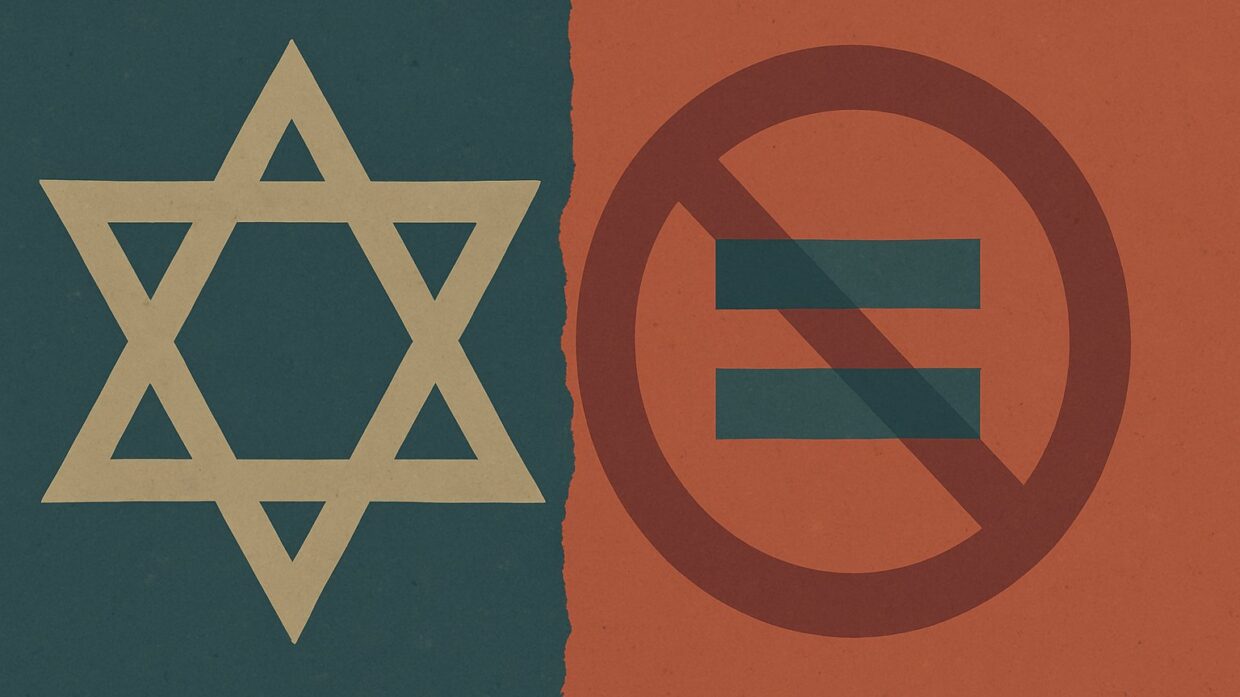
The Green Party of England and Wales has formally adopted a policy motion at its conference in Brighton that defines Zionism as racism, a step that immediately divided the party's leadership and provoked an official Israeli government response characterizing the decision as a stain on British history. The motion passed despite what reporting describes as divisions among senior party figures, but the available sources do not establish the exact vote count, the text of the final motion, or the specific nature of the internal disagreement.
What the documented record shows is that the party membership voted to pass the motion, the Israeli government issued a formal condemnation, and figures within the party's own leadership publicly disagreed with the outcome. The Guardian's framing emphasizes that the party formally adopted a policy that explicitly equates Zionism with racism, presenting this as a concrete party position. The BBC's coverage notes the divisions among top party figures but does not foreground the substance of what was voted on, focusing instead on the split it created.
The left-leaning frame, evident in The Guardian's coverage, treats the motion as a formal policy adoption and grounds the story in the Israeli government's response and the internal party fracture. The language used by Israeli officials calling it a stain on British history is reported directly. This framing allows the story to emphasize institutional division and international diplomatic response. What this framing leaves out is whether the motion represents a binding party position or an advisory one, what specific language was adopted, and whether there is any distinction between criticism of Israeli government policy and the characterization of Zionism itself as inherently racist.
The center-right framing, present in BBC coverage, also reports the vote and the divisions but uses more measured language around the motion itself. The BBC describes it as a motion equating Zionism with racism without editorializing whether that equation is accurate or constitutes antisemitism. This approach avoids the stronger interpretive claims that the right might make. What the BBC framing does not establish is the political context for why this motion emerged now, whether it reflects a broader shift in the party's activist base, or how it compares to positions held by other UK political parties on Israeli-Palestinian questions.
What neither frame adequately addresses is the specific distinction between criticism of Israeli government actions and the ideological characterization of Zionism itself. The UN General Assembly passed a resolution in 1974 defining Zionism as a form of racism, a position later rescinded in 1991. The Green Party's adoption of this language appears to ground itself in that now-withdrawn UN framing, but neither the left nor center reporting discusses this historical context or explains what the party intends the motion to accomplish as policy. The sources also do not clarify whether senior party figures who opposed the motion have committed to reversing it or whether it stands as party doctrine.
The underlying question is whether this represents a significant ideological shift in Green Party positioning or primarily signals the dominance of a particular activist faction within the membership. The answer to that question would require reporting on party membership demographics, prior policy positions, and the mechanisms by which these motions become binding. The available reporting does not establish any of this.
The Green Party's formal adoption of a motion equating Zionism with racism creates immediate institutional vulnerability for the party in British politics. This position will constrain the party's ability to build coalitions with centrist parties on climate and social policy, as other parties will face pressure to distance themselves from an organization now carrying a statement many view as antisemitic. The motion likely commits the party to defending this characterization in future policy documents and electoral campaigns, forcing candidates to either endorse or publicly break with party doctrine. Whether this becomes binding party platform language will determine whether Green candidates can avoid the issue or must actively campaign on it. This creates a structural problem for a party attempting to broaden beyond its activist base: it cannot simply retreat from the motion without suffering internal credibility damage, yet maintaining it isolates the party from mainstream British politics.