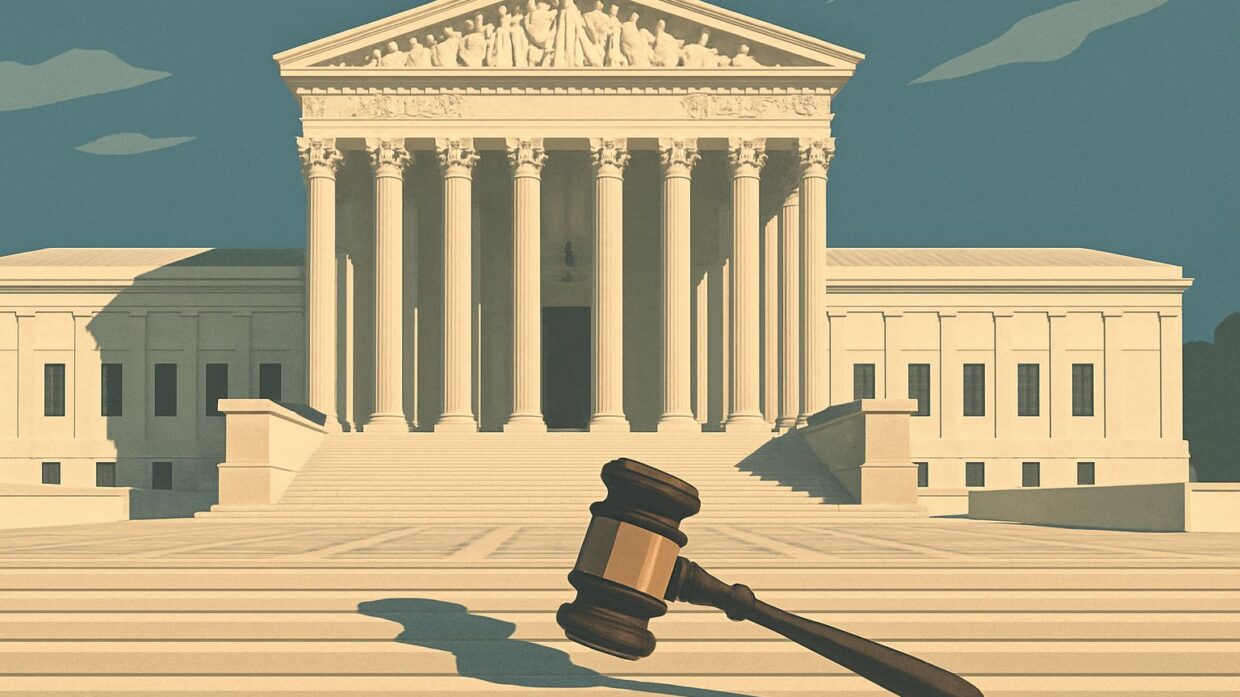
Photo: Well This Is News
Supreme Court Begins Controversial Term with Record-Low Approval as Rights Cases Loom
Supreme Court Kicks Off New Term with Major Decisions on Guns, Voting, Religious Liberty
Supreme Court Opens New Term Amid Legitimacy Questions as Major Cases Await
Key Takeaways
- Reporting on the Supreme Court's term opening conflates three distinct phenomena,low public approval, disagreement with specific decisions, and concern about institutional authority,without clarifying which problem actually exists.
- Supreme Court approval ratings have historically fluctuated during periods of controversial decisions, meaning current low approval may reflect normal political disagreement rather than a new institutional crisis.
- The Court's docket and its public approval ratings are separate questions, yet media coverage treats them as inseparable, obscuring whether the legitimacy problem is constitutional or political.
The Analysis
The Supreme Court opened its new term with three major cases pending and an institutional problem no case docket can solve: public approval ratings have fallen to record lows, a fact that both the right and left acknowledge but frame in entirely different ways.
What actually happened: The Court's 2024 term includes cases involving gun regulations, voter citizenship requirements, and religious liberty protections. The timing follows multiple years of controversial decisions, including the 2022 reversal of Roe v. Wade. Public polling data shows approval ratings lower than in previous terms, though the available reporting does not specify which polls are being cited or what the exact numbers are. The Court opened the term with its traditional Monday convening, standard procedure that occurs regardless of approval ratings.
Fox News framed this as "fresh questions over legitimacy and future" without establishing what specific institutional failure prompted those questions. The headline creates an implicit connection between low approval and delegitimacy without clarifying whether the Court's legitimacy derives from public opinion or from constitutional authority. The framing emphasizes that the cases themselves remain substantive and significant, which is accurate, but pairs that with a broader legitimacy crisis narrative that the reporting does not fully support. Fox's approach leaves unexamined whether public disapproval of decisions constitutes evidence of judicial overreach or simply evidence of unpopular rulings.
The Hill's summary appeared in a Sunday talk show preview piece and provides minimal detail about the Court's docket itself. The coverage emphasizes the political calendar, with Trump's midterm campaign as the dominant narrative. This framing treats the Supreme Court's term opening as secondary to electoral politics, which is a legitimate editorial choice but one that effectively deprioritizes institutional questions in favor of campaign strategy. The omission here is the Court's own agenda.
What neither side fully captures is the structural tension underlying both frames. Low public approval ratings for the Supreme Court are a real phenomenon documented in polling data. That polling does not, however, tell readers whether low approval reflects disagreement with specific decisions (which is politically normal), whether it reflects a belief that the Court has exceeded its constitutional authority (which is a structural complaint), or whether it reflects broader erosion of institutional trust across American government (which is a different phenomenon entirely). The available reporting does not distinguish among these possibilities.
The right's instinct to defend the Court's authority is accurate to constitutional design, which does not vest the Court's legitimacy in popular approval. The left's concern about the Court's reach is accurate to the scope of recent decisions. What both frames avoid is the documented fact that public approval of the Court has fluctuated significantly throughout American history, and that low approval during periods of controversial decisions is historically normal, not necessarily evidence of crisis.
The real headline is simpler than either frame suggests: The Supreme Court opened its term as it always does, carrying a full docket of constitutional questions, at a moment when public disapproval of its recent decisions is substantial. Whether that disapproval reflects democratic concern or illegitimate pressure on judicial independence remains the unresolved question neither the right nor the left has adequately answered with evidence.
Supreme Court legitimacy crises are manufactured by outlets unable to distinguish between unpopular rulings and institutional failure. The Court's approval rating fell because it overturned Roe v. Wade and upheld gun rights, decisions that alienated millions of voters. Those voters disliking outcomes is not evidence the Court lacks constitutional authority to issue them. The framing obscures a harder reality: the Court will continue issuing decisions approximately half the country despises regardless of polling numbers, because constitutional interpretation does not operate by referendum. News coverage treating approval ratings as measures of institutional health conflates democratic accountability with judicial independence, creating false legitimacy crises that delegitimize the institution faster than any ruling could. This term's docket will generate new disapproval. The Court will survive it, as it has survived previous periods of unpopularity stretching back to Franklin Roosevelt's court-packing fight.