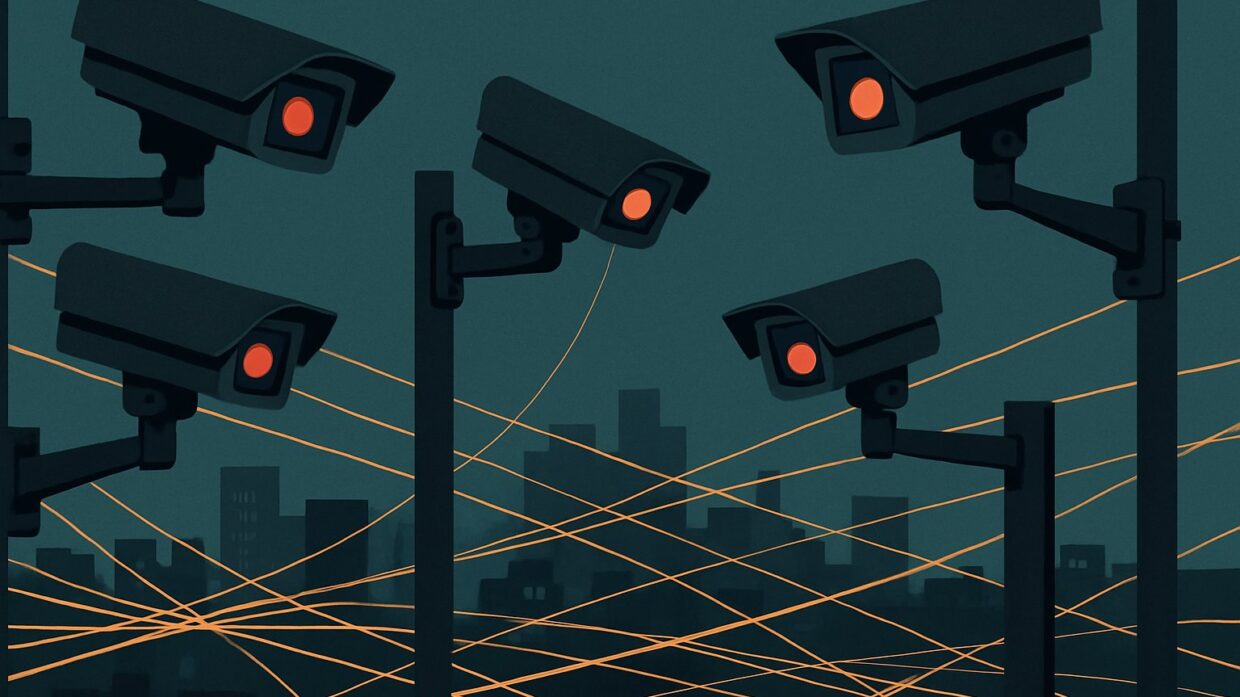
Photo: Well This Is News
Judge Blocks Warrantless Mass Surveillance Technology Used by Law Enforcement
Activist Judge Restricts Law Enforcement's Access to License Plate Reader Technology
Federal Judge Rules Warrantless Flock Camera Searches May Violate Fourth Amendment
Key Takeaways
- The judge did not ban Flock cameras or rule them unconstitutional on their face, but only flagged that warrantless access to weeks of historical travel data raises Fourth Amendment questions requiring future judicial review.
- The Supreme Court has not yet settled whether the Fourth Amendment protects historical location data differently than real-time license plate identification, leaving the legal doctrine incomplete.
- Law enforcement agencies now face operational uncertainty and must determine whether accessing Flock's historical travel records requires a warrant, even as courts are still developing the rules around surveillance technologies that did not exist when Fourth Amendment precedent was established.
The Analysis
A federal judge in Oklahoma ruled that warrantless searches using Flock Safety's license plate reader technology may violate the Fourth Amendment, but neither the framing celebrating this decision nor the framing condemning it captures what the ruling actually establishes or leaves unresolved.
The documented facts: U.S. District Judge Sara Eidsvoll ruled on a case involving a Tulsa County sheriff's deputy who accessed weeks of a driver's travel history using Flock cameras without a warrant. The judge stated that persistent dragnet-style surveillance while in public raises constitutional concerns and that the system appears to collect location data in a way that may require probable cause before law enforcement accesses it. The ruling does not ban the cameras outright. It establishes that accessing historical travel data through Flock systems without a warrant presents Fourth Amendment questions that require judicial scrutiny in future cases.
The left frame emphasizes the ruling as a victory for privacy rights and a check on mass surveillance infrastructure. This framing uses language like "dragnet" and "Orwellian surveillance" and focuses on the risks to ordinary citizens from persistent tracking. What this frame leaves out is the operational reality law enforcement agencies describe: Flock cameras are typically deployed in public spaces where no reasonable expectation of privacy exists, consistent with decades of Fourth Amendment precedent around license plates. The framing also does not address whether the judge's ruling would apply to real-time matching of license plates to criminal databases, which operates differently than accessing historical travel records. Those distinctions matter for understanding what the decision actually restricts.
The right frame describes the judge as activist and hostile to law enforcement tools. It emphasizes that police departments nationwide already use this technology and that the ruling creates uncertainty around proven investigative methods. What this frame underplays is the specific concern the judge identified: the difference between identifying a single license plate at a moment in time and reconstructing weeks of travel patterns. Historical location data has generated concerns even from conservative jurists. The right frame also does not acknowledge that the judge did not rule the technology unconstitutional on its face, only that warrantless access to historical data raises questions. That is a narrower claim than the framing suggests.
What neither side fully captures is the unresolved legal question at the center: whether the Fourth Amendment protects historical location data differently than real-time identification. The Supreme Court has not definitively answered this. The judge's opinion suggests she believes it does, but that is not settled law. Law enforcement agencies must now determine whether Flock deployments require warrant procedures for accessing historical data, and they may challenge this ruling. The consequence is operational uncertainty during a period when courts are still developing doctrine around how Fourth Amendment protections apply to novel surveillance technologies.
The headline that captures what actually happened: "Judge Rules Warrantless Access to Flock Camera Historical Data May Require Fourth Amendment Scrutiny, Leaving Broader Questions Unresolved."
This ruling creates immediate operational friction for police departments across the country by establishing that accessing weeks of Flock camera data without a warrant presents constitutional questions courts will now scrutinize on a case-by-case basis. Law enforcement agencies must decide whether to seek warrants before pulling historical travel records or risk future exclusion of evidence, fundamentally altering how departments use technology already deployed in hundreds of jurisdictions. The decision does not settle whether the Fourth Amendment protects historical location data differently than real-time plate matching, leaving prosecutors and judges to litigate the boundaries repeatedly until the Supreme Court provides clearer guidance. This operational uncertainty will force resource allocation decisions about warrant procedures while ongoing cases may challenge the ruling itself, creating a period where investigative practices around Flock systems remain contested rather than stable.