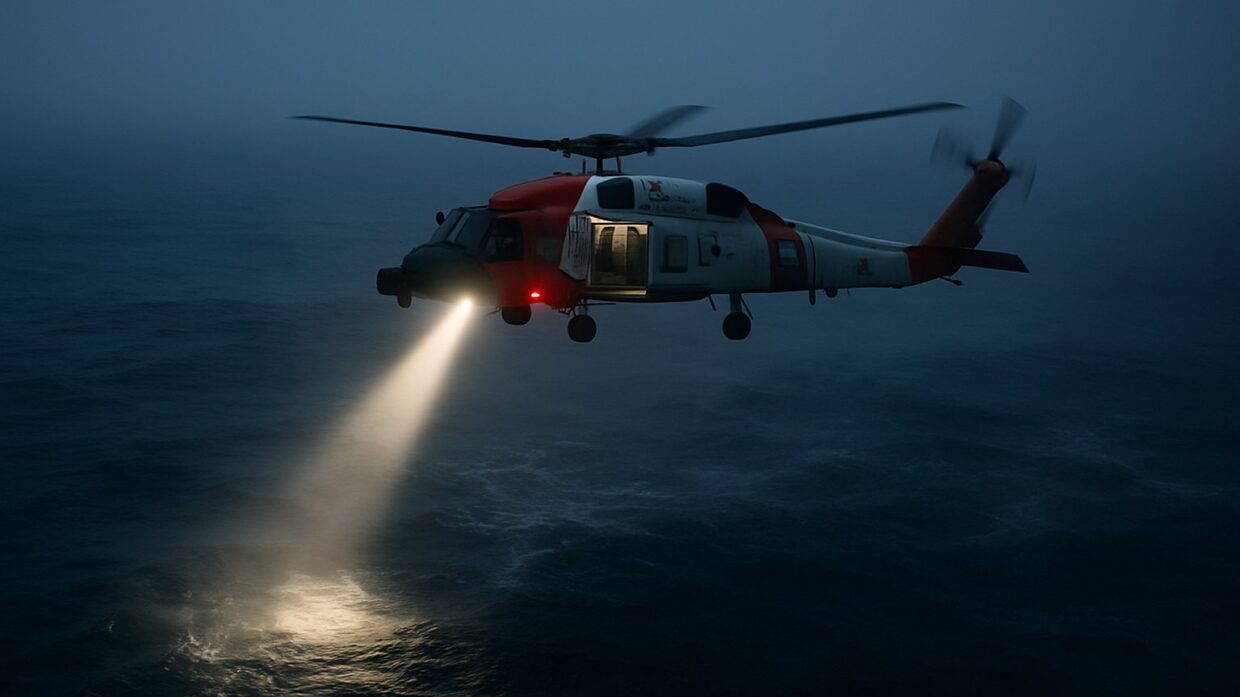
Photo: Well This Is News
Medical Transport Jet With Six People Vanishes Off Massachusetts Coast
Six Missing After Medical Jet Vanishes Off Massachusetts Coast
Coast Guard Searches for Missing Medical Jet Near Nantucket; Six Aboard
Key Takeaways
- Standard aviation incident reporting details such as aircraft registration, operating company, crew identities, weather conditions, radar contact status, and emergency transmissions remain absent from all available coverage.
- The Coast Guard search operation protocol, search area calculation methodology, and typical recovery timeline for offshore aircraft incidents are not addressed despite being routine context in aviation reporting.
- The aircraft's medical transport designation raises unexamined technical questions about pressurization systems and oxygen equipment that could affect survivability factors in an emergency.
The Analysis
A Gulfstream jet carrying six people lost radio contact with air traffic controllers at approximately 2 a.m. Saturday while en route from Bermuda to Boston, triggering an immediate Coast Guard search operation in waters off Nantucket. The Federal Aviation Administration alerted rescue authorities upon losing communications with the aircraft. The basic sequence of events is consistent across reporting, but the sources differ significantly in what they emphasize and what they leave unexamined.
NBC News and MSNBC's coverage identifies the aircraft as a "medical transport jet" and emphasizes the designation in the headline and opening paragraphs. The Daily Wire also names it a "medical transport jet" but leads instead with the human consequence: "Six Missing." Both framings are factually accurate, but they make different editorial choices about what matters most in the opening seconds.
Neither source provides specific details about the aircraft's registration, the company operating it, the identities or medical specialties of those aboard, or the weather conditions in the Bermuda-to-Boston corridor at the time of contact loss. These are standard reporting elements in aviation incidents, and their absence is notable. The available coverage does not establish whether the search was conducted under visual conditions, whether radar contact was lost before or after radio contact, or whether any emergency signals were transmitted by the aircraft. The Daily Wire does name the specific time the FAA alerted the Coast Guard, while NBC/MSNBC sources do not provide that precision.
The left-leaning coverage emphasizes rescue and search operations as the primary narrative frame. The right-leaning coverage uses identical information but leads with the crisis element: "Six Missing." This difference in emphasis does not reflect different facts but rather different editorial judgments about what angle conveys urgency most effectively.
What neither source adequately addresses is the baseline context for such incidents. Aviation search and rescue operations off the U.S. Atlantic coast are relatively common, though high-altitude aircraft over ocean typically have substantial survivability factors depending on the nature of the emergency. The reporting does not establish whether this particular route or aircraft type has a documented safety record, whether the flight plan included contingency waypoints, or whether the aircraft had filed an emergency locator transmitter activation. The medical transport designation raises implicit questions about whether the aircraft was equipped for higher-altitude pressurization or oxygen systems, but those technical details do not appear in any version.
Both framings leave out the institutional dimension: what protocols the Coast Guard follows in such operations, how search area calculations are determined for aircraft at unknown altitude, and what the typical timeline is for locating aircraft in offshore incidents. The public record available does not establish the current status of the search, whether debris or signals have been detected, or what preliminary information about the emergency may have been transmitted before communications ceased. The available reporting establishes only that contact was lost and a search was underway, but the editorial choices about which consequences to emphasize first reveal different narrative priorities even when the underlying facts are identical.
Medical transport flights operate under different regulatory and equipment standards than commercial aviation, and when one disappears over open ocean, it exposes gaps in how the FAA and Coast Guard coordinate real-time emergency protocols for specialized aircraft outside standard commercial corridors. The six people aboard represent not just a search and rescue operation but a test of whether non-commercial medical aviation operates with the same situational awareness redundancies as scheduled carriers. If this aircraft lacked the communication or tracking infrastructure now standard on commercial jets, it will likely trigger FAA review of medical transport certification requirements and mandatory equipment upgrades for similar operations. The incident matters because it will either validate existing protocols for specialized aviation or force regulatory agencies to acknowledge that medical transports operating on longer routes over water operate without equivalent safeguards.