Photo: Well This Is News
Midterm surprise: Democratic challengers surge in deep-red states as GOP enthusiasm falters
Republicans rally to defend competitive Senate seats in Texas, Iowa as Trump mobilizes base
Polls show tight Senate races in Texas, Iowa, Kansas as GOP faces competitive midterm landscape
Key Takeaways
- The Fox News polls explicitly identify cost of living and GOP enthusiasm gaps as the mechanism reshaping these races, yet neither side has connected this pattern to whether national Republican economic messaging is failing across all three states or whether it reflects specific candidate weaknesses.
- Trump's three targeted campaign stops in states that historically should not require presidential attention suggests internal GOP confidence has shifted to active damage control, but the reporting does not reveal whether these interventions will move polling or merely reallocate resources away from other races.
- Left-leaning outlets are not covering these Senate races in available sources, making it impossible to assess whether Democratic messaging emphasizes momentum in these races or grounds results in specific policy grievances, creating an incomplete picture of the actual competitive dynamics.
The Analysis
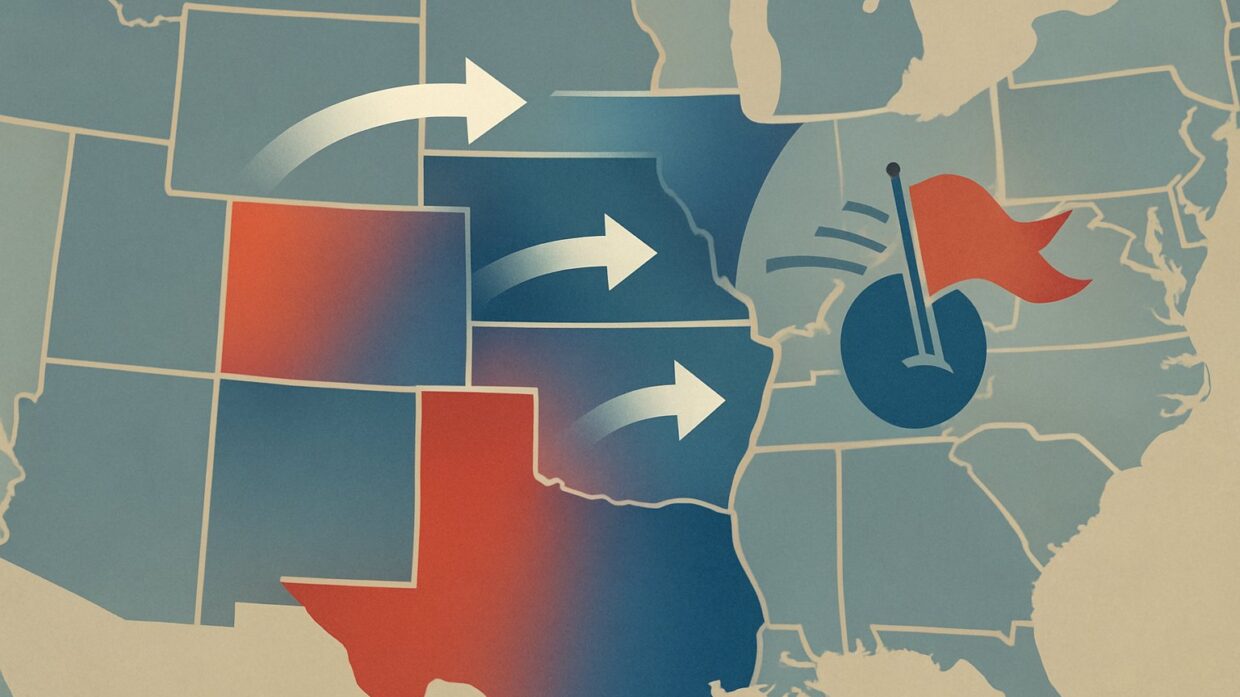
Three Senate races in traditionally Republican states are polling closer than GOP operatives anticipated, prompting Trump campaign stops and national party attention. What the polling data actually shows, versus what each side is claiming, reveals a more complicated midterm picture than either the panic narratives or dismissive messaging suggest.
The specific polling results are these: In Texas, a Fox News poll shows Democrat James Talarico with a 2-point lead over Republican Ken Paxton. In Iowa, a Fox News poll shows Josh Turek with what Bloomberg describes as a slim edge over Ashley Hinson, while a separate Quantus Insights poll shows Hinson edging Turek. In Kansas, JD Vance's campaign stop for Roger Marshall indicates Republican concern that Adam Hamilton is tightening a race that should favor the GOP by double digits in a state Trump won decisively in 2020. The Fox News Texas poll explicitly cites GOP enthusiasm gaps and crossover voters as reshaping dynamics.
The right-leaning framing, present in Fox News, Breitbart, and Washington Examiner coverage, describes these as competitive races requiring mobilization rather than warning signs. The Breitbart headline describes Iowa as closely divided, which is technically accurate but inverts expectation: a Republican representative running even or slightly behind in a GOP stronghold would normally be characterized differently. The Washington Examiner describes Trump's Paxton visit as part of a month-long campaign blitz, emphasizing resource deployment and enthusiasm building. Trump's quoted language, "We need Ken so badly," appears in the Examiner framing without acknowledging what that phrasing signals about internal GOP concern. Fox News calls Kansas an unexpected headache, which is more candid than the other right-leaning outlets but still frames the issue as manageable surprise rather than structural vulnerability.
The left-leaning outlets do not appear to be covering these races in the sources provided, which is itself notable. The omission means the Democratic interpretation of what these polls signal about GOP vulnerability, momentum, or emerging coalitions is not represented in this particular news cycle. That absence makes it impossible to assess whether Democratic messaging emphasizes the narrowing margins as momentum or grounds the result in specific policy grievances.
What neither side is foregrounding is the underlying pattern the polling appears to reflect. The Fox News Texas poll explicitly identifies the mechanism: cost of living, GOP enthusiasm gaps, and independent/crossover voters breaking toward Democrats. These are not unique to Texas. Iowa coverage mentions that cost of living dominates voter concerns there as well. The national Republican position going into the midterms assumed inflation anxiety would drive GOP gains, particularly among working and middle-class voters. These polls suggest that mechanism is not delivering as predicted in states where it should theoretically be strongest. Whether that reflects broader structural problems or specific candidate-level dynamics remains unclear from the reporting provided. The record does not establish whether Paxton's or Hinson's personal positioning is driving the softness or whether the issue is national economic messaging.
The Trump campaign response is instructive: his team is not waiting for further deterioration. Three separate rallies or targeted visits in states that should not require this level of presidential attention indicates GOP confidence has shifted from these races being settled to these races requiring direct intervention. That intervention itself may move numbers, or it may indicate resource allocation that constrains capacity elsewhere.
Republican operatives face a structural challenge that transcends individual candidate performance. When cost-of-living anxiety outweighs inflation messaging in deep-red states like Texas, Iowa, and Kansas, it signals the party's economic argument is not connecting with the voters it needs. The Fox News data showing GOP enthusiasm gaps and crossover defections in Texas represents not a polling anomaly but evidence that economic dissatisfaction is fracturing traditional Republican coalitions. Trump's emergency campaign stops in these states consume finite resources and implicitly concede that assumed advantages have evaporated. If this pattern holds through November, the Republican majority in the Senate becomes mathematically vulnerable, not because of blue-state pickups but because red-state retention is failing on fundamentals the party believed would secure them.