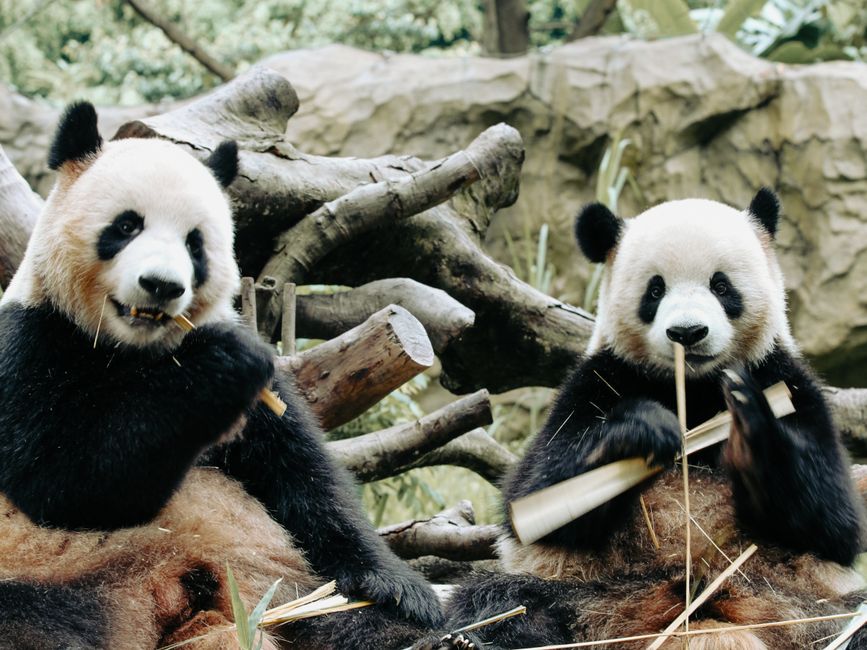
Photo: Mehmet Turgut Kirkgoz
Giant pandas arrive in Atlanta as symbol of US-China diplomatic thaw
Two giant pandas arrive in Atlanta under US-China government agreement
Two giant pandas arrive in Atlanta under US-China government agreement
Key Takeaways
- China has loaned pandas to zoos in multiple countries for decades, but neither major news source explains whether this Atlanta delivery is routine practice or unprecedented in scale.
- The Guardian connects the panda arrival to Xi-Trump summits without confirming the agreement was directly negotiated as part of those talks or completed separately.
- No public statements from the Trump administration or Chinese government have been reported confirming that the panda loan is intended as a diplomatic signal of improved relations.
The Analysis
Two giant pandas arrived in Atlanta on Sunday as part of a formal government agreement between Washington and Beijing, but the sources differ sharply on what this arrival actually signals about the relationship between the two nations.
The verified facts are straightforward. Ping Ping and Fu Shuang departed Chengdu in southwestern China early Sunday aboard a dedicated FedEx Boeing 777 aircraft, arriving in Atlanta that morning. Both sources confirm the animals are part of a bilateral agreement between the Chinese and American governments and will reside at the Atlanta Zoo. The Guardian reports the arrival coincides with Xi Jinping and Trump administration summits, though neither source provides the specific terms of the loan agreement, its duration, or which American officials negotiated the deal.
The Guardian frames this as a 'symbol' of diplomatic thaw. The headline emphasizes the connection to the Xi-Trump summit. The reporting treats the panda arrival as evidence that warming relations have produced concrete results, using language like 'agreement between governments' to underscore official diplomatic engagement. This framing leaves out several things: whether China has loaned pandas to other administrations, how long such loans typically last, and whether panda diplomacy is standard practice or unusual. The Guardian's emphasis on summits implies this is a new development tied to current leadership, but the reporting does not establish whether panda loans are routine or remarkable.
The Washington Examiner reports the same facts but strips away the diplomatic narrative. It omits the summit reference entirely. It emphasizes operational details: the aircraft type, the departure location, the logistics of transport. This framing treats the story as news of an animal arrival, not as a diplomatic statement. The Examiner's more granular focus on 'FedEx Panda Express' and 'Boeing 777' serves a different function than the Guardian's summit context. It frames this as a straightforward bilateral agreement without suggesting it represents a thaw or warming. Neither interpretation is false, but they emphasize different aspects of the same event.
What neither source addresses: whether panda loans are a standard tool of US-China diplomacy or if this represents something new. China has loaned pandas to zoos in multiple countries for decades. The public record does not establish whether this particular loan is unusually significant, whether it required high-level negotiation, or whether it reflects a shift in policy. Neither source explains the loan terms, duration, or costs. Neither confirms that this arrangement is directly tied to the summits mentioned or if it was negotiated separately. The Guardian assumes the connection; the Examiner declines to make it.
The underlying question is whether a panda arrival constitutes evidence of improved bilateral relations or whether it is a routine diplomatic courtesy that both nations regularly extend. A reader relying solely on the Guardian would assume this is a breakthrough signal. A reader relying on the Examiner would not. The difference reflects a choice about what details matter most, not about what the facts are. What remains absent is the specific history of panda loans to American zoos, the timeline of this agreement's negotiation, and whether the Trump administration or Chinese government has made any public statement linking it to broader diplomatic efforts.
Panda diplomacy has shaped US-China relations for decades, yet the arrival of Ping Ping and Fu Shuang reveals how the same factual event generates opposite interpretations depending on what context gets included or omitted. The Guardian's frame linking the animals to the Xi-Trump summit suggests a breakthrough, while the Washington Examiner's focus on logistics strips away diplomatic meaning entirely. What actually matters is whether China treats panda loans as routine wildlife diplomacy extended to multiple nations or as a deliberate signal reserved for moments of strategic warming. Without knowing the loan's duration, cost, negotiation timeline, and whether either government has publicly connected it to summit outcomes, readers cannot determine if this constitutes a meaningful policy shift or standard practice dressed in different rhetoric. Future panda agreements will be interpreted through whichever frame proved persuasive here, making the choice of context a consequential editorial decision that shapes how Americans understand bilateral relations.