Photo: Well This Is News
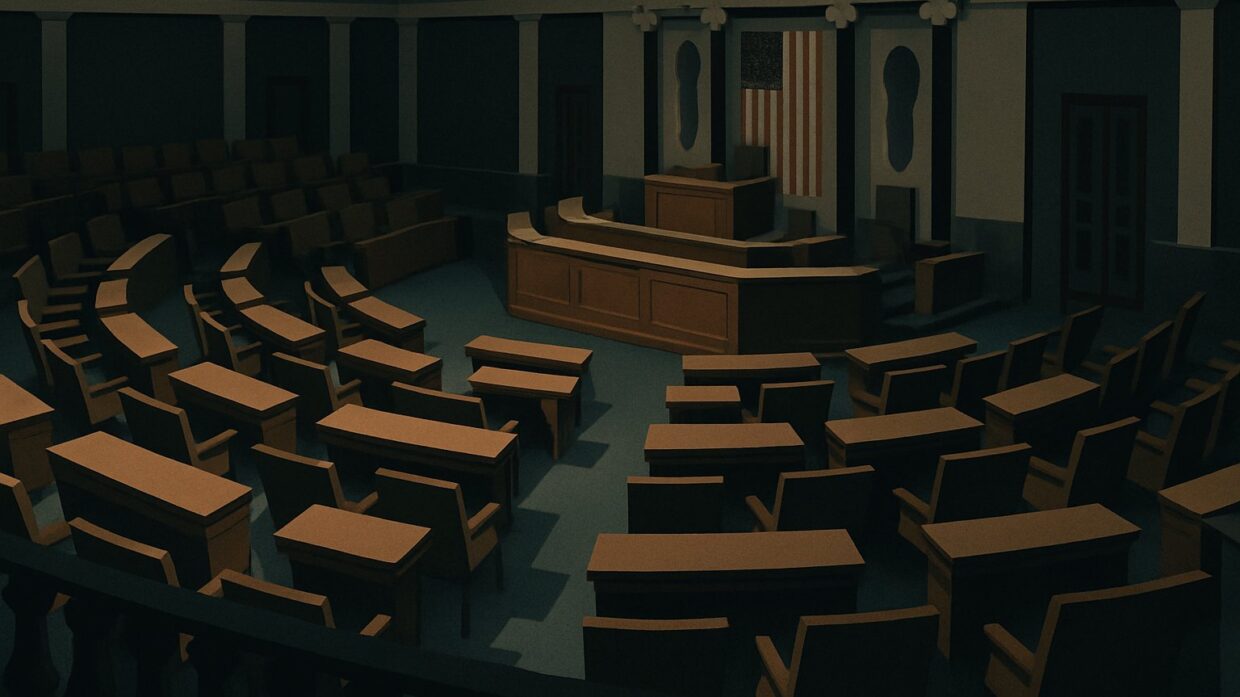
Lawmakers fear 'barely capable of email' Congress cannot manage AI risks
Congress pushes AI decisions past midterms as competing priorities pile up
Congress delays AI regulation as lawmakers question chamber's technical capacity
Key Takeaways
- No formal statutory deadline for AI regulation existed prior to Congress's decision to delay it, meaning the postponement reflects a choice about timing rather than a missed legal requirement.
- Congress has successfully regulated emerging technologies before including aviation and pharmaceuticals, but reporting on the AI delay does not examine whether those prior regulatory efforts required similar timelines or faced comparable institutional obstacles.
- Lawmakers are publicly acknowledging technical expertise gaps while simultaneously choosing procedural decisions that do nothing to close those gaps, suggesting the gap itself may not be the actual constraint on moving forward.
The Analysis
Congress has formally delayed substantive artificial intelligence regulation past the November midterm elections, a decision that has surfaced a recurring tension in the legislative process: lawmakers publicly acknowledge gaps in institutional capacity while simultaneously choosing procedural choices that defer addressing those gaps. The available reporting does not establish that any formal deadline existed prior to this delay, but rather that lawmakers who had signaled urgency about AI regulation now face a crowded Senate calendar and House recess.
The documented facts are straightforward. Some lawmakers, quoted in NBC News reporting, expressed doubt about Congress's technical competency to regulate AI, with one lawmaker using the phrase "barely capable of email" to characterize the chamber's digital sophistication. The Hill's reporting confirms that AI regulation debate is being "kicked down the road" past the midterms, and that some lawmakers are expressing frustration about the timeline. Neither source provides evidence of a missed statutory deadline or a specific regulatory window that has closed. What both sources report is a gap between expressed concern about AI's pace and Congress's demonstrated ability to move quickly on technical policy.
The left-leaning framing emphasizes institutional incompetence and existential risk. By leading with the "barely capable of email" quote and pairing it with warnings about AI wiping out humanity, NBC News creates a frame in which the story is fundamentally about Congress's inadequacy for the moment. This framing leaves out the procedural realities that shape any legislative delay, including committee jurisdiction disputes, competing appropriations deadlines, and the legislative calendar itself. It also does not address whether technical expertise exists within Congress (in committees, staff, or external advisors) even if individual lawmakers lack it, or whether the delay reflects a choice about sequencing rather than pure incapacity.
The right-leaning framing in The Hill emphasizes procedural constraint and competing priorities. By focusing on the crowded Senate agenda and the House schedule, The Hill's reporting creates a frame in which the delay is a natural result of finite legislative time and multiple urgent demands. This framing leaves out the question of whether those competing priorities are actually more urgent than AI regulation, or whether Congress is using crowded calendars as a politically convenient reason to defer a decision on which technical and political consensus remains fragmentary. The reporting does not address whether the urgency signals from some lawmakers reflect institutional consensus or represent a minority view.
What neither side foregrounds is the substantive disagreement Congress has about what AI regulation should actually look like. The available reporting does not establish whether the delay reflects inability to reach consensus on regulatory approach, disagreement about which agency should oversee AI, or genuine uncertainty about whether current law already covers AI applications. Congress has regulated emerging technologies before, including radio, aviation, and pharmaceuticals, though the reporting does not address how those prior regulatory efforts proceeded or what timelines they required.
The underlying question is whether the delay reflects Congress's structural inability to move at the pace emerging technology demands, or whether it reflects a choice about sequencing that is politically convenient in an election year. The reporting does not establish which.
Congress's delay on AI regulation past the midterms will likely entrench the current regulatory vacuum for at least two years, extending the period during which AI systems deploy without sector-specific oversight while executive agencies scramble to stretch existing statutes beyond their original scope. The Federal Trade Commission and SEC are already attempting to regulate AI under consumer protection and securities laws written decades before machine learning existed, creating inconsistent enforcement that neither industry nor consumers can reliably navigate. If Congress does not act in the next session, the regulatory gap will have widened far enough that any future legislation will arrive after critical market concentrations have formed, major harms have materialized, and incumbent firms have already shaped the technological landscape to their advantage. The delay is not merely a scheduling inconvenience but a structural decision to let private actors define AI's trajectory without democratic input during the technology's formative years.