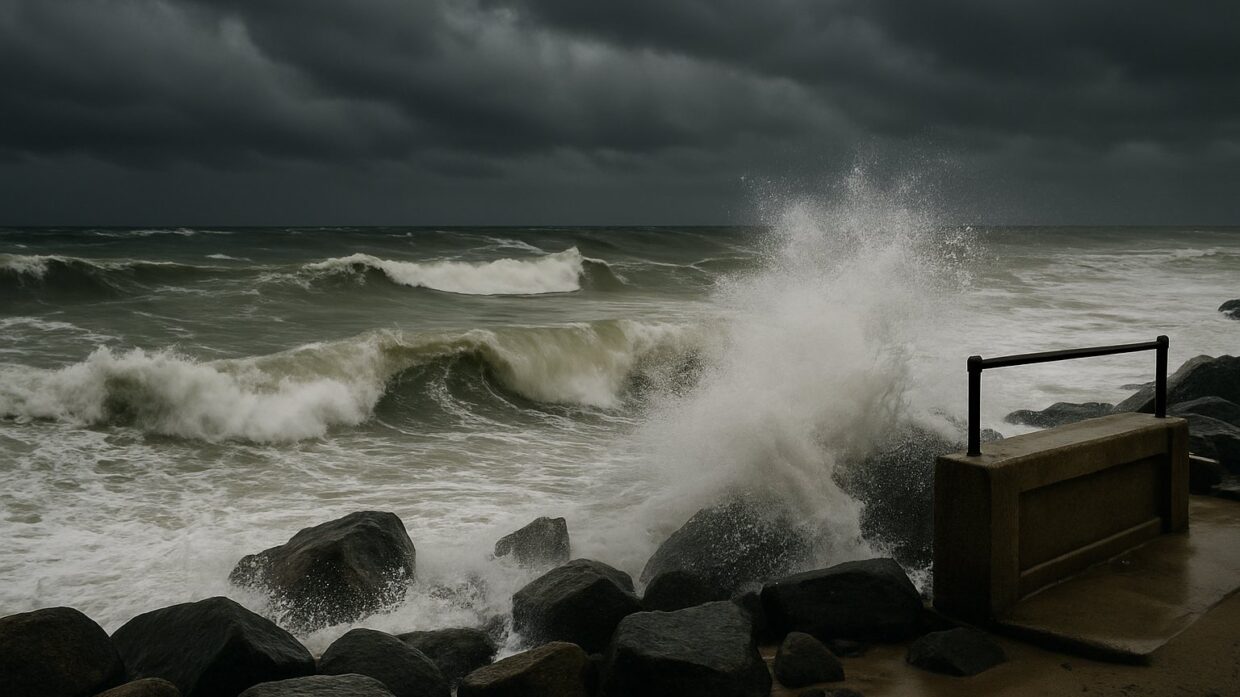
Photo: Well This Is News
Governors act decisively as destructive nor'easter threatens coastal communities with flooding and severe damage
States mobilize emergency resources for weekend nor'easter; officials prepare for potential coastal impacts
New York and New Jersey declare states of emergency as nor'easter approaches East Coast
Key Takeaways
- Neither news outlet reported specific meteorological data like wind speeds, precipitation totals, or coastal flood predictions that would establish whether this nor'easter presents unusual risk or represents standard seasonal weather.
- Emergency declarations for nor'easters may have become routine Friday announcements ahead of Atlantic storms, but available reporting does not compare this system to prior nor'easters in 2023 or 2024 to clarify whether the risk has escalated.
- The emergency declaration grants governors significant power to mobilize the National Guard and redirect resources without legislative approval, but public reporting focused on administrative action rather than documenting the meteorological basis for invoking that authority.
The Analysis
Two Democratic governors declared states of emergency Friday for a nor'easter expected to strike the East Coast over the weekend, but the public record does not yet establish the storm's actual severity or whether the declarations reflect standard pre-storm protocol or evidence of unusually dangerous conditions.
Governor Kathy Hochul declared the emergency for Nassau, Suffolk, New York City, and Westchester counties in New York. Governor Mikie Sherrill issued the equivalent declaration for New Jersey. The available reporting describes the storm as bringing destructive waves and street-level flooding, but provides no wind speed forecasts, precipitation estimates, or comparison to historical nor'easters in the region. NBC News correspondent Sam Brock reported from the storm zone, but the public record does not contain the specific meteorological data that would establish whether this nor'easter ranks as severe for the region or represents a typical weekend storm requiring precautionary preparation.
The left framing, represented by NBC's coverage, emphasizes the destructive potential and uses language focused on impact: destructive waves, flood waters submerging streets, and voluntary evacuations. This language pattern centers viewer attention on what residents face rather than on governmental response. The framing does not specify whether this particular storm poses unusual risk or whether such declarations have become routine practice ahead of any coastal storm system.
The right framing, represented by The Hill's straightforward reporting, emphasizes preparedness and coordination. The language centers on what governors did and what resource allocation becomes possible, positioning the emergency declaration as a procedural tool. This framing does not establish whether the declaration reflects confidence in the storm's severity or standard administrative practice. The reporting names the officials involved and the jurisdictions affected, but does not describe what the storm's forecasted characteristics actually are.
What neither side establishes is whether states of emergency for nor'easters have become routine Friday announcements or whether this particular system presents documented threats that justify the classifications. The National Weather Service issues detailed forecasts with specific wind speeds, precipitation totals, and coastal flood advisories, but those specific numbers do not appear in either outlet's reporting. The available coverage also does not compare this storm to prior nor'easters in 2023 or 2024, which would help readers assess whether the declaration reflects escalating risk or standard procedure. A nor'easter is a predictable Atlantic weather pattern; what remains unclear is whether this one carries the characteristics that distinguish it from seasonal expectations.
The consequence of the emergency declarations is administrative: governors gain authority to mobilize the National Guard, suspend regulatory requirements, and redirect state resources without legislative approval. That power matters. What the public record does not yet establish is the basis for invoking it. Standard meteorological data would answer that question, but the reporting focused on administrative action rather than on the storm itself.
Emergency declarations grant governors unilateral power to mobilize National Guard units, suspend environmental regulations, and redirect state budgets without legislative approval, yet the reporting surrounding New York and New Jersey's nor'easter declarations omitted the specific meteorological data that would justify such extraordinary authority. Without wind speed forecasts, precipitation estimates, or comparison to historical nor'easters, readers cannot determine whether these declarations reflect routine precaution before any coastal storm or response to documented threats that warrant bypassing normal governmental checks. The absence of National Weather Service data from coverage creates a accountability gap: when governors invoke emergency powers, the public record should establish not just that they took action, but why the measurable characteristics of this particular storm demanded executive authority that circumvents legislative review. Routine use of emergency declarations for typical seasonal storms normalizes the concentration of power and erodes the distinction between preparedness and crisis governance.