Photo: Well This Is News
Godzilla-Level Super El Niño Shatters Temperature Record, Supercharging Climate Crisis
El Niño Temperatures Hit Historical Levels; Natural Climate Cycle Peaks Early
Record-Breaking El Niño Reaches Peak Intensity Months Earlier Than Predicted
Key Takeaways
- Scientists have not yet established whether this El Niño event represents an intensification of the cyclical pattern itself or simply a higher baseline temperature against which all measurements are now taken.
- The reported earlier-than-expected peak timing requires clarification: whether this acceleration is driven by warming conditions or reflects normal variability within the natural El Niño cycle.
- The distinction between the El Niño phenomenon (which occurs naturally and cyclically) and the absolute temperature baseline (which may have shifted due to cumulative warming) is scientifically crucial but largely absent from public reporting.
The Analysis
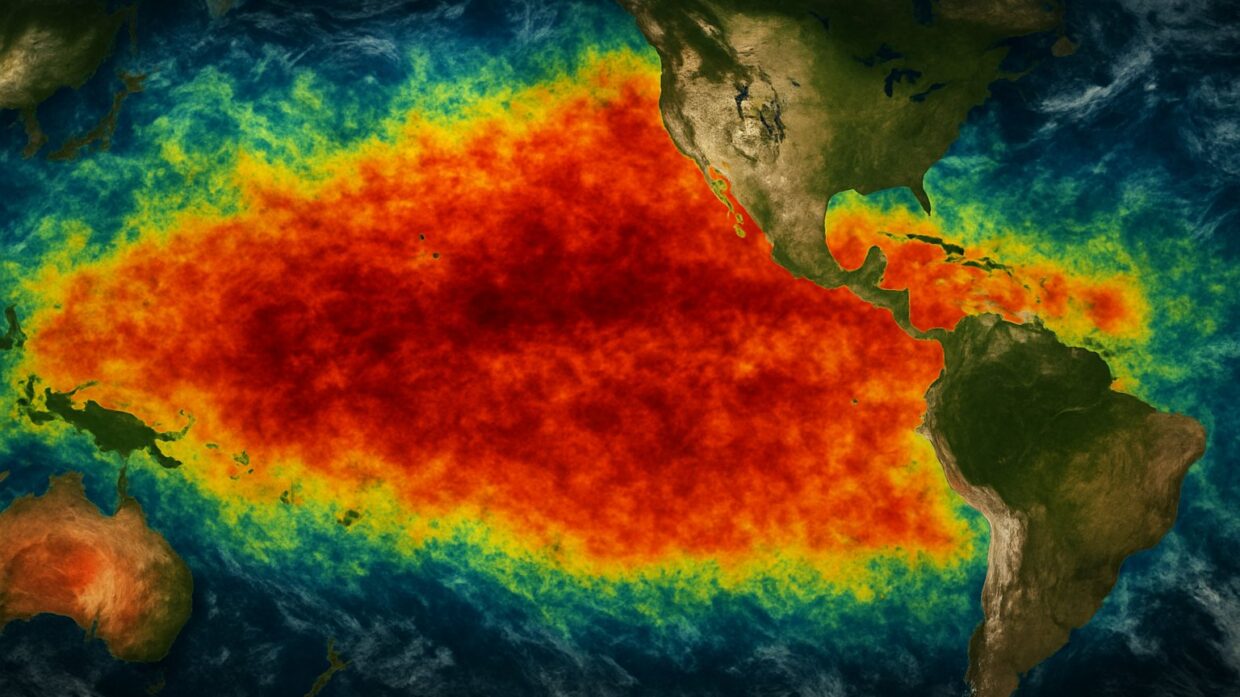
The current El Niño event has set a verifiable record: sea surface temperatures in the tropical Pacific have exceeded all previous measurements for this cyclical phenomenon. This is a documented fact that neither framing disputes. What differs dramatically is what each side emphasizes about what caused it and what it means.
The Guardian's coverage uses language specifically chosen to connect this record to human-caused climate change. The phrases 'Godzilla-level' and 'jaw-dropping' appear twice in the summary. The Guardian names climate change as the active force ('supercharging the climate crisis') and centers the story on human consequences ('huge impact on communities across the world'). This framing is consistent with the climate science reporting convention that treats El Niño intensity as evidence of broader warming trends shaped by greenhouse gas emissions. The Guardian does not dispute the ocean temperature numbers. It interprets them through a lens of human responsibility and urgency.
Carbon Brief's treatment, sourced as the neutral perspective, acknowledges the same temperature records and uses the term 'remarkable' to describe the phenomenon. Carbon Brief foregrounds the scientific measurement itself: 'Sea surface temperatures in the tropical Pacific now equal.' The emphasis is on the data point and the unusual timing, not on causation or consequence. This framing does not claim the warming is independent of climate change, but it decouples the El Niño event from the climate policy narrative. It treats the phenomenon as an object of study rather than as evidence of a broader crisis.
What neither framing fully addresses is the documented distinction between the El Niño cycle itself, which is a recurring ocean-atmosphere pattern independent of human influence, and the baseline temperature against which this year's El Niño is being measured. The available reporting does not establish whether the record-breaking nature of this event reflects: an intensification of the El Niño pattern itself due to changed ocean conditions, a higher baseline ocean temperature that all phenomena are now measured against, or both simultaneously. The science of how anthropogenic warming interacts with natural cyclical patterns remains more complex than either framing captures.
The timing claim requires scrutiny. The Guardian states the record is being reached 'several months before its expected peak.' Carbon Brief's summary confirms this unusual acceleration but does not emphasize it as a consequence of climate change. The public record does not yet establish whether earlier peak timing is itself driven by warming or whether it reflects variability within natural cycles.
The most honest version of this headline would be: 'Tropical Pacific Reaches Record Temperatures During El Niño Cycle; Scientists Examine Whether Pattern Intensification Reflects Climate Change or Baseline Warming Shift.' This avoids both the assumption that the cycle itself has been 'supercharged' into a crisis mechanism and the assumption that this is merely a natural event occurring at an unchanged scale. It acknowledges the measurement while preserving the actual scientific uncertainty about causation.
Earlier peak timing for El Niño events signals a potential shift in how ocean-atmosphere cycles respond to warmer baseline temperatures, which could reshape seasonal weather prediction models that farmers, water utilities, and disaster preparedness agencies rely on globally. If El Niño peaks are now arriving months ahead of historical patterns, forecasting windows for drought preparation in East Africa or monsoon intensity in South Asia narrow considerably. Insurance actuaries and infrastructure planners built risk assessments on century-old timing assumptions; acceleration of these cycles forces recalibration of flood defenses, irrigation schedules, and emergency reserves across multiple continents. The predictability loss matters more than the temperature record itself because institutions cannot adapt to disruptions they cannot anticipate.