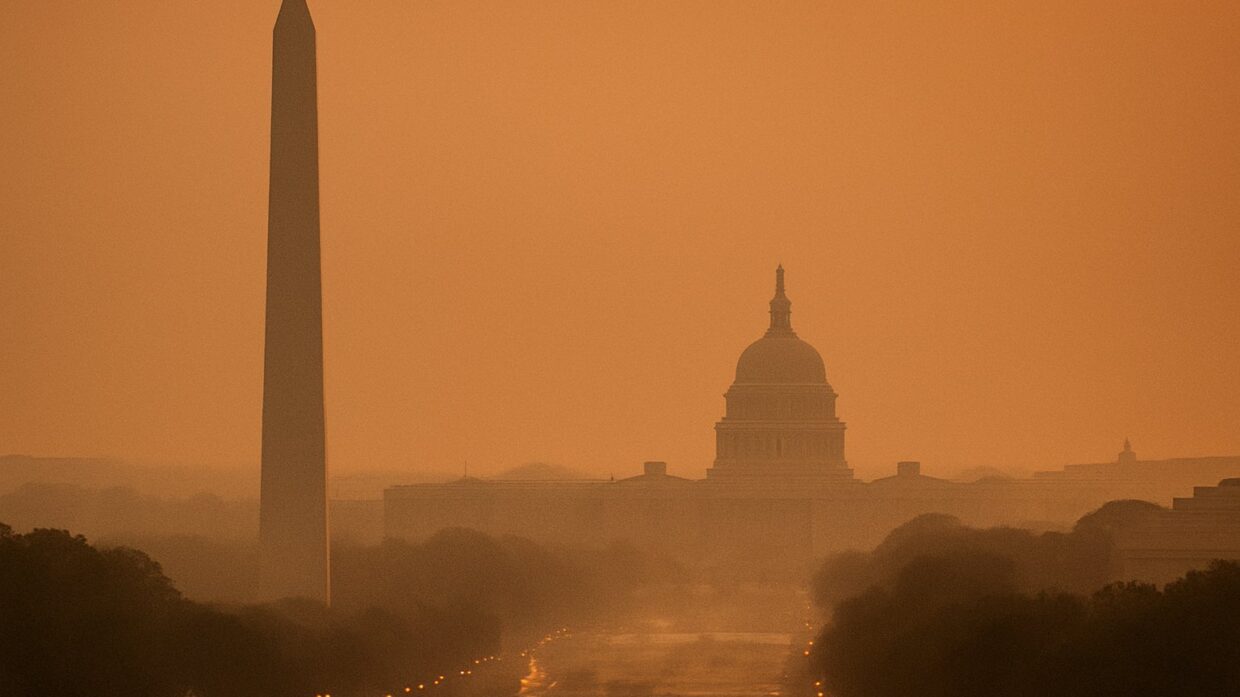
Photo: Well This Is News
Trump's massive fireworks show will spike pollution during dangerous heat wave
Media exaggerates health risks from July Fourth fireworks during summer heat
Heat wave and pollution collide as Washington prepares record July Fourth
Key Takeaways
- Heat and fireworks emissions interact through atmospheric stagnation, meaning identical smoke volumes disperse differently at 102 degrees than at 75 degrees, but the coverage does not establish whether this year's conditions create materially worse health outcomes than typical years.
- The public record does not disclose whether the National Park Service adjusted the fireworks volume, duration, or launch sequence in response to the heat forecast, or what attendance projections and medical personnel deployment the agency planned.
- The 250th anniversary marketing appears genuine and may reflect independent commemoration planning unrelated to this specific heat event, but the reporting does not establish whether the record scale was driven by political considerations or timing coincidence.
The Analysis
The July Fourth weekend presents a genuine logistical collision between two atmospheric conditions: a heat wave producing temperatures forecast at 102 degrees Fahrenheit in Washington, D.C., and fireworks emissions that both Mother Jones and The Washington Post coverage flags as air quality concerns. Neither framing is wrong about the basic facts. Both conditions exist simultaneously.
What the left frame emphasizes is the fireworks' contribution to air pollution. Mother Jones cites "internal documents from the National Park Service" establishing that the display will produce "unhealthy levels of pollution at the National Mall and surrounding area." The language choice matters: "unhealthy levels" is a technical air quality metric, not editorial speculation. This framing leaves out whether similar pollution levels occur at routine July Fourth celebrations, or whether the Trump administration fireworks display differs materially in scale from prior years' events in ways that increase emissions proportionally. The omission is significant because it implies this administration is uniquely culpable for a phenomenon,fireworks pollution,that recurs annually.
The right frame dismisses the coverage as media hysteria. The Daily Wire's characterization,"legacy media panics" and warns attendees to "wear an N95 mask",reframes legitimate air quality reporting as alarmism. The Washington Post's specific recommendation does appear in the coverage, according to The Daily Wire's reporting, though the full context of that recommendation is not provided in the summary. This framing leaves out what those air quality measurements actually establish: whether the combination of heat and fireworks creates conditions materially worse than comparable events, or whether the Post's precaution reflects standard guidance for vulnerable populations during heat waves with marginal air quality degradation.
What neither side fully addresses is the established science on how heat and air pollution interact. High temperatures reduce atmospheric mixing and trap pollutants closer to ground level, a phenomenon meteorologists call atmospheric stagnation. This means fireworks emissions during a 102-degree day do not disperse at the same rate as identical emissions on a 75-degree day. The relevant question is not whether fireworks produce emissions,they do, annually,but whether the specific atmospheric conditions this July Fourth make those emissions pose materially different health risks than typical years. The available coverage does not establish whether the National Park Service adjusted fireworks volume, duration, or launch sequence in response to the heat forecast, or whether such adjustments are technically feasible.
The reporting also does not disclose what attendance projections the Park Service made, what medical personnel were deployed, or how the agency weighted the public desire for a record celebration against the documented health risks of large crowd assembly during extreme heat. The 250th anniversary marketing appears genuine,Trump administration planning does emphasize historical scale,but the coverage does not establish whether the size increase was driven by political calculations or by independent commemoration planning that predated this particular heat event.
A more precise headline would acknowledge both conditions without implying causation: a severe heat wave coincides with a large fireworks display, creating compounded air quality challenges that event planners must manage. The public record does not yet establish whether that management was adequate.
Heat waves trap ground-level pollution through atmospheric stagnation, a basic meteorological principle that makes July Fourth fireworks emissions behave differently on a 102-degree day than at typical celebrations. The National Park Service has approved a record-scale display during extreme heat without publicly disclosing whether officials adjusted fireworks volume, duration, or launch timing in response to the atmospheric conditions, or whether crowd medical capacity was expanded accordingly. This represents a concrete planning gap: federal agencies responsible for large public gatherings during climate-intensified heat waves lack transparent protocols for weighing attendance records against documented health risks from combined heat and air pollution exposure. Future holiday events in warming summers will face identical decisions without institutional guidance from how this precedent was handled.