Photo: DeLuca G
Tit-for-tat violence escalates as US strikes Iranian tankers in response to failed missile attacks
US military destroys Iranian tankers after IRGC targets Navy warship with ballistic missiles
US destroys five Iranian oil tankers after attempted missile strikes on Navy warship
Key Takeaways
- The US strikes destroyed Iranian tanker infrastructure that operates within the existing sanctions regime, suggesting continuity with long-standing policy rather than a strategic departure.
- Oil prices spiked after the strikes despite Trump's prediction that prices would fall following a US victory over Iran, raising questions about whether military commanders anticipated or planned for this economic outcome.
- Reporting does not confirm whether the tankers were sunk or merely damaged, leaving the actual scope of the strikes and their proportionality to Iran's missile attacks unverified.
The Analysis
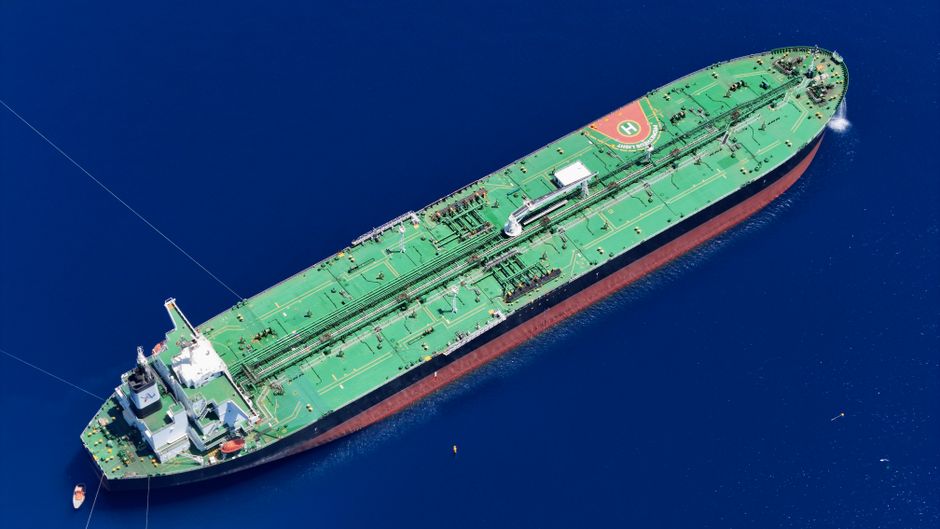
The US military struck five Iranian crude oil tankers on Tuesday in response to ballistic missile attacks launched by the Islamic Revolutionary Guard Corps against a US Navy warship. CENTCOM identified the disabled vessels by name: M/T Kaviz, M/T Sabiti, and three others operated by IRGC shipping networks. The attacks came after Iran attempted to target the warship on two separate occasions within two days. Brent crude oil prices spiked to nearly $100 per barrel following the strikes, driven partly by simultaneous Houthi attacks on Saudi oil infrastructure.
The left-leaning framing emphasizes "tit-for-tat violence" and "escalation," language that appears in both The Guardian and MSNBC coverage. This framing treats US and Iranian actions as reciprocal and symmetric in scale. The Guardian describes the violence as "surging again," implying cyclical inevitability rather than causal responsibility. MSNBC uses the phrase "lurch back toward fighting," treating the military exchange as mutual drift rather than response-and-consequence. This framing leaves out that Iran initiated this specific exchange by launching ballistic missiles at a US warship, which prompted the US strikes on tankers.
The right-leaning framing, visible in the Washington Examiner, emphasizes failed Iranian attacks and precise US response. The language specifies that missile attacks "targeted" the warship and that they "failed," establishing agency and outcome. The Examiner names the tankers as "IRGC crude oil carriers," explicitly connecting them to Iranian military infrastructure rather than civilian shipping. This framing treats the US strikes as defensive and proportional. It does not address that destroying tanker infrastructure disrupts oil supplies, which has civilian economic consequences beyond the military dimension.
What neither framing fully captures is the underlying strategic context. The US has maintained extensive economic sanctions on Iran's oil sector for years, explicitly designed to degrade revenue available to the IRGC. Iran's tanker fleet operates under those sanctions constraints. Destroying the vessels is consistent with long-standing US sanctions policy, not a departure from it. Bloomberg reporting notes that Trump predicted oil prices would fall after a US victory over Iran, but the strikes actually caused prices to spike, contradicting that claim. The reporting does not establish whether US commanders anticipated this price effect or how it factors into the strategic calculation.
The sequence matters. Iran launched missiles first. The US responded by destroying tankers. Neither the left nor right framing addresses what triggers the next Iranian response, or whether this represents a sustainable pattern of escalation or a bounded exchange. CENTCOM's statement says the tankers were "destroyed," but no reporting confirms they were sunk or rendered permanently inoperable versus damaged. The specific damage assessment affects assessments of proportionality and likelihood of further escalation.
The record establishes that this exchange occurred, that Iran initiated with missiles, and that the US responded with strikes on shipping infrastructure. What remains undisclosed is the extent to which either side views this as a contained response or the opening of a new phase. Oil markets are pricing in continued uncertainty.
Iran's deliberate targeting of a US warship with ballistic missiles signals a willingness to challenge American military presence through direct attack rather than proxy operations, marking a significant shift in tactical doctrine that will reshape US force posture calculations across the Middle East for years. The US destruction of IRGC-controlled tankers in response demonstrates that Washington now treats Iranian state shipping infrastructure as a legitimate military target, not merely economic collateral. This explicit linkage between sanctions enforcement and kinetic military action establishes new operational precedent that Iran may cite to justify targeting civilian American assets or allied shipping. The spike in global oil prices reveals that markets view the boundary between contained responses and sustained escalation as dangerously blurred, creating economic pressure that could force either side toward de-escalation or further provocation depending on domestic political calculations. Future Iranian decisions about missile deployments and American choices about force protection will operate within this newly established framework where both navies have crossed thresholds previously treated