Photo: Well This Is News
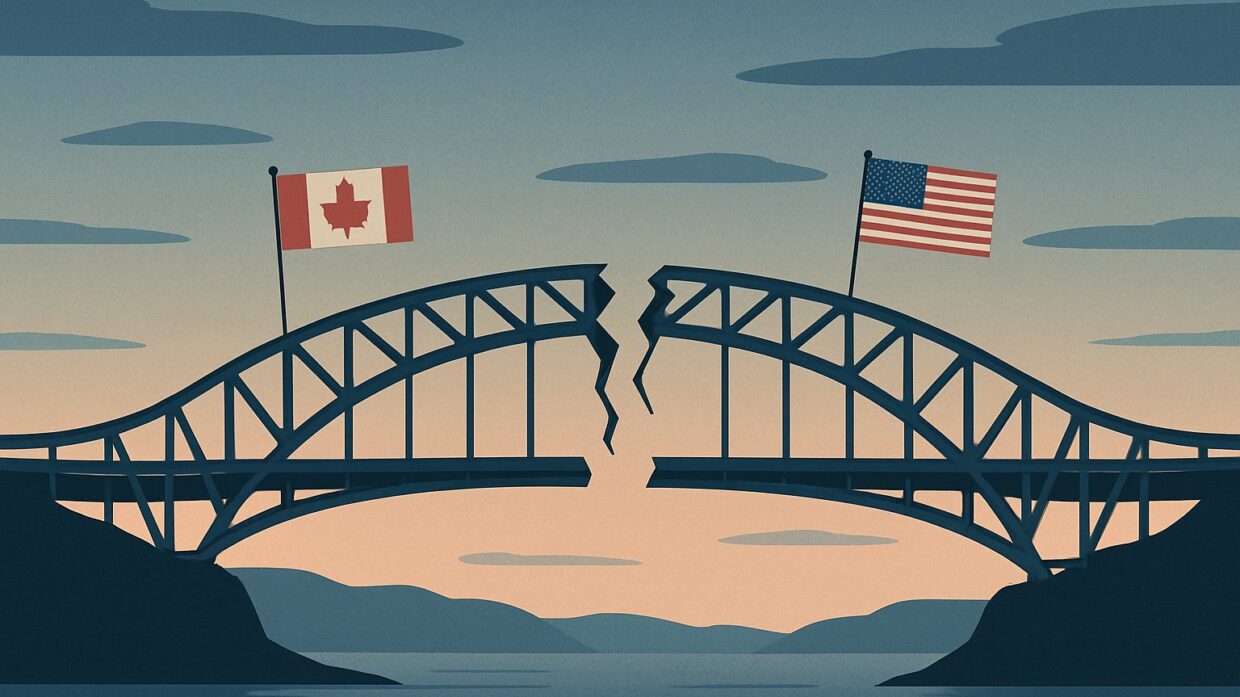
Carney stands firm: Canada won't accept US trade deal that weakens French language rights
Carney declares Canada 'at war' with US after trade negotiations fail
Canada-US trade talks collapse as Carney rejects tariff demands over French language protections
Key Takeaways
- The US proposal to alter French language protections marks a shift toward using trade agreements to reshape partner nations' domestic policies, a departure from how these deals typically work.
- Neither side has explained whether the language provision was a known issue from the start or a late-stage demand that surprised Canadian negotiators, a detail that would clarify whether Carney refused compromise or faced a goalpost shift.
- This dispute follows decades of US-Canada tension over cultural content protection, suggesting the current breakdown reflects an ongoing pattern rather than an isolated incident, but reporting has not established whether Trump's approach represents a new strategy or tactical negotiating.
The Analysis
Canada and the US have broken off trade negotiations after the Trump administration proposed terms that would alter how Canada protects the French language, according to reporting from multiple outlets. Prime Minister Mark Carney rejected the proposal and stated to reporters that Canada was prepared for what he called a fundamental shift in the bilateral relationship. This is not a disagreement about tariff rates or dispute resolution mechanisms. It is a collision over whether a trade agreement can reach into a country's domestic language policy.
The Guardian reports that Carney was "praised for rejecting" the US proposal, emphasizing the cultural sovereignty dimension. Breitbart quotes Carney saying Canada is "at war" with the United States and reports that Ontario Premier Doug Ford said "everything is on the table" in response. PBS NewsHour frames the story as intensifying economic fallout and notes that Carney said Canada no longer views the US as a reliable partner. Axios reports that Carney's defiance has "Canada cheering." What the headlines capture differently is tone and implication, not the underlying facts.
The left-leaning framing emphasizes that Carney stood firm on a matter of national identity and cultural protection. The Guardian's language choice, "praised for rejecting," assigns moral clarity to Carney's decision and frames it as defense of something irreplaceable. The implicit argument is that trading away language protections would constitute a form of cultural surrender. That framing leaves out what the US position actually was, what specific language provisions were contested, and whether there were alternative formulations the two sides explored. It also does not foreground the economic costs Canada may face as negotiations collapse.
The right-leaning framing emphasizes Carney's use of the word "war" and the breakdown itself. Breitbart leads with the language of conflict, not the substance of the dispute. This framing highlights Canadian defiance and preparation for retaliation, suggesting escalation. It does not explain what triggered the US demand in the first place or whether the French language provision was a dealbreaker for Canada from the start or emerged during negotiations. It also does not establish whether the US had legitimate trade-related reasons for the demand or whether it was, as some coverage implies, an arbitrary imposition.
What neither framing adequately addresses is the prior history of trade disputes between the US and Canada over cultural content. The two countries have disagreed for decades over whether cultural products, including those in French, should be protected from trade liberalization rules. During the USMCA negotiations in 2018, similar tensions arose. The current dispute sits inside that longer pattern. Neither side explains whether the Trump administration was trying to alter an existing precedent or whether the dispute reflects a new position.
The reporting also does not establish whether the French language provision was a condition the US imposed late in talks as a negotiating tactic, or whether it was known from the beginning. The absence of that timeline is significant because it changes the narrative from "Carney refused to compromise" to "the terms shifted unexpectedly." Carney's public language, calling it a matter of national sovereignty, suggests he did not expect the US to make language policy a negotiable item in a trade agreement. The real question is whether this reflects a genuine Trump administration policy shift toward using trade agreements to reshape partner nations' domestic policies, or whether it was a tactical negotiating move that failed.
Canada's refusal to negotiate away French language protections has shattered the assumption that trade agreements affect only tariffs and investment rules. If the Trump administration successfully forces language policy into future trade talks with other nations, it establishes a precedent that domestic cultural regulations are now legitimate bargaining chips in commerce negotiations. This fundamentally alters the scope of what trade agreements can demand. Mexico and other countries with indigenous language protections or cultural content rules will face pressure to reconsider policies they have defended as non-negotiable. The collapse signals that trade negotiations no longer stop at the border of national identity, reshaping how every nation must defend domestic policies that were previously considered outside the commercial sphere.