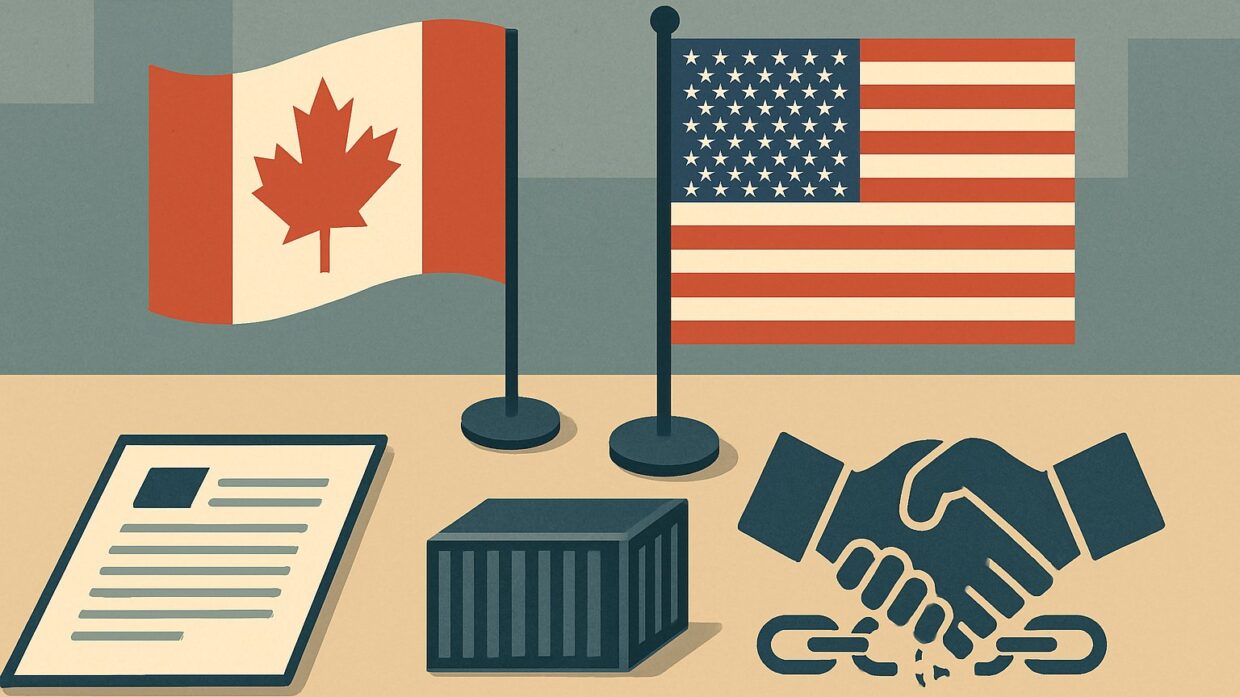
Photo: Well This Is News
Vance Caught on Audio Mocking Canadian Leader Over Trade Concessions to Trump
VP Vance Takes Aim at Democrats in TikTok Video While Administration Secures Trade Wins
Vance Mocks Canada's Trade Stance in Leaked Audio as Carney Warns Deal Leaves Both Countries Worse Off
Key Takeaways
- Canada's former finance minister Mark Carney has publicly stated the completed trade deal represents a bad outcome for both countries, which is an extraordinary public criticism from the chief negotiator of a deal already done.
- No full transcript of Vance's remarks has been published, leaving the exact wording and context unavailable for independent verification despite widespread reporting on the leaked audio.
- The most significant gap in coverage is whether Vance's private mockery reflects the administration's genuine assessment of Canadian negotiating weakness or was performative contempt for a donor audience, a distinction that would clarify whether the deal terms resulted from asymmetric leverage or poor Canadian judgment.
The Analysis
Leaked audio of Vice President JD Vance mocking Canada's negotiating position has surfaced at a moment when the Trump administration is actively reshaping North American trade architecture, revealing the contempt dynamics that underpin current dealmaking. The gap between what Vance said privately and what the administration is officially claiming about the trade outcome matters because it exposes the actual negotiating leverage and the political calculation on both sides.
The documented facts: Audio reported by Canadian Press allegedly captured Vance at a private New York fundraiser mocking Canadian Prime Minister Mark Carney for attempting to match Trump's toughness. Bloomberg reports that Carney, Canada's former deputy prime minister, has stated publicly that the resulting trade deal represents a bad outcome for both countries and marks an unprecedented concession, accepting that Trump can impose tariffs despite the terms of the North American trade pact. No audio transcript has been published, so the exact wording remains unavailable to independent verification. The context is a renegotiation of trade terms between the US, Canada, and Mexico following Trump's tariff threats.
The left framing, advanced by The Guardian and MSNBC, emphasizes Vance's apparent contempt for a Canadian leader attempting good-faith negotiation. The language used is "mocking" and "taunting," which frames the dynamic as a powerful actor belittling a weaker one. This narrative leaves out the specific terms Canada accepted, what Carney actually said in response to Vance's remarks, and whether Carney's own warning about a bad deal outcome suggests he may have negotiated under duress or poor information. It also does not foreground whether Vance's private remarks align with public Trump administration statements about the deal being favorable.
The right framing, evident in Fox News coverage, pivots entirely away from the trade negotiations to Vance's social media activity targeting Democrats, including calling AOC a "communist" and labeling Adam Schiff "irrelevant." This reframes Vance from a diplomat negotiating trade to a political warrior on the campaign trail. The coverage leaves out whether those social media attacks occurred before or after the leaked audio story broke, which would clarify whether this represents a deliberate pivot or coincidental timing.
What neither side foregrounds: Carney's explicit statement that the deal itself is bad for both countries. If Trump's negotiator mocked Canada's leader and Canada's former finance minister simultaneously warns the deal harms both nations, the implication is that Canada accepted unfavorable terms. Yet the left does not press whether Carney negotiated poorly or was outmaneuvered. The right does not address whether mocking a counterpart during active negotiations signals the Trump team's confidence in its leverage or reveals contempt for the diplomatic process itself. Bloomberg's reporting on Carney's criticism is the only framing that actually names the economic substance, but even that does not detail what specific provisions constitute a bad outcome.
The underlying question the coverage does not fully answer: did Vance's private mockery reflect the administration's genuine assessment of Canadian weakness, or was it performative contempt designed for a donor audience? The leaked audio format suggests the remarks were not intended for public consumption, which makes them a window into unstated thinking. But without the full transcript or Carney's response, readers cannot assess whether this was dismissive bullying or frank acknowledgment of asymmetric negotiating power. What the record does establish is that Canada's chief negotiator himself now calls the result a bad outcome, which is a striking public statement about a completed deal.
Carney's own declaration that the deal harms both countries transforms this from a story about personal insults into evidence that Canada's negotiating team accepted unfavorable terms under pressure. When a nation's finance expertise publicly repudiates a trade agreement moments after its completion, it signals either negotiating failure or coerced acceptance. This creates institutional consequences: future Canadian governments inherit a pact their own architects condemned, establishing a precedent that Trump can unilaterally impose tariffs despite contractual language, and it undermines Canada's negotiating credibility in subsequent bilateral discussions where counterparts will reference Carney's warning as proof that Canadian leadership cannot secure sustainable agreements.