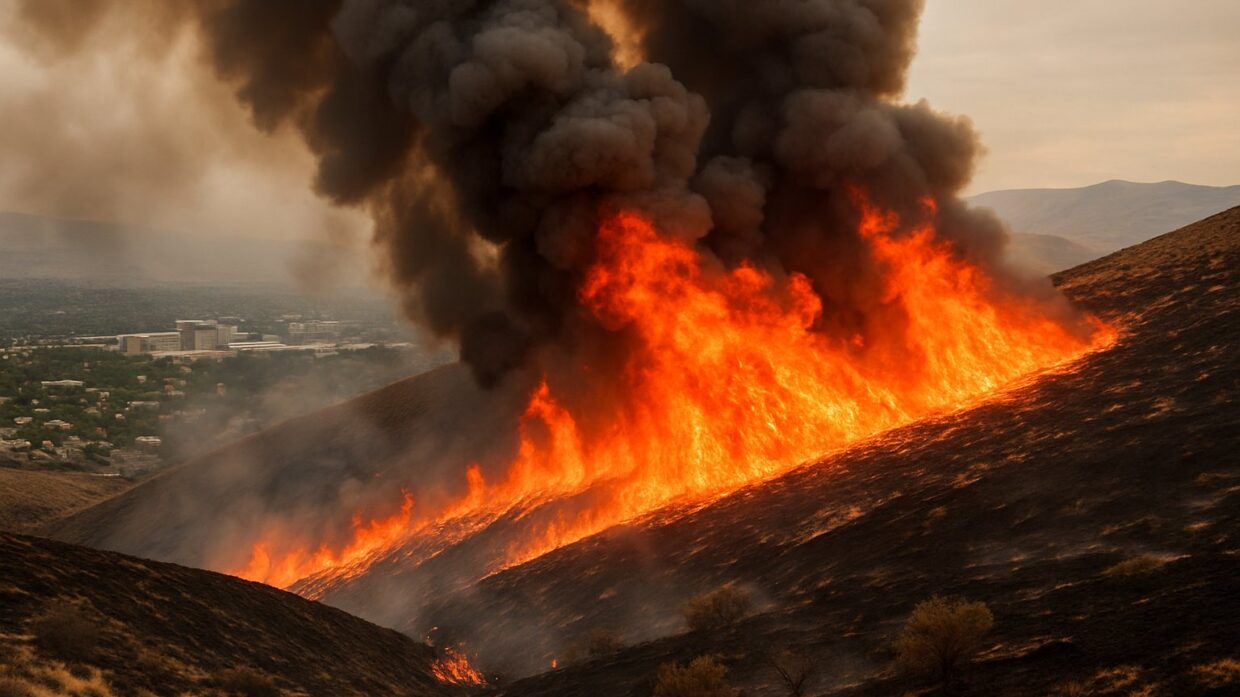
Photo: Well This Is News
Human-caused wildfire explodes near Reno, forcing mass evacuations as climate-driven fire season intensifies
Another major wildfire erupts in American West during hot summer, consuming thousands of acres near Reno
Fast-moving wildfire near Reno, Nevada forces tens of thousands to evacuate as blaze expands to 15,000 acres
Key Takeaways
- The Hawk fire was confirmed human-caused, but the specific ignition mechanism (arson, unattended campfire, equipment use, or industrial activity) remains uninvestigated and publicly unreported, making it impossible to determine whether this reflects changed human behavior, changed environmental conditions making human activity more dangerous, or both.
- No reporting established whether 15,000 acres in August near Reno represents a historical anomaly for that region or falls within the documented range of typical August fires, leaving the question of actual intensification unanswered.
- The framing debate obscures the operational question of whether human-caused fires in this location have grown more common, whether they now spread faster due to altered moisture conditions, or whether evacuation zones have expanded due to settlement patterns rather than fire behavior alone.
The Analysis
A fast-moving wildfire near Reno, Nevada, designated the Hawk fire, has forced tens of thousands of residents to evacuate while consuming more than 15,000 acres. The available reporting establishes the fire's speed and scale but diverges sharply on what those facts signify about larger environmental patterns and seasonal trends.
The documented facts: The Hawk fire expanded to 15,000 acres as reported by The Guardian and NBC News, though Breitbart reported the fire had reached nearly 11,000 acres by Saturday evening, suggesting different reporting times. The blaze is advancing toward the University of Nevada, Reno campus. The Guardian explicitly states the fire was "human-caused," though none of the sources provide the specific ignition mechanism or investigation details. Tens of thousands of residents received evacuation orders. The fire occurred during August, typically the peak of Nevada's fire season.
The left-leaning framing, exemplified by The Guardian's emphasis on "human-caused" in the headline and the inclusion of climate context, presents this fire as evidence of climate-driven intensification of Western fire seasons. The Guardian's language choices,"exploded," "fast-moving," paired with the human cause attribution,construct a narrative where human activity compounds warming-driven conditions. This framing emphasizes the seasonal context: the fire occurs amid a broader pattern of Western wildfires. What this framing leaves out is any discussion of specific fire management practices, land use decisions, or whether the 15,000-acre scale represents an unusual departure from historical fire sizes in this region during August.
The right-leaning framing, via Breitbart, describes this as "another wildfire in a long, hot, and fiery summer" without attributing causation to climate trends. Breitbart's language emphasizes the serial nature of Western fires,"another" fire, a "long, hot" summer,presenting the phenomenon as a recurring seasonal pattern rather than evidence of systemic change. The headline focuses on the physical event: land and structures consumed. This framing leaves out any engagement with why this summer is notably hot or whether historical comparisons support the characterization of intensification.
What neither side fully captures is the operational question: the Hawk fire was human-caused, yet the reporting does not disclose whether this reflects arson, equipment use, unattended campfires, or industrial activity. That distinction matters for understanding whether this fire reflects changed human behavior, changed conditions that make human activity more dangerous, or both. The reporting also does not establish whether 15,000 acres in August near Reno represents an anomaly relative to the fire history of that region or falls within the documented range of historical August fires.
The left frame treats the human cause as confirming climate-driven intensification. The right frame treats it as a seasonal occurrence. Neither addresses whether human-caused fires in this location have grown more common, whether they now spread faster due to altered moisture conditions, or whether evacuation zones have expanded due to changed settlement patterns rather than fire behavior alone.
The underlying question is whether this fire signals a structural shift in Western fire dynamics or documents a known seasonal pattern. The available reporting establishes the fire's size and human cause, but does not provide the historical context or investigation details necessary to answer that question.
Nevada's fire management infrastructure must now absorb the operational reality that human-caused ignitions in August near population centers like Reno now force mass evacuations at scales that demand permanent shifts in evacuation planning, emergency response staffing, and university campus operations. The Hawk fire's advance toward the University of Nevada, Reno campus specifically challenges institutional continuity: whether classes resume as scheduled, whether campus housing protocols change, whether recruitment and retention suffer from repeated evacuation events in coming years. If human-caused fires in this region now spread fast enough to threaten a major research university's operations, fire suppression response times and containment strategies must be recalibrated regardless of whether climate change or human behavior or both drove this particular ignition. The evacuation of tens of thousands exposes whether current alert systems, road capacity, and shelter availability can handle concurrent fire events, which will recur if this region's fire season lengthens or intensifies.