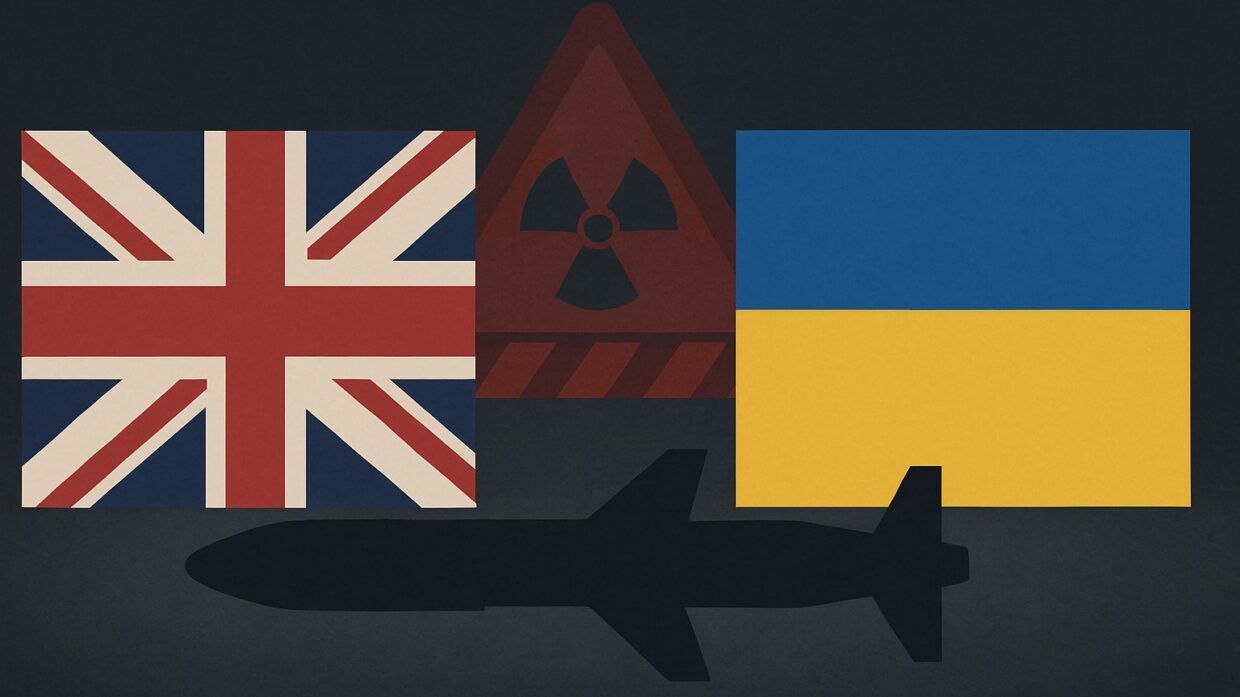
Photo: Well This Is News
Burnham defies Moscow threats to maintain steadfast UK backing for Ukraine's defensive strikes
UK escalates Ukraine involvement as Russia warns of consequences for British drone support
UK Prime Minister Burnham pledges continued Ukraine support despite Russian warnings over British drone use
Key Takeaways
- The UK government has not clarified whether Ukraine's use of British drones for strikes inside Russian territory was pre-authorized by London or proceeded without explicit approval.
- Burnham's statement reflects an undeclared shift in Western military aid from supplying defensive weapons to enabling offensive operations against Russian territory, yet neither government nor media has openly debated this transition or its strategic implications.
- The absence of public information about authorization procedures, rules of engagement, and coordination mechanisms between London and Kyiv suggests either deliberate ambiguity for deniability or inadequate institutional oversight of sophisticated weapons transfers.
The Analysis
Burnham's statement that Russian threats will not alter UK support for Ukraine marks a deliberate escalation in Western military positioning, though the specific operational scope remains partially obscured by diplomatic framing. The UK Prime Minister responded directly to Moscow's anger over reports that Ukraine has used British-supplied Storm Shadow drones in what military analysts describe as deep strike operations against Russian territory, including targets inside Russia proper. The documented sequence is this: Ukraine reportedly employed UK drones in strikes beyond Ukrainian borders; Russia issued a public warning to London; Burnham responded with a commitment to continue support regardless. What the public record does not yet establish is whether the UK government had pre-authorized such uses or whether Ukraine proceeded without explicit British approval.
The left frame emphasizes Burnham's principled stand against intimidation and Russian aggression, using language that casts the UK as a moral actor defending democracy against an authoritarian threat. This framing highlights Burnham's statement that British support is resolute and unconditional, positioning the UK as refusing to be bullied by Moscow. The Guardian's reporting from the left-aligned perspective does not foreground the escalatory dimension of supplying weapons specifically designed for strikes deep inside enemy territory, nor does it address the precedent this sets for Western weapons use in the conflict.
The right frame interprets the same sequence as a dangerous expansion of British military involvement that brings the UK closer to direct confrontation with a nuclear power. This perspective emphasizes that Russian warnings constitute a genuine escalatory threshold, and that Burnham's response crosses a line from defensive support to offensive operations. The right-aligned reading suggests the UK is drifting toward involvement in a conflict with no clear exit strategy or defined limits on weapons deployment. This framing leaves out the countervailing argument that denying Ukraine the capability to strike Russian military infrastructure actually extends the conflict by preventing Ukraine from degrading Russian strike capacity.
What neither side fully addresses is the institutional question of authorization and oversight. The available reporting does not confirm whether these specific drone strikes were conducted with British government knowledge or approval, whether there are formal rules of engagement governing their use, or what the actual chain of communication between London and Kyiv looks like. Storm Shadow drones are sophisticated weapons requiring targeting data and technical oversight. The absence of clarity on this point suggests either that the authorization process is deliberately ambiguous to create deniability, or that oversight mechanisms are inadequate for the scale of support being provided. Burnham's statement does not clarify which is true.
The underlying structural question is whether Western military aid to Ukraine has transitioned from supplying defensive weapons to enabling offensive operations that directly engage Russian territory. That transition, if confirmed, represents a meaningful shift in the nature of Western involvement. It also suggests that the framing of Ukraine's struggle as purely defensive may no longer accurately describe the conflict's operational reality. Neither side's framing addresses whether this shift was deliberate policy or the accumulative result of incremental weapon transfers without a coherent strategic doctrine governing their use.
Burnham's refusal to constrain British drone support establishes a precedent that Western weapons suppliers will not exercise operational control over how their systems are deployed against a nuclear power. If Ukraine conducted these strikes without explicit UK authorization, it exposes a dangerous gap in oversight mechanisms for sophisticated weapons systems. If the UK knew and approved the strikes, it signals that Britain has crossed from supporting Ukrainian defense into enabling offensive operations against Russian territory, fundamentally altering the nature of NATO involvement and removing a previous escalatory boundary. Either scenario creates institutional consequences: future weapons transfers will occur under ambiguous authorization frameworks, allied governments will face domestic pressure to deny responsibility for strikes their weapons enable, and the distinction between supporting a defensive war and participating in an offensive one will dissolve into plausible deniability. This establishes the template for future Western military aid decisions where operational boundaries disappear and strategic accountability becomes impossible to enforce.