Photo: Th2city Santana
Massive Ukrainian drone attack on Russia kills at least six in one of war's largest strikes
Ukraine Launches One of Its Largest Aerial Attacks of War, Killing at Least Six in Russia
Ukraine launches largest drone attack of war, strikes warehouse near Moscow, six killed
Key Takeaways
- Ukraine has shifted strategy from targeting purely military infrastructure to systematically striking civilian logistics networks, suggesting either a deliberate strategy to degrade Russian civilian supply chains or a calculation that military-civilian distinctions no longer matter operationally.
- Neither Ukraine nor Russia has publicly explained the strategic intention behind this particular attack or disclosed key operational details like total drones launched, interception rates, or whether it was part of a coordinated multi-operation campaign.
- This attack signals the war is evolving into a contest of attrition against civilian infrastructure and supply chains, and it establishes a precedent that neither side may face practical constraints on targeting civilian logistics anymore.
The Analysis
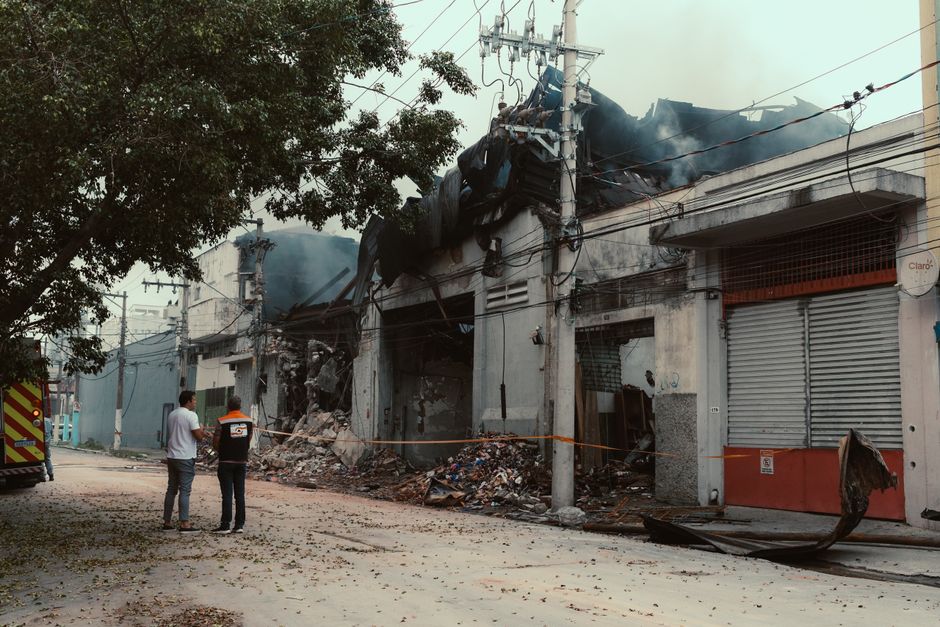
Ukraine conducted one of its largest coordinated drone strikes of the war, targeting a Wildberries distribution warehouse near Moscow and killing at least six people according to Moscow's own admission. Hundreds of drones were launched across Russian territory in the attack. This represents a significant tactical development in a conflict where long-range strike capability has been the decisive differentiator.
The verified facts are limited to what both Ukrainian and Russian sources have reported: the strike occurred, the warehouse caught fire, at least six deaths are confirmed by Russian regional authorities, and the scale appears comparable to other major attack waves Ukraine has conducted. The Guardian and NPR both reported the attack as one of the largest of the war. Bloomberg's framing around the Wildberries warehouse and a drone downed in Romania provides additional tactical detail without emphasizing the political dimensions either side prefers to highlight.
The left framing, visible in The Guardian's use of the word 'massive' and NPR's emphasis on this being 'one of Kyiv's largest aerial attacks,' centers the story on Ukrainian capability and resolve. This framing emphasizes the scale of the assault and implicitly positions it as evidence that Ukraine can strike deep into Russian territory despite the overall military balance. The left-leaning sources do not foreground the fact that targeting a civilian warehouse, regardless of its logistical importance, involves striking infrastructure where civilian casualties are probable. The emphasis shifts toward the military achievement rather than the civilian cost.
The right framing, as evidenced by Breitbart's headline, uses nearly identical language to the left sources but places the story in a different contextual frame by virtue of its editorial selection. Breitbart leads with the same facts but does not emphasize Ukraine's tactical achievement or strategic position. Instead, by covering the story without additional framing, it allows readers to interpret the attack without guidance toward viewing it as a demonstration of Ukrainian strength. The right has been more cautious about celebrating Ukrainian strikes that involve civilian infrastructure damage, and the neutral-seeming headline reflects that editorial restraint.
What neither framing adequately addresses is the escalatory logic embedded in this attack. Ukraine has shifted from targeting military infrastructure to systematically striking civilian logistics networks, which suggests either a deliberate strategy to degrade Russian civilian supply chains or a calculation that the distinction between military and civilian targets has become operationally irrelevant. The attack on Wildberries, a major e-commerce logistics company, targets infrastructure that supports civilian consumption but also supplies military personnel. Russia's own admission of at least six deaths indicates the strike succeeded in its stated objective, whatever that objective was.
The public record does not yet establish whether this attack represents a new phase of Ukrainian strategy or a response to specific Russian actions. Moscow has not disclosed how many drones were launched in total, how many were intercepted, or whether this attack was coordinated with other operations. Neither side has publicly explained the military necessity of striking a warehouse near Moscow as opposed to forward military positions or supply depots closer to the front. The attack demonstrates capability but leaves the strategic intention unclear.
What this actually signals is the war's evolution into a contest of attrition against civilian infrastructure and supply chains rather than purely military targets. Ukraine appears to be escalating its willingness to strike deep inside Russian territory, while Russia continues to report casualties but has not announced retaliatory measures at equivalent scale. The precedent this sets is that neither side may have practical constraints on targeting civilian logistics anymore.
Ukraine's strike on the Wildberries warehouse marks the war's transition from targeting military infrastructure to systematically degrading civilian supply chains that indirectly support Russian forces. This strategic shift eliminates the operational distinction between military and civilian targets, establishing a new precedent that both combatants can now justify striking deep into each other's territory against logistics networks. Future escalation will likely follow this template, as Ukraine has demonstrated it can coordinate hundreds of drones while Russia faces pressure to respond in kind. The institutional consequence is the collapse of targeting restraint that previously limited strikes to frontline positions and military depots. Once this boundary dissolves in practice, neither side retains credible justification for refusing similar attacks, accelerating the war's expansion into civilian economic infrastructure across both nations. This fundamentally alters what war in Europe means for civilian populations far from active combat zones.