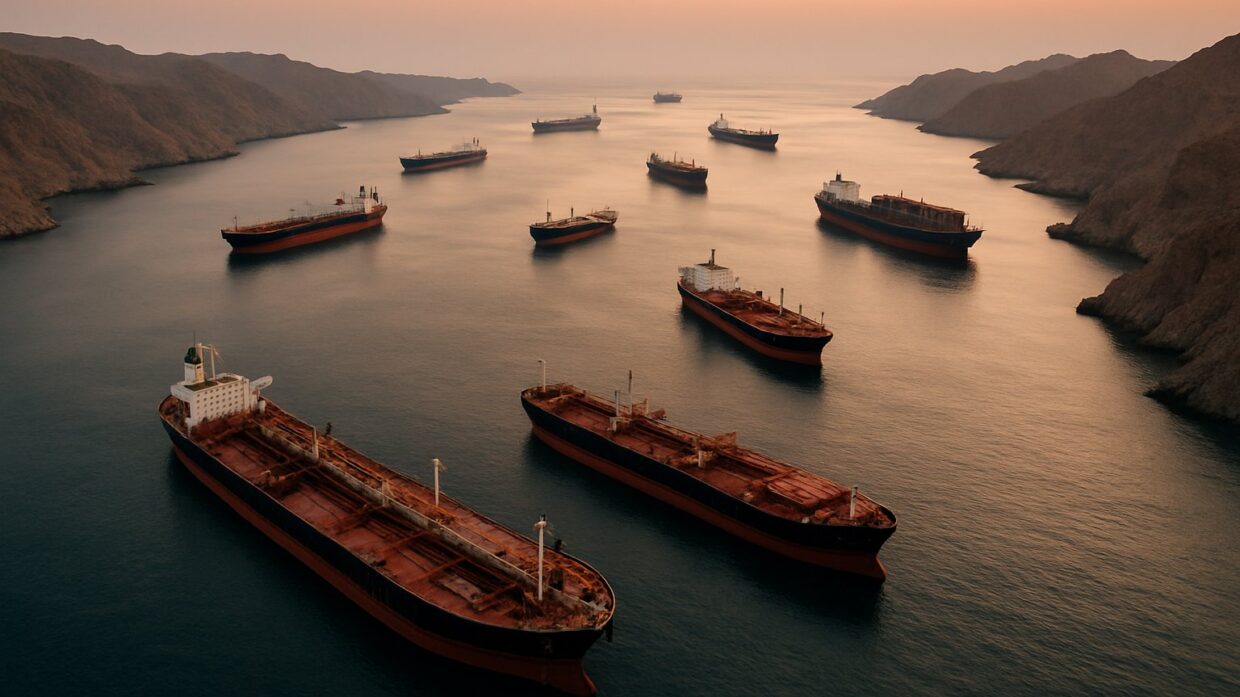
Photo: Well This Is News
Trump Escalates With Iran Compensation Demand, Threatening Strait Deal
Trump Insists Iran Pay Reparations Before Hormuz Agreement
Trump Demands Iran Reparations as Hormuz Strait Negotiations Stall
Key Takeaways
- The sequence of events shows Iran tabled reparations demands first through Oman-mediated talks, then Trump countered with his own reparations claim, but reporting does not clarify whether Trump views this as a fixed precondition or an opening negotiating position.
- Both sides are now conditioning progress on financial settlements rather than on technical solutions to reopen shipping, which could make resolving the Hormuz closure harder rather than easier to achieve.
- The reporting omits key context: the US-Iran Claims Tribunal has existed since 1979 to handle historical disputes, yet Trump's demand suggests reopening those claims within Hormuz negotiations, raising the structural question of why a shipping agreement should become a vehicle for settling decades-old liability claims.
The Analysis
Trump's demand that Iran pay reparations for decades of US soldier deaths in attacks linked to Iranian proxies has introduced a new condition into talks to reopen the Strait of Hormuz, a chokepoint through which roughly one-third of the world's seaborne oil passes. What the available reporting does not establish is whether this demand represents a fixed negotiating position or a hardening of Trump's opening bid after Iran tabled its own reparations claim.
The sequence of events matters. Iran, according to The Hill's reporting, initiated talks through an Oman-mediated framework and submitted demands it framed as compensation for US sanctions and past military strikes. Trump responded by demanding reparations for deaths attributed to Iranian-backed proxies, specifically naming victims of the USS Cole attack and personnel killed in Iraq and Syria. The Guardian quotes Trump stating Iran must "pay up" before any Hormuz agreement proceeds. Fox News emphasizes that Trump is conditioning reopening on Iranian compensation, while The Guardian frames the demand as evidence negotiations have "stalled."
What distinguishes these frames is what each omits. The left-leaning coverage emphasizes Trump's demand as an escalation that will derail talks, presenting it as a maximalist position inconsistent with negotiation. The reporting does not address why Trump might view compensation as a prerequisite rather than a later-stage negotiating point. It also underplays that Iran introduced its own reparations framework first, which set the terms for Trump's counterclaim. The right-leaning coverage inverts this narrative, presenting Trump's demand as a justified response to Iranian overreach. It does not explore whether conditioning a critical shipping agreement on historical reparations creates a harder problem to solve than the original Hormuz question.
The reporting across outlets leaves out several crucial contexts. First, the US and Iran have disputed claims for decades under the auspices of the US-Iran Claims Tribunal, established after the 1979 revolution. Trump's demand suggests reopening what that tribunal was designed to adjudicate, raising the structural question of why a Strait of Hormuz agreement should become a vehicle for settling historical claims. Second, the reporting does not establish the specific quantum of compensation Iran demanded or how that compares to Trump's implied counterclaim. Without those numbers, readers cannot assess whether the gap is negotiable or symbolic. Third, neither framing addresses the economic cost to both nations of extended Strait closure, which presumably creates pressure to resolve disputes faster, not slower.
The underlying question is whether Trump views reparations as a necessary precondition for any deal or as the opening position in a larger negotiation. The available reporting treats it as the former, but the evidence does not clearly establish which interpretation is accurate. What the sequence does show is that Iran's decision to table its own compensation claim shifted the negotiation away from the technical maritime question and toward historical liability, a domain where neither side has obvious leverage.
One plausible interpretation is that both parties are using reparations claims to signal resolve rather than to solve an actual problem. The reporting is consistent with that reading, but it does not confirm it. What remains undisclosed is what either negotiating team believes would constitute acceptable resolution, or whether either side expects reparations to be central to any final agreement or peripheral to it.
Reopening the Strait of Hormuz affects global oil prices and energy security across Europe, Asia, and North America within months, not years. Trump's reparations demand transforms what should be a technical maritime negotiation into a historical claims dispute, potentially pushing settlement timelines from quarters into years while one-third of seaborne oil remains at risk of disruption. If Trump treats compensation as non-negotiable rather than opening bid, the US signals it will accept extended Strait closure and elevated fuel costs rather than compartmentalize historical grievances from present infrastructure needs. This restructures how future administrations can negotiate with Iran on any issue, since both sides now expect compensation claims to accompany discussions. The USS Eisenhower and other carrier groups currently managing Strait tensions will remain deployed longer, draining defense budgets allocated elsewhere. Global markets already price in this uncertainty, but sustained closure would trigger recession across oil-dependent economies.