Photo: Well This Is News
Trump's Iran deal claims contradict Tehran's denial of talks
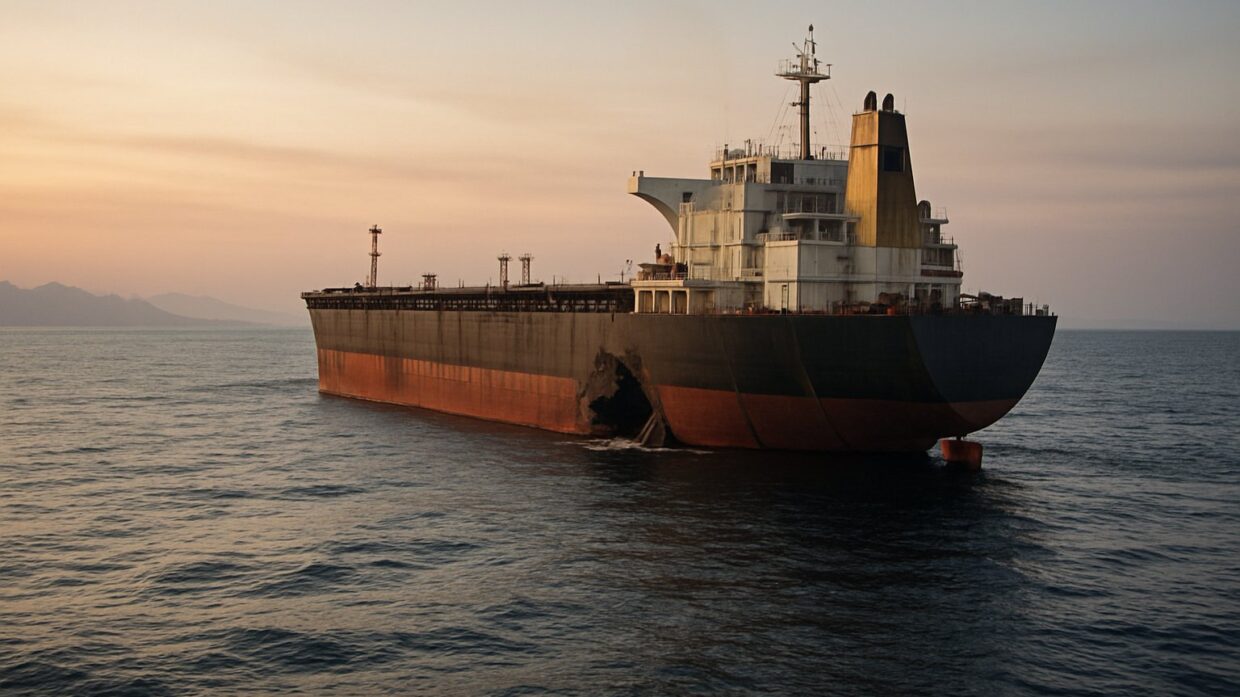
US-Iran tensions spike as projectile hits cargo ship during ceasefire negotiations
Trump claims Iran deal imminent as Tehran denies active negotiations
Key Takeaways
- Trump and Iran were describing different things: Trump cited Qatari mediation exchanges as evidence of negotiations, while Iran insisted no formal direct talks existed, making both statements potentially accurate depending on how you define negotiation.
- The public record does not reveal whether Trump based his optimism on confirmed intelligence about Iranian positions or was simply amplifying Qatari reports of proposal exchanges, leaving his claim's credibility unverified.
- The projectile strike on the cargo vessel remains unattributed, with no confirmation whether it was a deliberate Iranian test of US resolve, an accidental misfire, or an attack by a non-state actor, making it impossible to assess whether it contradicts or confirms negotiation progress.
The Analysis
Trump claimed on Monday that the US and Iran were in active negotiations to reopen the Strait of Hormuz, with a deal possible as early as Tuesday. The claim contradicts Iran's public position: Tehran denied that formal talks were occurring. This is not a disagreement about terms or timing. It is a disagreement about whether substantive negotiations exist at all.
The specific words matter. Trump said the US and Iran were "discussing" reopening the strait and that mediators were "exchanging proposals." Iranian officials said they were not in talks. Qatar, which has been involved in mediation efforts, reported progress in discussions, but Qatar's framing differs from Trump's claim of direct US-Iran negotiation. Qatar said "they are exchanging proposals," which may refer to indirect communication through intermediaries, not face-to-face negotiation or back-channel diplomatic contact between Washington and Tehran.
The left frame emphasizes Trump's claim without independent confirmation. MSNBC reported that Trump "accused Iran of duplicity" and "insisted the two sides were discussing," then notes that "Tehran denied talks were even taking place." The framing treats Trump's assertion as a claim requiring Iranian confirmation, not as established fact. This leaves out whether Trump had access to intelligence about Iranian intentions or whether he was interpreting Qatari mediation activity as evidence of Iranian willingness to negotiate. The coverage does not establish which.
The right frame emphasizes the projectile strike on the cargo vessel as evidence that Iran's military actions contradict ceasefire negotiations. Fox News reported the timing: Trump's claim of imminent progress occurred on the same day a vessel was struck. The framing suggests operational inconsistency, implying Iran cannot be negotiating in good faith while conducting attacks in the same waters. This leaves out whether the projectile strike was deliberate targeting, accidental misfire, or an attack by non-state actors. The report does not establish who fired it.
What neither side fully captures is the negotiation structure. Mediated diplomatic contact through a third party is not the same as direct talks, and both sides may use this distinction tactically. Trump may interpret Qatari intermediation as momentum toward a deal. Iran may maintain that no formal negotiations exist because no direct US-Iranian talks have occurred. Both statements can be technically accurate if they are describing different things.
The Strait of Hormuz closure matters because roughly 20 percent of global oil transits through it. Any disruption affects energy markets worldwide. Trump's claim of progress would reduce oil prices if believed. Iran's denial maintains strategic ambiguity about its intentions. The projectile strike, if it was deliberate Iranian action, contradicts either claim that negotiations are progressing or that the two sides are moving toward reopening commercial shipping.
What the public record does not establish is whether Trump had confirmed intelligence about Iranian positions or was amplifying Qatari reports. It also does not establish whether the projectile strike was a deliberate test of US resolve during negotiations, a miscalculation, or an action by a non-state actor aligned with Iran. Until those facts are disclosed, the conflict between Trump's optimism and the cargo ship incident remains unexplained.
Trump's claim of imminent Iran negotiations creates immediate policy confusion that affects global energy markets worth trillions in annual throughput. If markets believe a Strait of Hormuz deal is near, oil prices fall and investors adjust holdings accordingly. If negotiations prove illusory, the reversal destabilizes already volatile markets. The real danger is that Trump's public timeline forces both sides into either delivering a deal by Tuesday or appearing duplicitous, compressing negotiation space and raising the risk that either party escalates to save face. When the US president announces specific deal dates without Iranian confirmation, he transforms mediation dynamics from deliberate to reactive, where maritime incidents become pressure tactics rather than isolated events.