Photo: Well This Is News
Government admits Reflecting Pool charges were baseless after blaming innocent man
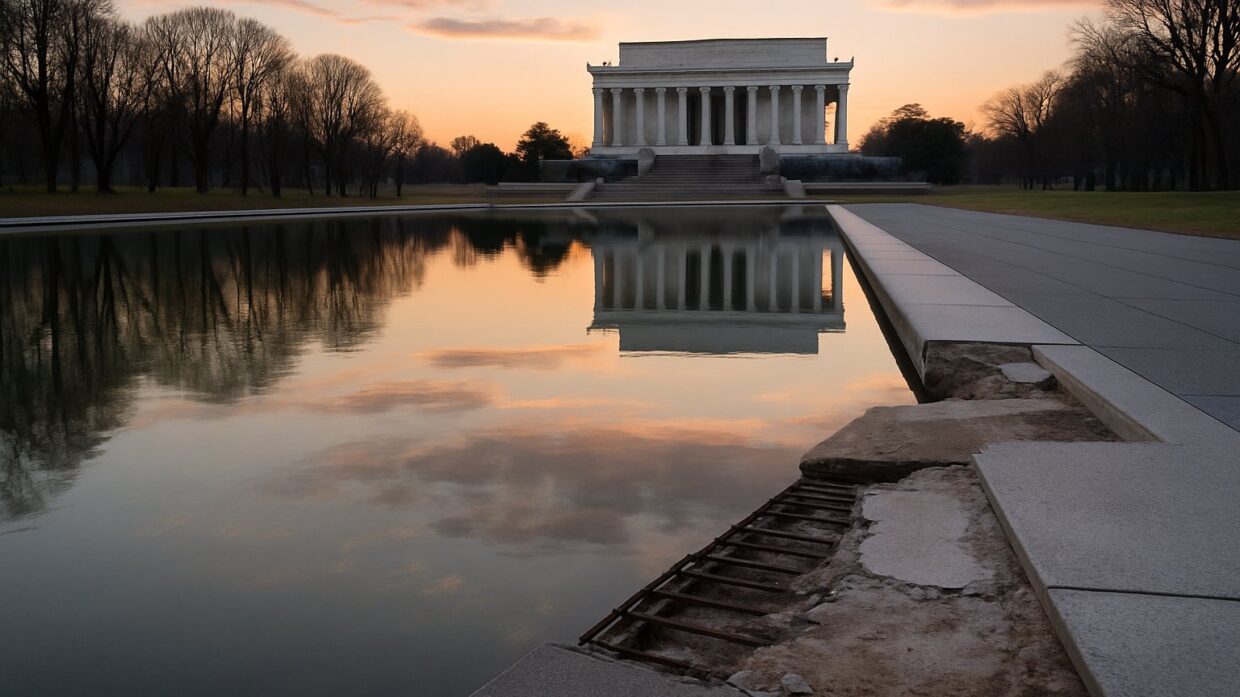
Pirro dismisses Reflecting Pool case, finds damage caused by botched federal contractor work
DOJ drops charges against Olympian in Reflecting Pool case, citing contractor installation failure
Key Takeaways
- The Justice Department's 20-page court filing attributes the Reflecting Pool damage to both the contractor's poor installation quality and the decision to compress the timeline for the $14 million renovation, but does not disclose whether prosecutors knew about these factors before or only after indicting Hearn.
- Neither the government nor the news reporting establishes whether anyone responsible for the contractor's work or the artificial rush to completion to meet a political event deadline faces any consequences for the damage itself.
- The public record shows a correction was made, but leaves unanswered whether this reveals an evidentiary error in a specific case or a broader failure in how federal prosecutors investigate technical damage claims before bringing criminal charges.
The Analysis
The Justice Department's decision to dismiss charges against David Hearn rests on a specific finding: the damage to the Lincoln Memorial Reflecting Pool in June resulted from a contractor installation failure, not from Hearn's actions. The 20-page court filing from U.S. Attorney Jeanine Pirro's office establishes that the sealant failure occurred due to both flawed installation work and the compressed timeline to complete the $14 million renovation before America 250 celebration events.
What actually happened: Hearn touched the water in the pool out of curiosity. Federal prosecutors initially charged him with destruction of federal property based on allegations that he ripped the sealant, which caused significant damage. Months later, after additional investigation and information provided post-indictment, prosecutors determined the damage was attributable to the contractor's work quality and the decision to rush completion, not to Hearn's contact with the water.
The left framing emphasizes prosecutorial failure and potential injustice. NPR's headline construction "Prosecutors move to dismiss" followed by the phrase "botched installation to blame" creates narrative distance between investigators and the actual damage source. The Atlantic's framing, "How the Reflecting Pool Vandalism Case Fell Apart," uses language suggesting institutional collapse rather than a correction based on evidence. This framing leaves out the specific investigative process that led to the dismissal and how prosecutors arrived at the revised conclusion. The emphasis on prosecutor incompetence serves a rhetorical function: it highlights government overreach without examining whether the initial charging decision was based on the evidence available at that time.
The right framing emphasizes executive action and responsibility correction. The Washington Examiner's coverage highlights that "U.S. Attorney Jeanine Pirro has filed a motion to dismiss," foregrounding the official's decision-making rather than passive discovery of error. This framing allows the administration to appear decisive in correcting a mistake. What this emphasis underplays is whether the initial charge was justified given the investigation's status at the time of indictment, and whether the rushed timeline itself constitutes a separate accountability question.
What neither side fully addresses: The public record establishes that a contractor's work quality and the decision to rush completion for a political event created the conditions for damage. What remains undisclosed is the timeline of when prosecutors knew about these factors relative to when they charged Hearn. If installation defects were identifiable before indictment, that raises separate questions about due diligence in prosecution. If these facts only emerged afterward, that indicates either incomplete investigation at charging or subsequent discovery that warranted dismissal. The reporting does not establish which applies here. Additionally, neither framing examines the institutional process that permits criminal charges to proceed with incomplete technical investigation of damage to federal property, or whether anyone responsible for the contractor's work or the rushed timeline faces consequences for the original damage itself.
The underlying question is whether this represents a correction of an evidentiary error or a failure of pre-indictment investigation standards. The available reporting suggests the former, but leaves the latter unexamined.
The contractor's installation failure and the decision to accelerate the $14 million renovation for the America 250 celebration created the conditions that damaged the Reflecting Pool, yet no accountability mechanism exists for those responsible for either the work quality or the rushed timeline. The dismissal of charges against Hearn exposes a gap in federal property management oversight: when damage to national monuments results from contractor negligence and political scheduling pressure, the current system produces only the dismissal of an innocent person, not reform of the procurement or project management practices that enabled the failure. This case should trigger examination of how federal agencies supervise major renovation contracts and whether timeline pressures for celebratory events create dangerous incentives to cut corners on critical infrastructure work.