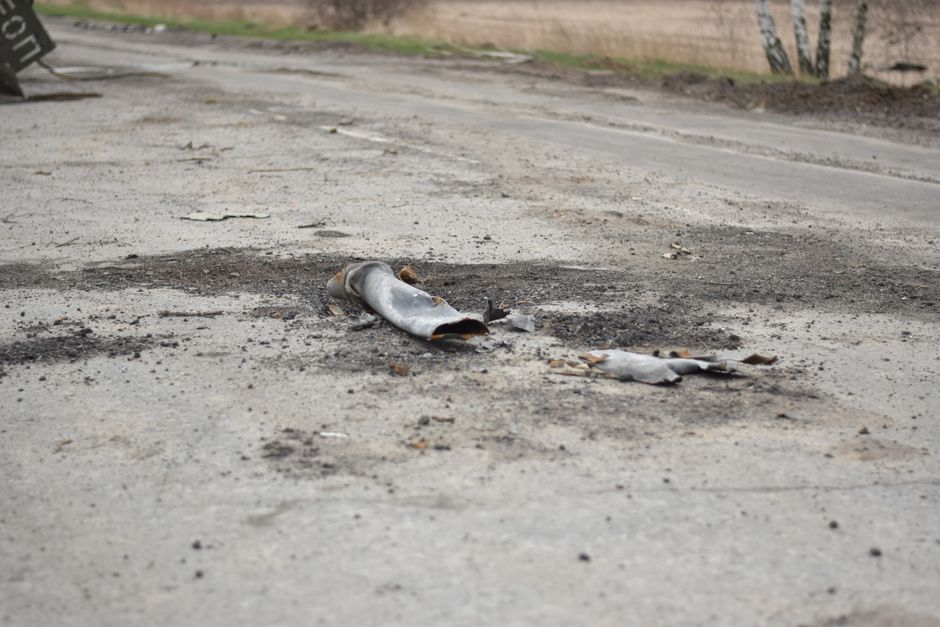
Photo: Serhii Bondarchuk
NATO alarmed as Russian missile violates Polish territory; US intensifies Iran campaign with Saudi backing
Russian missile crosses into Poland during Ukraine attack; US maintains pressure on Iran with regional allies
Russian missile enters Polish airspace during Ukraine strike; US escalates Iran strikes as Saudi joins operations
Key Takeaways
- The 2015 Iran nuclear deal withdrawal and two decades of escalating US-Iran proxy conflicts created the conditions for current strikes, a causal chain neither side's framing examines.
- Neither reporting explains whether the Polish missile crossing was navigational error, electronic warfare, or intentional, leaving the core question of Russian intent unresolved.
- The simultaneous escalations in Europe and the Middle East occurred without disclosed active diplomatic channels between parties, suggesting negotiated settlement options may have already been exhausted.
The Analysis
Two separate military escalations unfolded simultaneously on July 29-30, creating what analysts describe as deepening regional instability. A Russian Kh-101 cruise missile, confirmed by Polish Defense Minister Władysław Kosiniak-Kamysz as "most likely" the weapon type, crossed Polish airspace and struck near a village during Russia's estimated 83-missile attack on Ukrainian targets. In the Middle East, US Central Command announced a "heavy wave" of overnight airstrikes against Iranian military targets, followed by joint US-Saudi strikes on Iran-backed militias in Iraq and reported explosions in Egypt.
The factual record establishes what happened but leaves the framing of significance to each outlet. Poland's Prime Minister Donald Tusk visited the crater site and emphasized coordination with EU and US leaders, describing the incident as a Russian airspace violation. The Polish government did not characterize the strike as deliberate targeting of Polish territory; officials contextualized it as a stray missile during operations against Ukraine. NATO responded with statements pledging to "take all necessary measures" to defend member territory, though no NATO military response has been announced. US Central Command's statement on Iranian strikes made no explicit connection to the Polish incident.
The left framing, evident in Guardian coverage, emphasizes the "direct threat" to NATO and frames the incidents as part of a widening conflict. The language used is "NATO alarmed," "war widening," and references to "uncharted territory." This framing treats the missile crossing as evidence of escalating Russian aggression and links it narratively to broader concerns about conflict expansion. The emphasis suggests systemic threat escalation rather than operational accident. What this framing leaves out is the distinction between a stray missile and intentional targeting, and it does not foreground that Poland reported no casualties or that NATO has not demanded military escalation in response.
The right framing, evident in Washington Examiner coverage, describes the Polish incident as occurring "during a large-scale Russian strike on Ukraine" and emphasizes that "no one was injured." This contextual placement treats the missile crossing as an incident arising from ongoing operations rather than as an autonomous threat. The Iran coverage emphasizes US "proportional response" and "strengthened regional partnerships." This framing treats American and Saudi action as defensive rather than provocative. What this framing underplays is that Saudi Arabia's entry into Iraq strikes represents a significant shift in regional alignment and that Iran has vowed further retaliation.
What neither framing adequately addresses is the treaty history that shapes current tensions. Russia's 2015 agreement to respect NATO airspace, the 2015 Iran nuclear agreement that the Trump administration withdrew from in 2018, and the subsequent pattern of Iranian proxy escalation and US military responses provide essential context. The Polish missile incident occurs within a theater where Russia operates with reduced constraints after years of sanctions and military buildup. The Iran strikes occur within a region where US-Saudi cooperation has intensified following previous Iranian attacks on US bases. Neither the left nor right framing traces how prior diplomatic agreements, treaty withdrawals, and sanctions regimes created the current sequence of events.
The underlying question is whether these incidents represent an uncontrolled escalation spiral or tactical responses within established patterns of regional competition. The available reporting does not establish whether the Polish missile crossing was navigational error, electronic warfare confusion, or intentional probe. The Iranian strikes may reflect deterrence strategy or indicate decision to abandon negotiated settlement. What remains undisclosed is what diplomatic channels, if any, were active before these military operations began and whether either side perceives remaining room for de-escalation.
Poland's airspace violation by a Russian missile and Saudi Arabia's entry into Iraq operations mark institutional ruptures that reshape military response frameworks on two continents. Poland's NATO membership obligates collective defense protocols, yet the alliance's muted response signals it distinguishes between stray ordnance and deliberate attack, preserving de-escalation options despite the precedent-setting violation. Simultaneously, Saudi Arabia's shift from observer to active participant in US-led Iraq strikes legitimizes direct sunni-state engagement against Iran-backed forces without requiring formal coalition declaration, lowering the diplomatic threshold for future regional interventions. These moves embed operational patterns that treat airspace violations and cross-border proxy warfare as tolerable within competitive frameworks rather than triggering alliance-wide mobilization, fundamentally altering how NATO and Gulf states calculate risk in sustained conflicts.