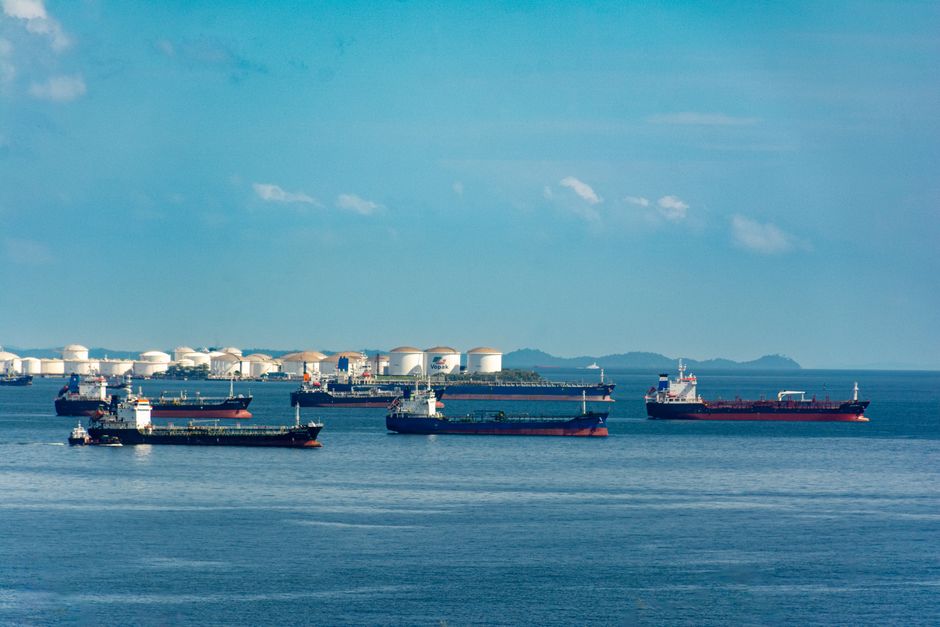
Photo: Zifeng Xiong
US reassures Gulf allies on Iran ceasefire and shipping security
Rubio: Iran banned from charging Hormuz tolls under international law
Rubio pledges Strait of Hormuz will remain toll-free as 11,000 sailors remain stranded
Key Takeaways
- 11,000 sailors are currently stranded in the Strait of Hormuz during the US-Iran conflict, indicating that diplomatic pledges about freedom of navigation are not preventing real disruption of shipping right now.
- Rubio's legal assurances do not address whether Iran has the actual naval capability to enforce restrictions through blockade, missiles, or mines regardless of what international law permits.
- The fragility of the ceasefire deal itself required Rubio to personally visit Gulf allies for reassurance, suggesting that previous US security commitments already lack sufficient credibility to prevent merchant vessels from being trapped in contested waters.
The Analysis
Rubio's pledge to Gulf allies that the Strait of Hormuz will remain toll-free sits atop a shipping crisis the US commitment alone cannot resolve: 11,000 sailors are currently stranded in the waterway, and international law arguments do not address whether Iran has the naval capacity to enforce restrictions regardless of formal claims.
The secretary of state made his statement during a visit to reassure UAE, Kuwait, and Bahrain about two simultaneous US commitments: maintaining freedom of navigation and advancing a US-Iran ceasefire deal. The Guardian framed this as a reassurance mission, emphasizing the diplomatic relationship-building aspect. The Washington Examiner emphasized Rubio's legal assertion that international maritime law forbids toll-charging, with the headline stating Iran "will never be able" to do so.
What neither framing acknowledges is the operational gap between declarative statements and maritime reality. The Strait of Hormuz is 21 miles wide at its narrowest point. One-third of all seaborne oil passes through it. Iran controls the northern shore and has the capability to disrupt shipping through naval blockade, missile strikes, or mine placement regardless of what international law permits. Rubio's assurance rests on the assumption that the ceasefire holds and that diplomatic commitments will constrain Iranian behavior. The presence of 11,000 stranded sailors suggests that assumption is currently failing.
The left-leaning framing emphasizes reassurance and alliance-building, which reflects the administration's negotiating position. The right-leaning framing emphasizes legal prohibition and resolve, which reflects a deterrence posture. Both assume that what Rubio says in the Gulf matters more than what Iranian naval commanders can do in the strait.
The reporting does not establish what specific mechanisms would prevent toll-charging if Iran decided to attempt it. The reporting does not clarify whether the ceasefire agreement contains explicit language on Hormuz tolls or whether Rubio's statement reflects only US interpretation of existing international maritime conventions. The reporting does not disclose whether the stranded sailors are stranded because of Iranian action, US military operations, or other causes.
What neither side foregrounds is the economic consequence already visible: shipping insurance rates have risen, vessel routing has shifted away from the strait, and global energy markets are pricing in supply-chain fragility. Rubio's pledge is addressed to governments and markets that have already begun pricing in the possibility that the strait is not reliably toll-free, regardless of what international law says. The ceasefire deal that both sources reference as the context for this visit is itself fragile enough that the US felt compelled to send its top diplomat to reassure allies in the region. That reassurance was necessary is itself evidence that the previous commitment level, whatever it was, did not hold sufficient credibility to prevent stranding 11,000 sailors in contested waters.
Rubio's pledge operates in a strategic vacuum where declarative statements have already lost market credibility. Shipping insurance premiums have risen, vessels have rerouted away from the strait, and energy markets are pricing in supply-chain disruption regardless of international law or diplomatic assurance. The fact that 11,000 sailors remain stranded despite prior US commitments exposes the gap between what the State Department promises and what Iran's naval capacity can actually enforce. A ceasefire fragile enough to require emergency reassurance visits from the secretary of state cannot credibly guarantee freedom of navigation through a chokepoint Iran physically controls. Markets and allies will continue hedging against Iranian action until operational reality, not legal proclamation, demonstrates that the strait remains secure.