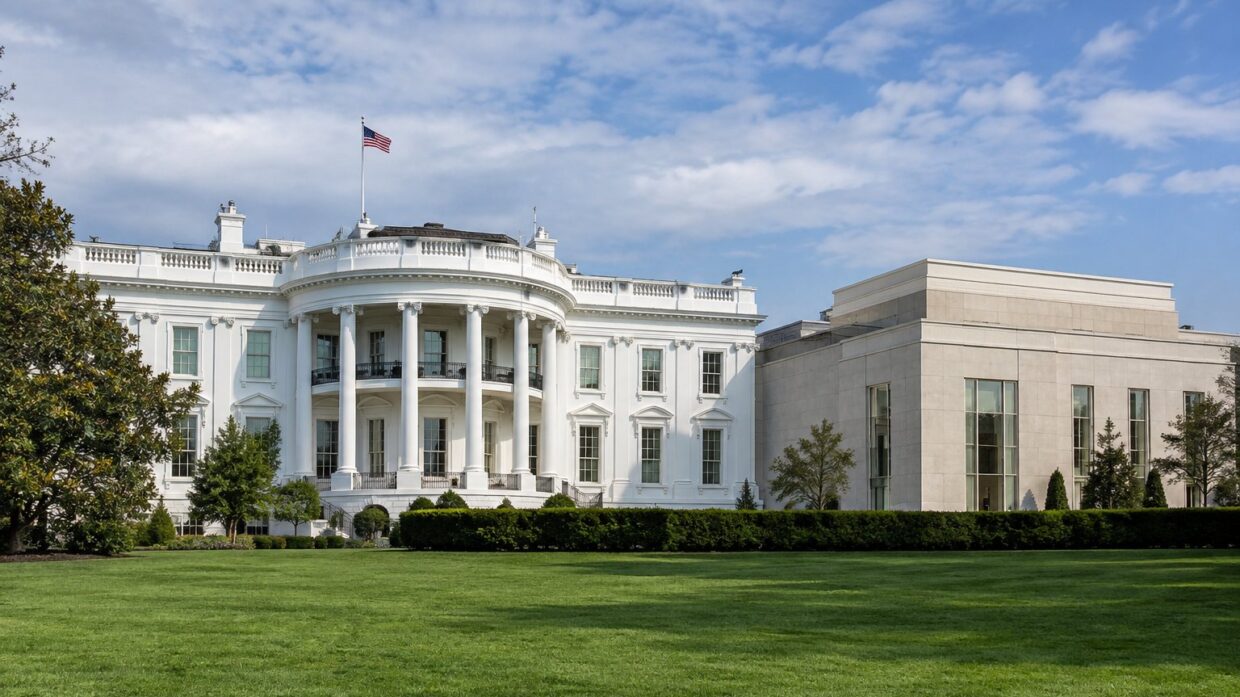
Photo: Well This Is News
Trump's Massive New Ballroom Slammed as 'Hideous' Excess While Donors Hide in Shadows
Blumenthal Launches Donor Probe as Trump DOJ Investigates Senator's Conduct
White House Ballroom Project Triggers Dispute Over Donors and Federal Oversight
Key Takeaways
- Federal campaign finance law prohibits certain political contributions but does not prohibit private donations to buildings or infrastructure projects, creating a legal gray zone that neither side acknowledges.
- The Trump prosecutor's specific legal theory for investigating Blumenthal has not been publicly disclosed, making it impossible to evaluate whether the investigation targets genuine violations or operates as retaliation.
- The dispute actually turns on whether congressional investigative power over private donors has enforceable limits that prosecutors can legally defend, not on the ballroom's size or aesthetics.
The Analysis
The White House ballroom dispute has split along two distinct battles, each side fighting a different war and neither acknowledging what the other side is actually defending.
What actually happened: A new ballroom has been constructed on White House grounds, described in available reporting as significantly larger than the main residence and funded through anonymous donations. Senator Richard Blumenthal, who will chair the Senate's Permanent Subcommittee on Investigations when Democrats take control, announced plans to investigate and expose the identities of donors funding the project. In response, a federal prosecutor appointed by the Trump administration began investigating Blumenthal's conduct, suggesting his donor-inquiry activities may violate federal law. Blumenthal denies the investigation has merit and frames it as retaliation for his oversight efforts.
The left frames this as Trump excess and donor secrecy. HuffPost emphasizes the ballroom's size relative to the main residence, describes it as "hideous," and quotes Democratic lawmakers calling it a wasteful monument to Trump's priorities. Representatives James Clyburn and Morgan McGarvey used social media to express frustration with the scale and aesthetics of the structure. This framing leaves out what the ballroom project actually cost, where the funding originated before it became anonymous, and whether the project required any federal approval or appropriation. The emphasis is purely on visual excess and the political symbolism of donor anonymity.
The right frames this as prosecutorial retaliation for partisan overreach. The Daily Wire emphasizes that Blumenthal "began his crusade to expose every private donor" and that the Trump DOJ's investigation represents a defensive boundary against what they characterize as harassment of donors. This framing leaves out what evidence the federal prosecutor claims to possess that would justify investigating Blumenthal, what specific legal or ethical violations are alleged, and whether prior administrations have investigated members of Congress for subpoena activities. The emphasis is on Blumenthal's aggressive donor-exposure intent and governmental response to it.
What neither side fully captures is the underlying power dynamic. Federal campaign finance law prohibits certain contributions to candidates but does not prohibit private donations to buildings or infrastructure projects associated with political figures. The gap between what Congress can legally investigate and what donors may legally provide appears to be the actual point of tension. Blumenthal's investigation assumes donor records exist and are discoverable through subpoena power; the Trump DOJ's investigation assumes those subpoena activities may themselves violate law or ethical boundaries. Neither framing acknowledges that this conflict reflects a genuine ambiguity in how congressional oversight and donor privacy interact when applied to structures rather than campaigns.
The available reporting does not establish the specific legal theory underlying the Trump prosecutor's investigation into Blumenthal. It does not establish whether the ballroom project involved any federal funds or regulatory approval. It does not establish the original source of the funds before they became "anonymous." The visual argument from the left depends on aesthetic judgment, not documented policy violation. The prosecutorial argument from the right depends on unstated legal claims.
What this actually signals is a clash between two incompatible governance claims: the Democratic position that donor funding for structures associated with political figures should be disclosed, and the Trump administration's position that efforts to compel that disclosure may themselves be subject to federal prosecution. The underlying question is not whether the ballroom is too large, but whether Congress's investigative power over private donors has enforceable boundaries that prosecutors can defend.
The ballroom dispute exposes a collision between congressional oversight authority and donor privacy protections that federal law has never clearly resolved. Blumenthal's investigation assumes Congress can subpoena donor records for non-campaign infrastructure; the Trump DOJ's counter-investigation assumes such subpoenas may violate legal boundaries prosecutors can enforce. This sets precedent for whether future Congresses can compel disclosure of private funding for presidential residences and associated structures, or whether that investigative power will be constrained by criminal liability for those who exercise it. The gap between campaign finance law's disclosure requirements and infrastructure funding's opacity has now become a prosecutorial battleground. Whichever side prevails will define the investigative limits Congress faces when confronting presidential donor networks operating outside campaign finance disclosure rules.